
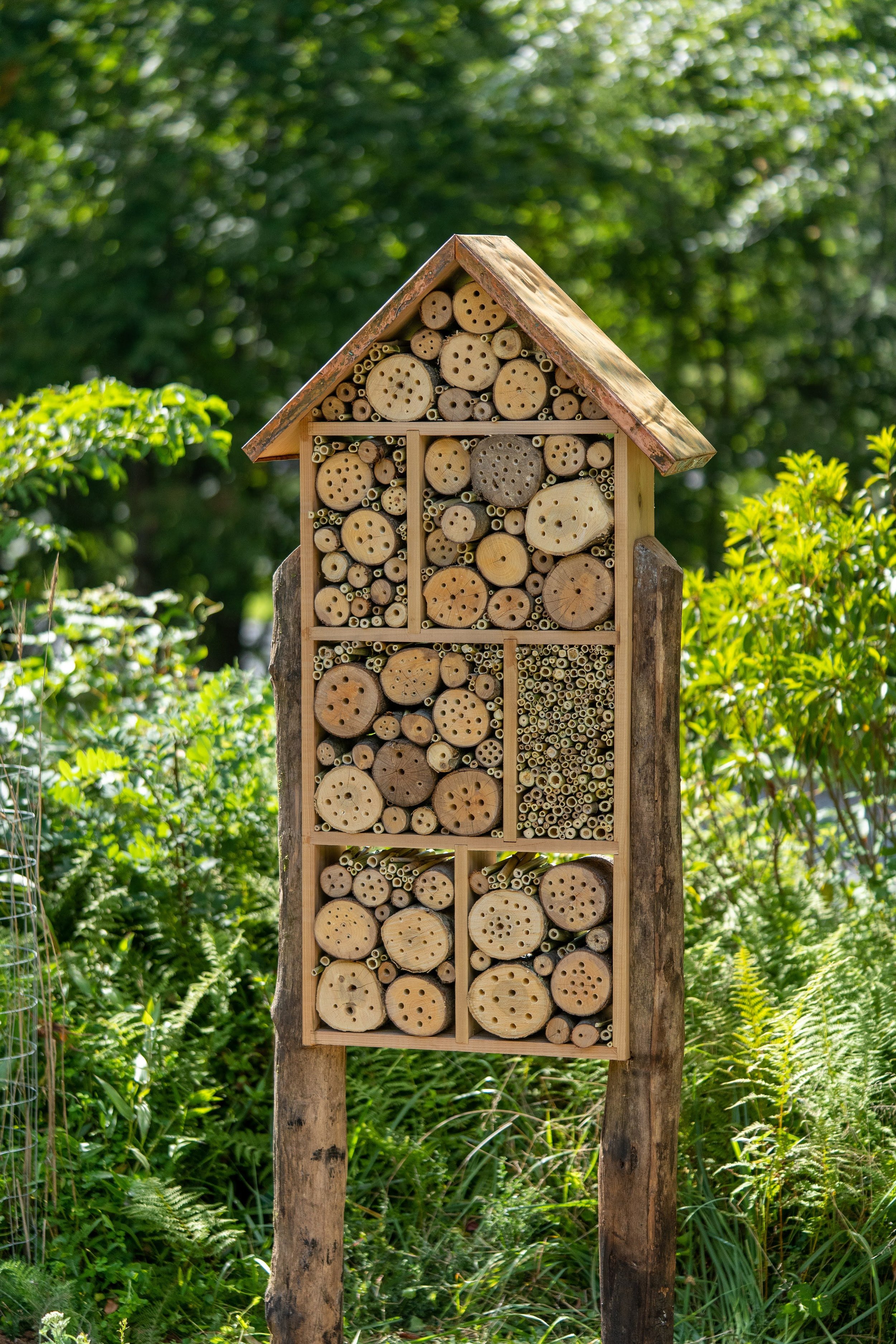
The Bee & Bee - Blue Ridge Discovery Center’s five star-bee hotel (Bee sure to leave us a yelp review!)
It’s World Bee Day! To celebrate, we’re cleaning up our bee hotel here at Blue Ridge Discovery Center and sharing how you can build a bee hotel for your own home.
bee houses support Virginia’s Native solitary bees
While we love our Honey bees (Apis mellifera), they are far from the only hard working bees that deserve our thanks. More than 20,000 species of bee have been described worldwide, and here in Virginia alone, the Department of Conservation and Recreation (DCR) recognizes 458 native species!
Of these native bees, the majority do not live in eusocial hives—many are solitary or sub-social. There’s a huge variety in how these bees live. Some excavate underground burrows, some nest in hollow plant stems, others glue together clippings of leaves, and some don’t build nests at all.

One of our guests—a small carpenter bee—visits the bee hotel!
Why build a bee hotel?
One way we can support native bees is by building a “bee hotel”. These structures supply plenty of nesting opportunities to a few of the local bees. About a third of the native species in our area are cavity nesters, preferring to construct their nests in pre-existing holes in wood or plant stems. Adding a bee hotel to your garden is a great way to interact with some of these native species, and it can be an attractive feature to showcase local biodiversity.
Preserve bee habitat
You don’t have to build an elaborate bee house to help out the native bees. What’s more important is to provide bees with their favorite foods! Support native flowers, especially a variety of species that bloom at different times throughout the year. Not only can this bring extra beauty to your garden—these plants are enormously important to countless native species, including the bees.
Of course in the wild, these bees find places to nest on their own in unimpacted environments, which you can help protect on your property. Designate a few areas to avoid mowing, tilling, or treating lawn with fertilizers and pesticides to prevent destroying miner and cellophane bee nests. If you trim plants—especially perennials and annuals with pithy stems—leave a few of those clippings behind, as they can be great habitat for mason bees, sweat bees, and leaf cutters
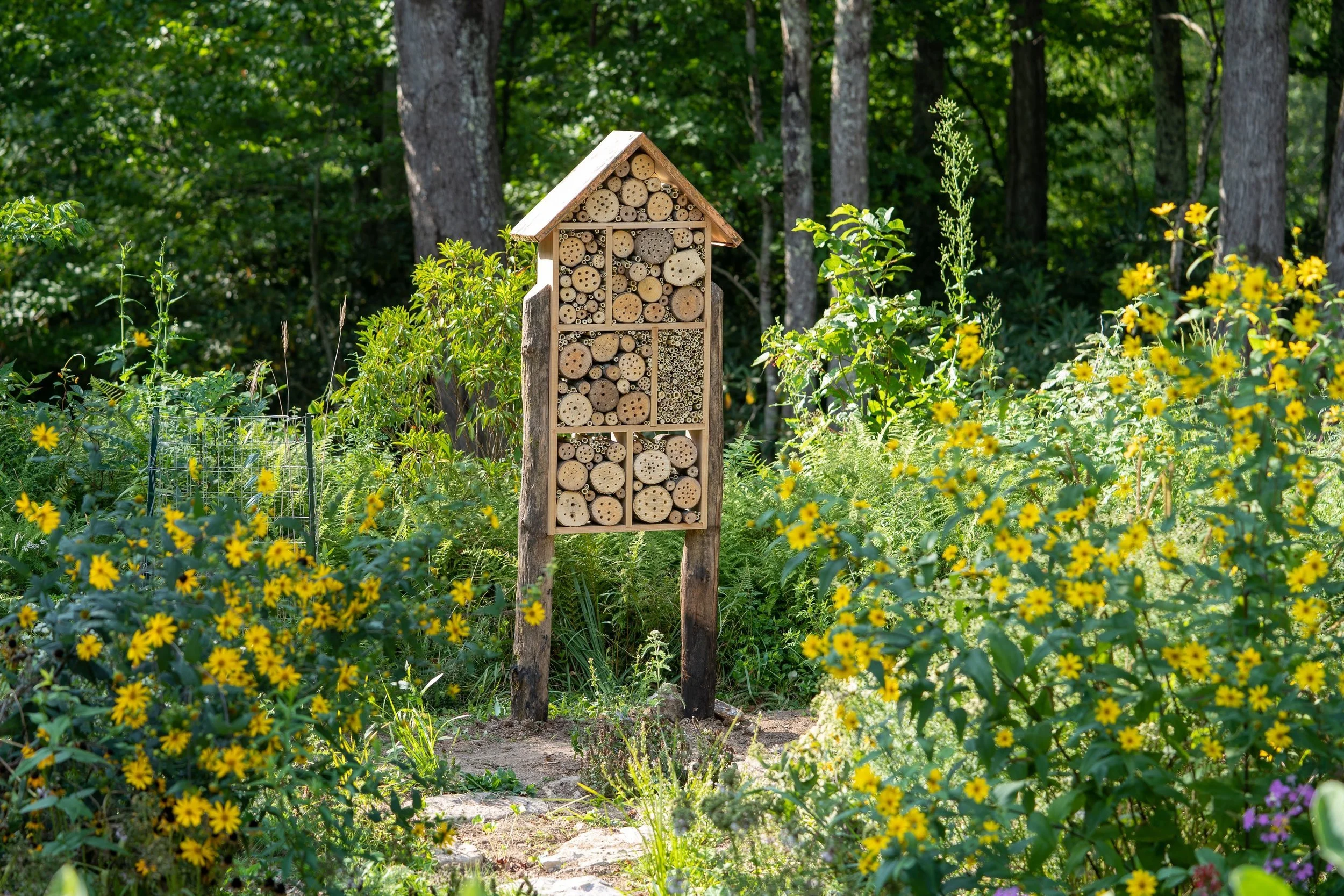
It’s important to provide ample bee habitat and food sources near the bee hotel!
HOw to build a bee hotel
Materials:
Untreated wood boards
Wood screws
Signpost
Several branches at least 2” diameter
Dried plant stems
Tools Needed:
Circular saw
Post driver
Reciprocating saw (or chainsaw)
Cordless drill (drill press is better)
Various woodboring drill bits ranging from 3/36” to 3/8"
*Avoid using treated wood, wood glue, and wood stain or paint as the chemicals in these products can be harmful to insects*
instructions
Select the location of the bee hotel.
Consider placing the box where it will not be disturbed and can be warmed by the sun, especially in the morning and afternoon. Also consider orienting the box so its front faces south or southeast to receive plenty of sun. The box should be around four feet high, but as long as it is above grass level, the height is not crucial.
Plan the construction of the bee hotel.
The dimensions and size of the frame are not important, the species of bee who will use pre-existing holes do not seem to mind living close to each other. The bee hotel frame can be a large wooden box like we have at the center, or you can be more creative. The frame could also be a large pot, stacked bricks or stone, even old cans. Just make sure the frame has a roof to shed rain, is able to drain when wet, and can hold the nesting materials without falling apart.
Construct the frame.
Build the frame with untreated wood and screws, or other materials that are not chemically treated. Set the signpost in the ground with a post driver. Affix the box with the bolts and nuts.
Prepare the nesting holes.
Cut branches into segments around 10 inches long. Drill several holes into the segments, with diameters varying from 3/32” to 3/8". Holes should be at least six inches deep, but avoid drilling all the way through.
Fill the frame with nesting holes.
Stack the wood into the bee hotel and fill in the spaces with cut plant stems. Try to pack the stems in tightly, they will help prevent the wood from being knocked out by especially strong gusts of windKeep up with maintenance.
Mold, mites, bacteria, fleas, and other dangers to the bees can build up over time. To keep the nests healthy, consider replacing the hotel’s contents every few years. This should be done around mid-May, as most of this year’s generation should have emerged, and the bees may have only just begun constructing their nests. Remove the old wood and plant stems and scatter them nearby, so any bees that are still in them still have a chance. Replace the bee hotel contents with new drilled wood and stems.
You might notice a lot of leeway in these instructions—and that’s on purpose! Bee houses can take whatever form you want them to—so use materials readily available to you and get creative with it! The most important thing is keep up maintenance on any bee houses you build to keep the inhabitants healthy!
Even if you can’t build a bee hotel this World Bee Day, take some time outside to thank some of these incredibee hard workers!
