
Camera Trapping: The Noninvasive Way to Capture Wildlife
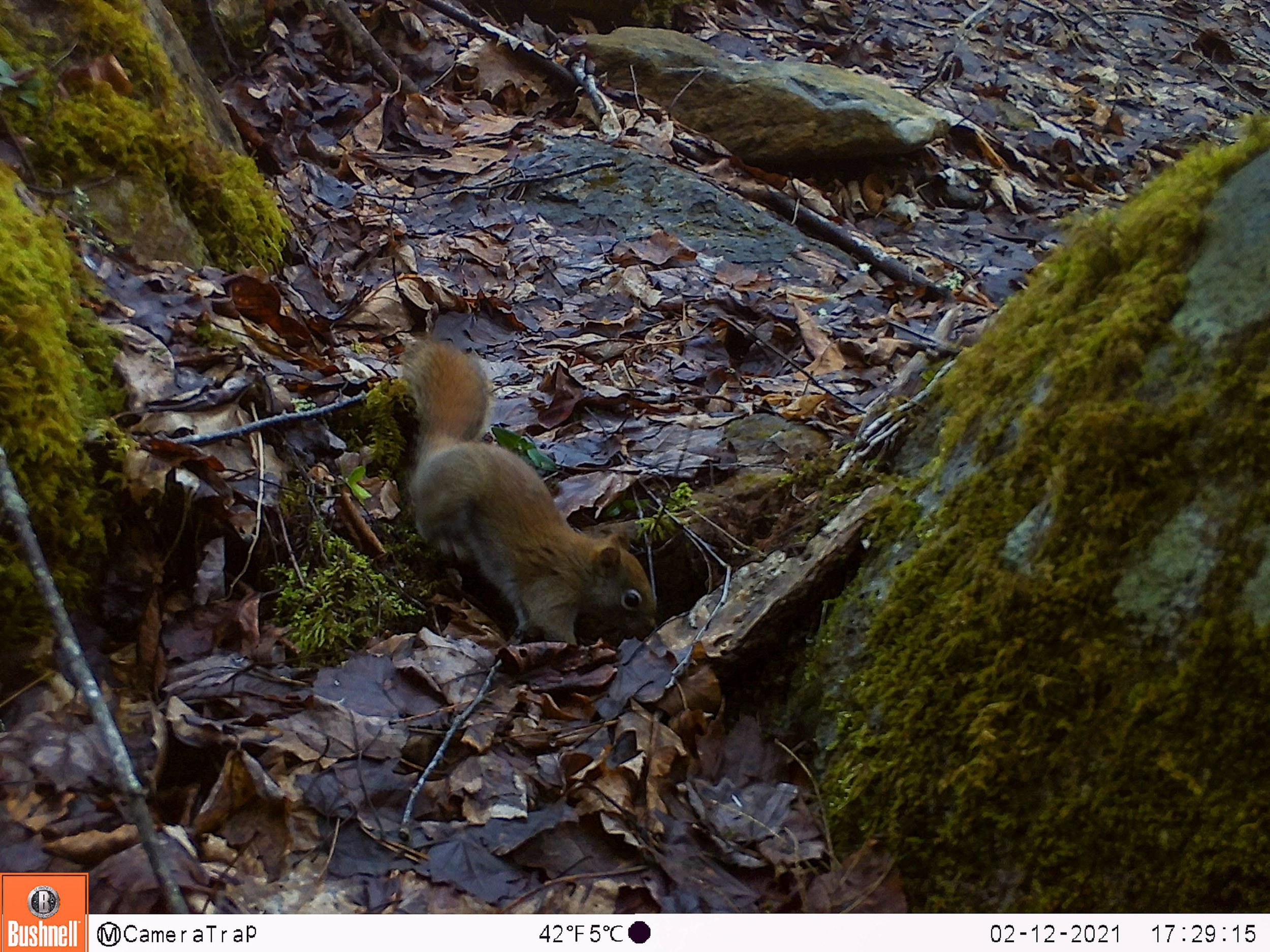
How often do you get to see a bobcat in your backyard or on a hike through the woods? How many times do you run into a bear by a creek? Maybe a mink or a weasel scurrying around in the leaf litter? The odds are that you likely have never experienced this, or if you have, it only happened once or twice. There is so much wildlife roaming the woods that we almost never get to see. So how can we monitor these populations if we can’t see them? Enter the camera trap, one of the most important tools in wildlife monitoring.
What is a camera trap?
Camera traps have been around for over a century, however it's only been in recent years that they have become a popular form of data collection. Nowadays they are readily accessible pieces of equipment that are used by a large variety of people, including hunters, biologists, photographers, and people that just want to see what they might find!
So what is a camera trap, exactly? It’s a camera hooked up to an infrared sensor that detects motion and body heat. When the sensor detects something with a heat signature moving, it either snaps a quick photo (or multiple, depending on your settings) or takes a short video. This camera is hidden in an enclosure that is designed to withstand the weather conditions of an area as well as camouflage the camera, usually with typical green leaf camouflage or snow camouflage for snowy environments. All of the photos and videos the camera takes are stored on an SD card, which can be plugged into a computer to retrieve the data.
What are camera traps used for?
Why are camera traps such an important tool for wildlife monitoring? The ability to document verified occurrences of different species is an invaluable resource for monitoring wildlife in an area. Camera traps are noninvasive and often camouflaged to the point that you might know it’s even there, making it the perfect tool for wildlife monitoring! Camera traps can be installed and operated with minimal disturbance to habitats and wildlife, increasing the chances of capturing them moving about normally in their habitat. No need to worry about the battery dying either–the battery life of the camera traps nowadays is impressive, even more so if the camera trap has a built-in solar panel. This allows the camera to be set out for weeks or months at a time without anyone having to go monitor the plot. One camera trap works especially well as part of a system–you can set up a large plot with numerous cameras to increase wildlife documentation. If you can identify an individual of a species, you can even track their movements throughout the habitat.
Camera trapping at the Mount Rogers Winter Naturalist Rally
Camera traps aren’t just for the scientists! With how accessible these cameras are, you could also get and install one on your property and find out just who your neighbors are.
Wanna learn more about camera trapping and how to set up your own? Come join us at the Blue Ridge Discovery Center’s Mount Rogers Winter Naturalist Rally on February 21! Brandon Bernhardt, district wildlife biologist with Virginia DWR, will be leading a program on the basics of camera trapping out in the field. Topics and demonstrations will include camera set-up and settings, placement, and wildlife photo ID. Register for the Winter Rally here: https://blueridgediscoverycenter.org/mrnr-winter.
