
Bat Hibernation
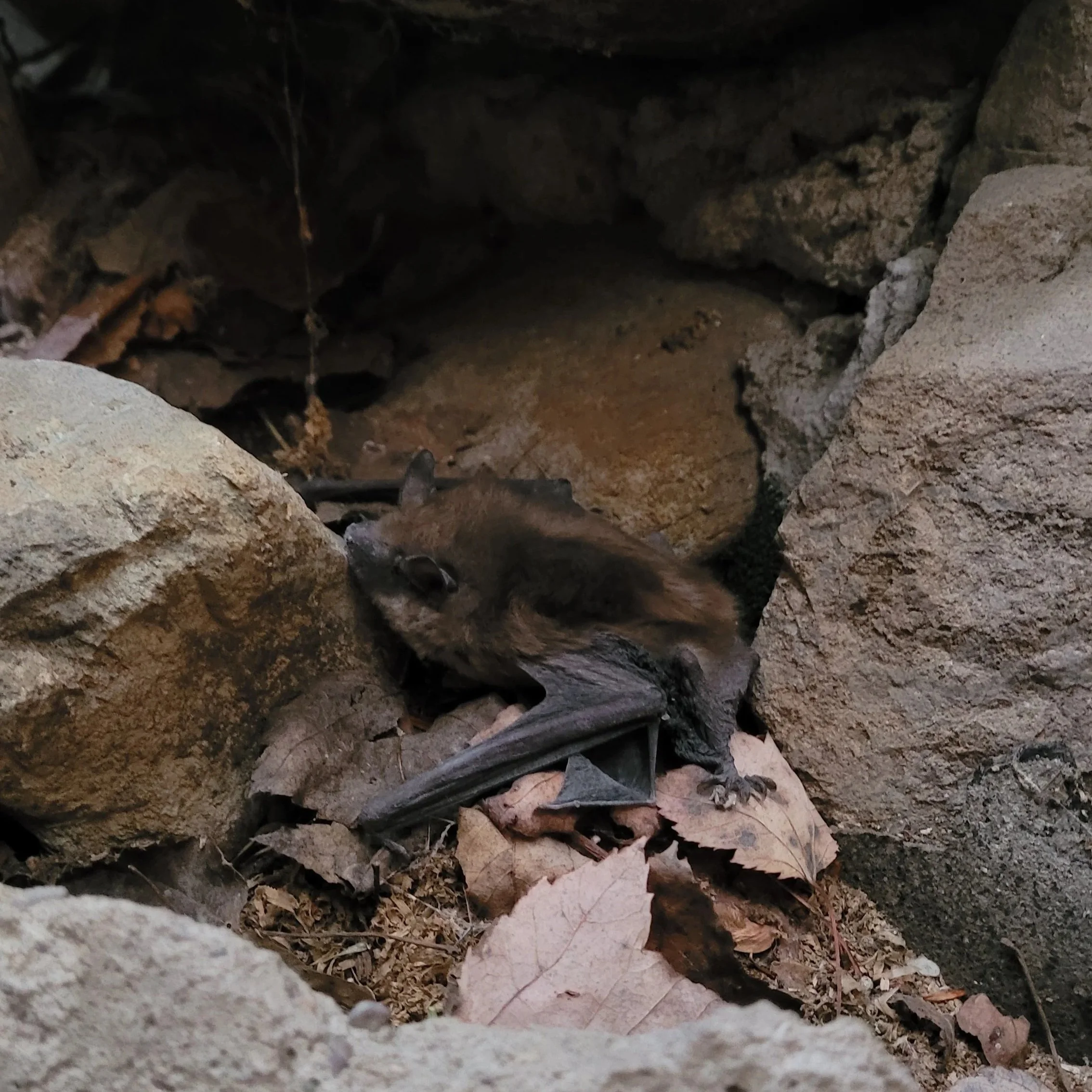
A big brown bat hibernating underneath the cottage at BRDC.
Hibernation as a Winter adaptation
When winter comes around, and the last of the bugs disappear until the spring, a particular group of flying mammals must find a way to survive the winter without their only food source. Bats are the only true flying mammals, belonging to the order Chiroptera. There is a massive amount of diversity found in bats, with Chiroptera being the second largest order of mammals after rodents with around 1,500 different identified species. Of these species, the majority are insectivorous, with the rest being frugivores, nectivores, or, in the case of the vampire bats, sanguinivores. Within the Blue Ridge, all of the bats species that live there are insectivorous bats, also classified as microbats.
Insectivorous bats eat an astonishing amount of insects on a daily basis, with some bats eating several thousand per night. They are remarkable predators, using high frequency pulses of sound to echolocate insects in flight with incredible accuracy and precision. Their success as predators and the quantity of insects they eat each night make them important parts of the ecosystem as regulators of insect populations, particularly mosquito populations. With how many insects they need to eat each day, their metabolism is incredibly fast. So how could bats possibly survive in the winter when access to insects is incredibly limited?
Along with groundhogs and chipmunks, bats are one of the few groups of mammals in the Blue Ridge that enter a state of true dormancy or hibernation. During the fall, bats will increase their food consumption to build up extra body fat. This extra body fat aids in insulation from the cold as well as functioning as a reserve of calories that the bat can burn throughout the winter. When entering into the dormant state, bats will drastically decrease their biological functions. This includes reducing their heartrate, metabolism, and respiratory rate drastically. Their heartbeat is slowed from 200 beats per minute to as low as 10 beats per minute! Each breath is taken minutes apart and their organs slow down their functions. This state of low activity and reduced metabolic rate is called torpor, a state of efficient energy consumption that lets bats go for up to a month without drinking, eating, or moving.
Rarely do bats actually have to stay in torpor for such a long time, only if the winter is especially harsh in more northern habitats. Most bats in the Blue Ridge will enter torpor for short periods of time, usually a couple of hours in a day up to a week, during particularly cold spells of weather. Interrupting torpor allows the bat to increase its body temperature for a short period of time before going back into torpor, preventing them from fully freezing to death.
Winter migration to hibernacula
Some species of bats will even migrate to seek warmer areas for their hibernacula, the place they choose to hibernate. Hoary bats (Lasiurus cinereus) will migrate in the hundreds to warmer locations, whether that be somewhere closer towards the equator like Mexico, or somewhere lower in elevation. Eastern red bats (Lasiurus borealis) and silver-haired bats (Lasionycteris noctivagans) are also known to migrate to warmer locations, although in less massive groups.
In the Blue Ridge, elevational migration from high mountain tops to lower elevation hibernacula is common in hoary bats, and while some populations migrate to lower latitudes, many populations of these migratory species reside in the Blue Ridge year-round.
Microbats can be sorted into two groups based on where they choose to establish their hibernacula. Some bats will choose to hibernate in caves and other bats will choose to hibernate in trees. Bats that hibernate in caves will either hibernate on their own or in small groups, or in massive colonies huddled together. Some of these cave colonies can contain thousands to hundreds of thousands of bats at one time. Tree bats choose to establish their hibernacula in tree cavities or underneath loose bark. Sometimes they will instead hibernate in wood piles, rock crevices, or houses when they can slip into an opening.
Cave bats in the Blue Ridge include species like the Virginia big-eared bat (Corynorhinus townsendii virginianus), little brown bat (Myotis lucifugus), and Indiana bat (Myotis sodalis). Tree bats include Eastern red bats, hoary bats, and silver-haired bats. The big brown bat (Eptesicus fuscus) is more of a generalist when it comes to picking their hibernacula, going into caves or tree cavities, but they have shown a preference for human-made structures like attic spaces, barns, and chimneys.
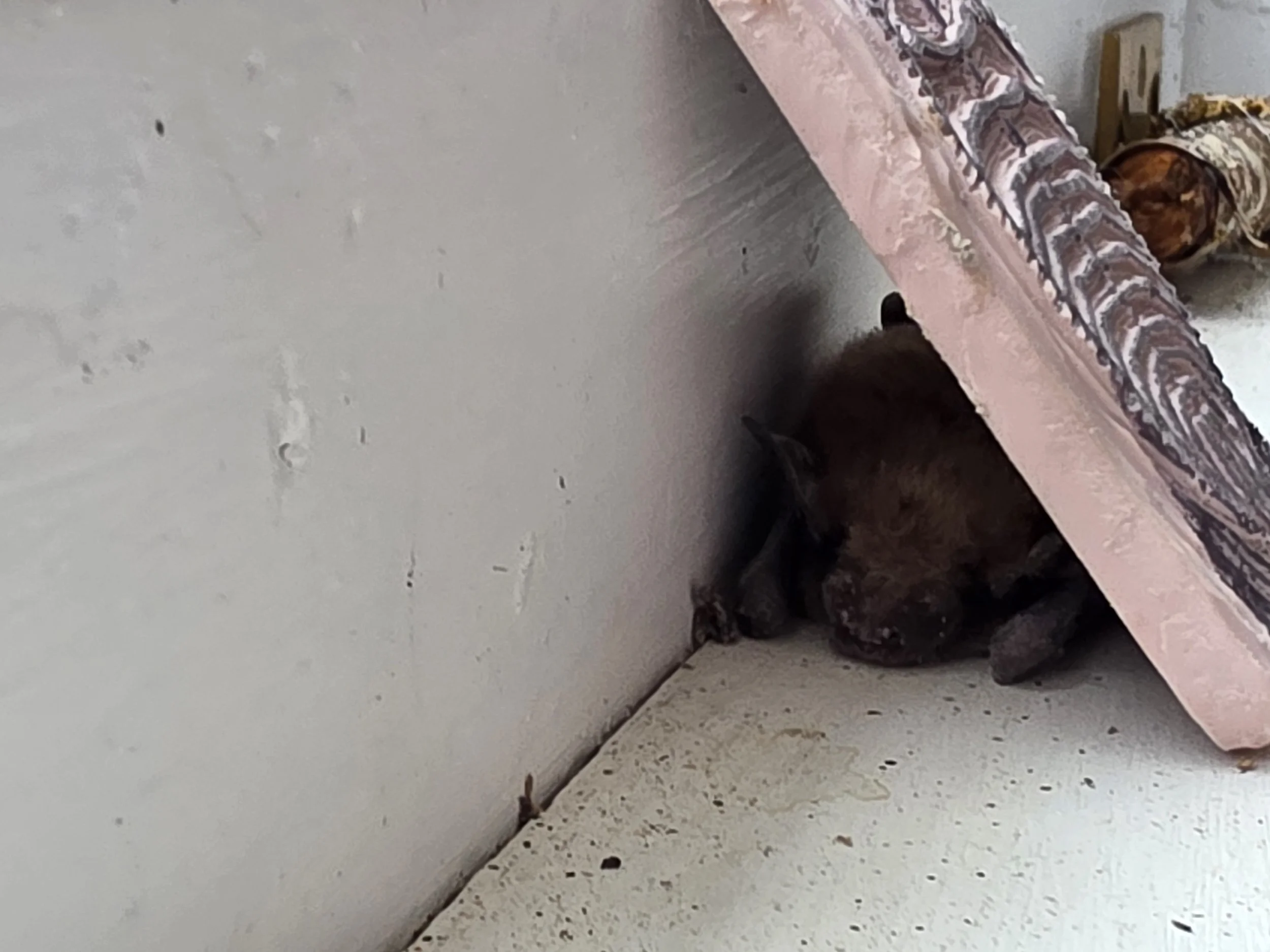
A big brown bat that decided to hibernate in the BRDC basement! We did decide to very carefully transfer this bat to another protected location where he wouldn’t be awakened early and starve.
threats to hibernating bats
Being roused from hibernation is a deadly issue for bats, as awaking too early causes them to expend too much energy and burn up fat stores before spring, leading to starvation and dehydration. This is a large part of why white nose syndrome (Pseudogymnoascus destructans) has caused such massive die offs in bat populations across North America. The fungus prefers to grow in cold environments and will grow as a white “fuzz” around the mouth and noses of bats as they hibernate. Bats afflicted with white nose syndrome awaken from torpor more frequently, raising their body temperatures more than necessary and expending energy stores too quickly.
Should you find a bat hibernating in a human-made structure, it’s best to leave it alone. Bats pose no danger to humans and should only be moved if they are compromising a function of the structure or the bat is in more danger being left there than relocated. Relocating bats should be done carefully, preferably by wildlife officials. Especially in the winter, releasing a bat could be more dangerous to the bat itself while in hibernation.
