
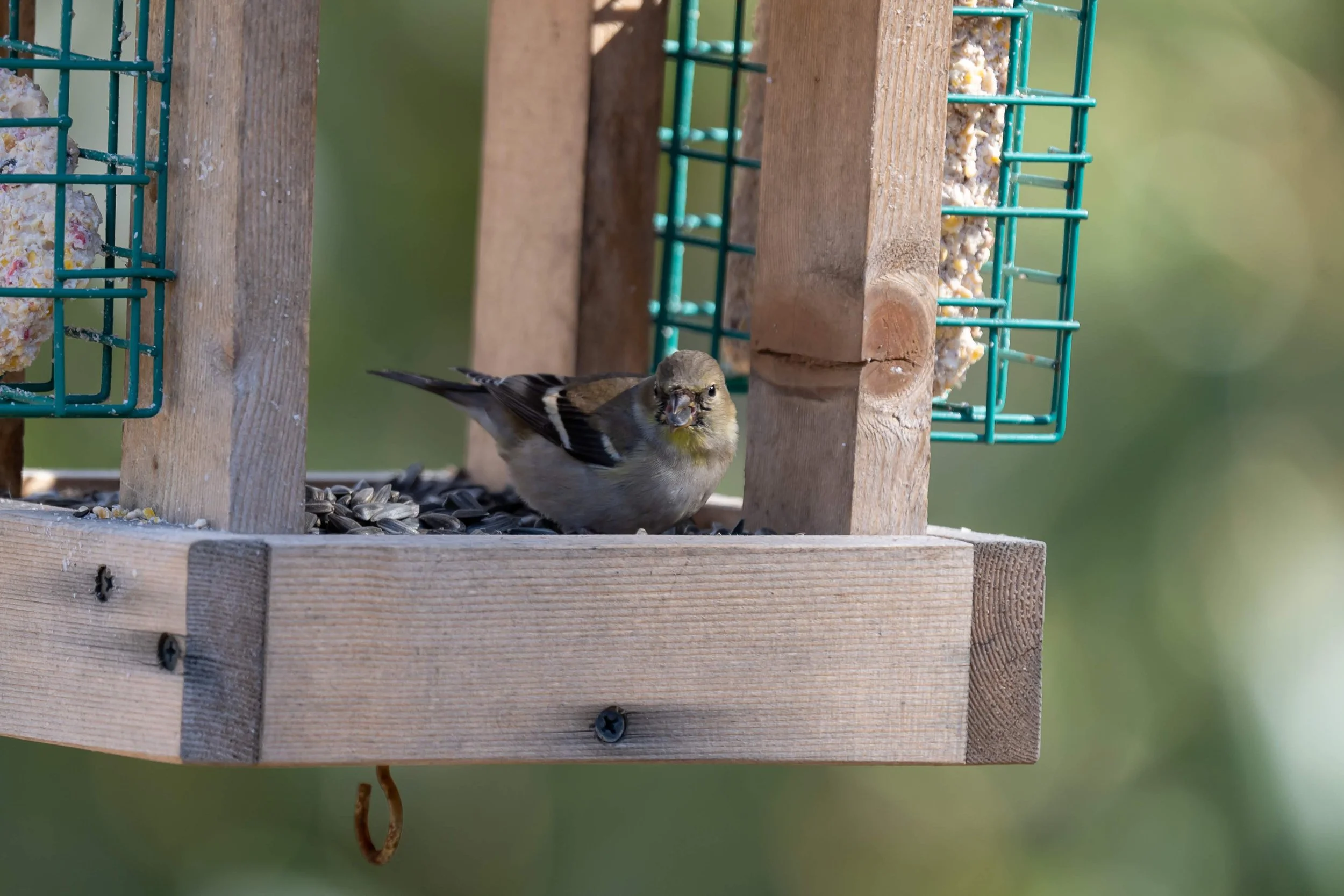
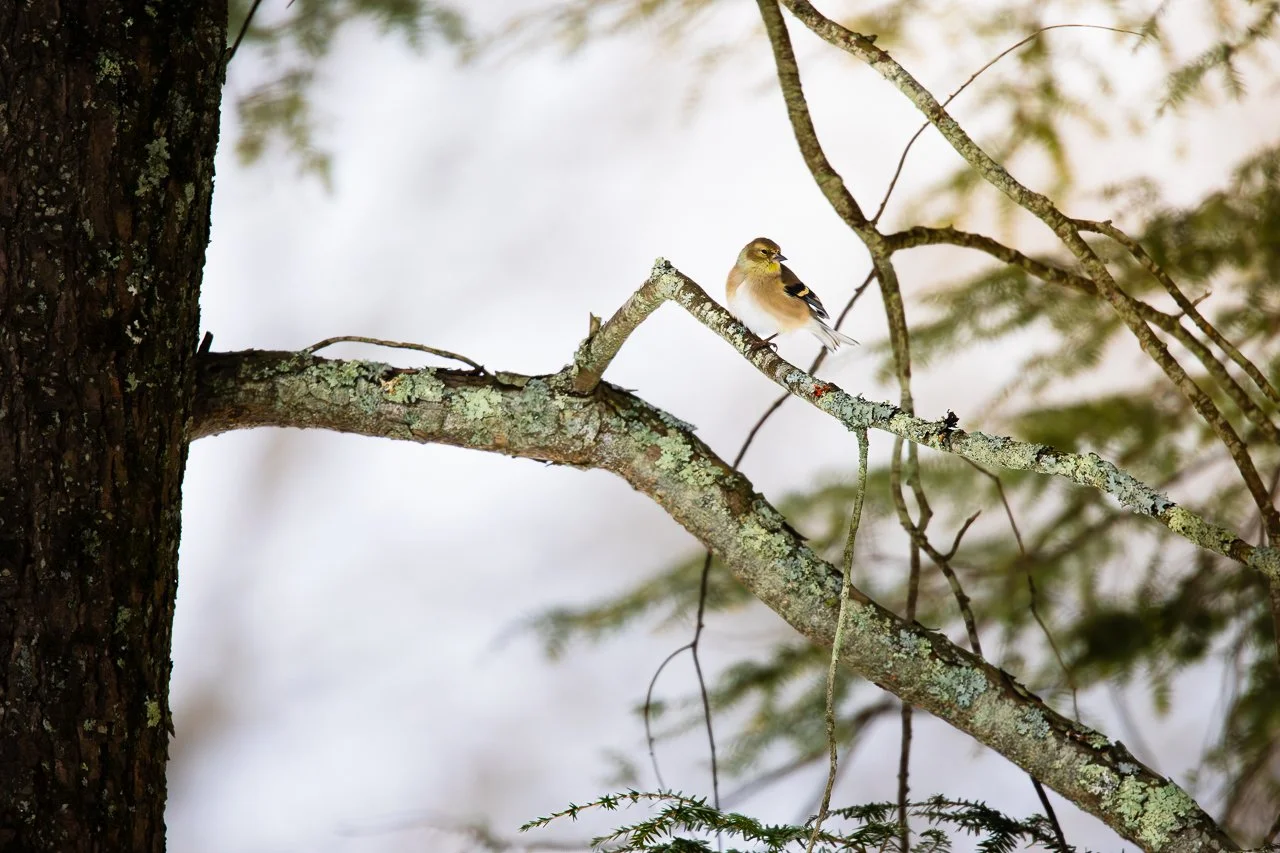
An American Goldfinch (Spinus tristis) visitng a feeder at BRDC.
It can be hard for birds to find food in the winter, especially if there’s inches of snow on the ground! Our winter resident birds can struggle to find a steady source of food to keep their energy stores high in the winter. Luckily, you can help. Setting out a birdfeeder during the winter is a great way to help your local bird populations, and doing so will also give you a great view of some gorgeous bird species and accent your snowy backyard with some life and color! Keep reading for our recommendations for what feeders to use and what to feed them with, as well as what birds you can expect to see this winter.
Food types
When choosing food types, you have many options depending on the time of year and what birds you want to attract and feed. For winter birds, it is important to focus on high calorie foods with lots of fat to give the birds the energy they need to survive the cold.
Common seed choices include black oil sunflower seeds, thistle, peanuts, and suet. Sunflower seeds are a great choice because most bird species will happily take them, but they are especially good for birds like cardinals, chickadees, and titmice.
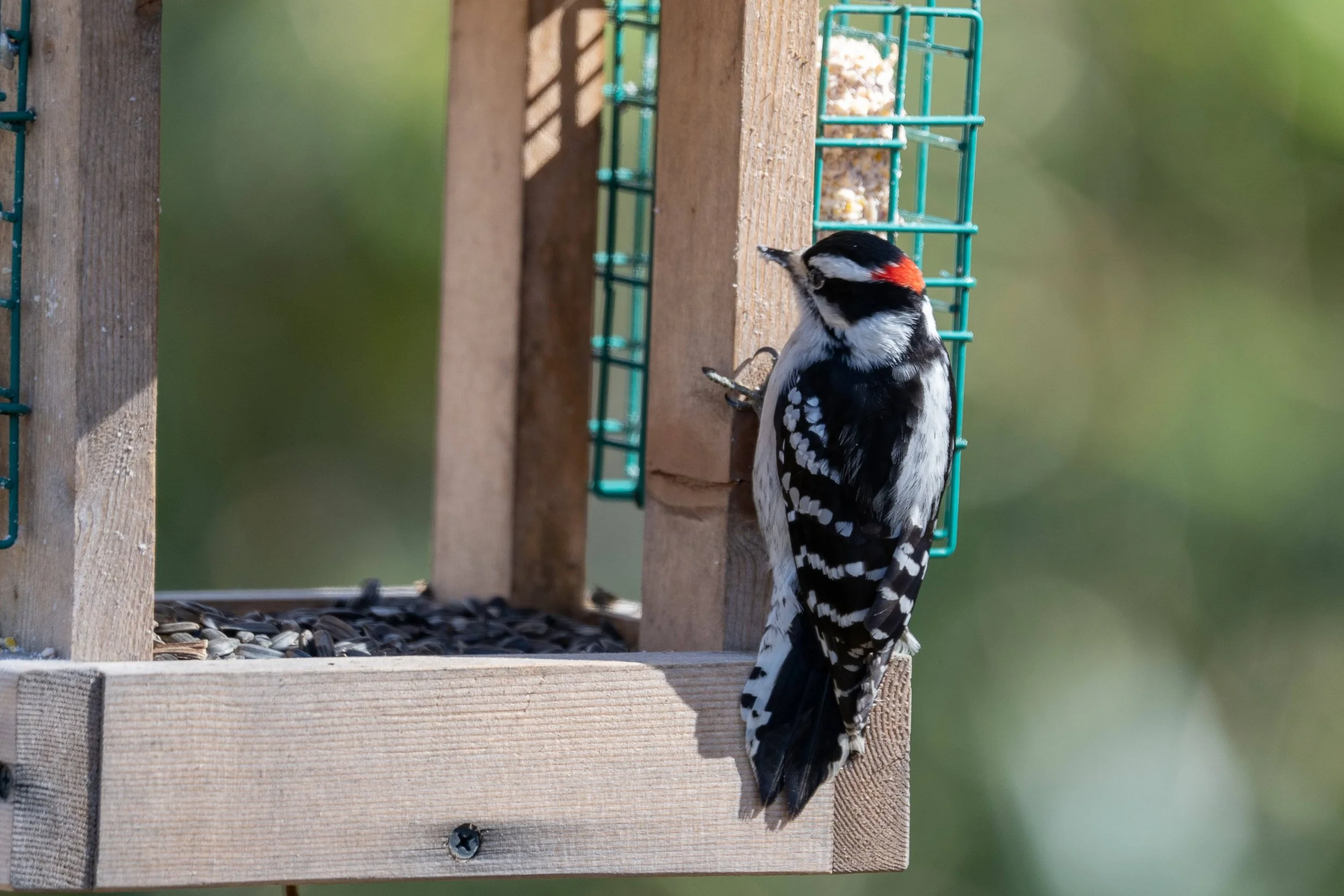
A Downy Woodpecker (Dryobates pubescens) snacking on suet.
Thistle is a great, high-fat addition to birdfeeders that is particularly favored by finches like the goldfinch. It’s great on its own, or it can be paired with sunflower seeds depending on your birdfeeder type.
Unshelled peanuts, either in halves or crushed, make for a great high fat and high protein food for your birds. Many birds will take peanuts, but titmice and bluejays are especially fond of them.
Suet is the most calorie dense food option with the highest fat you can offer your birds. Suet is essentially rendered beef fat or lard mixed with seeds, nuts, or mealworms and can be found in stores as cakes. (You can also make it yourself for a fun, albeit messy, craft!)
Don’t put suet in regular birdfeeders! Place the suet on a platform or invest in a special suet cage feeder. Suet is a favorite of birds like woodpeckers, wrens, and nuthatches that like to climb on trees.
Feeders
There are several options for birdfeeders to choose from, and it mostly depends on what food you are trying to use and what birds you want to feed.
Tube Feeder
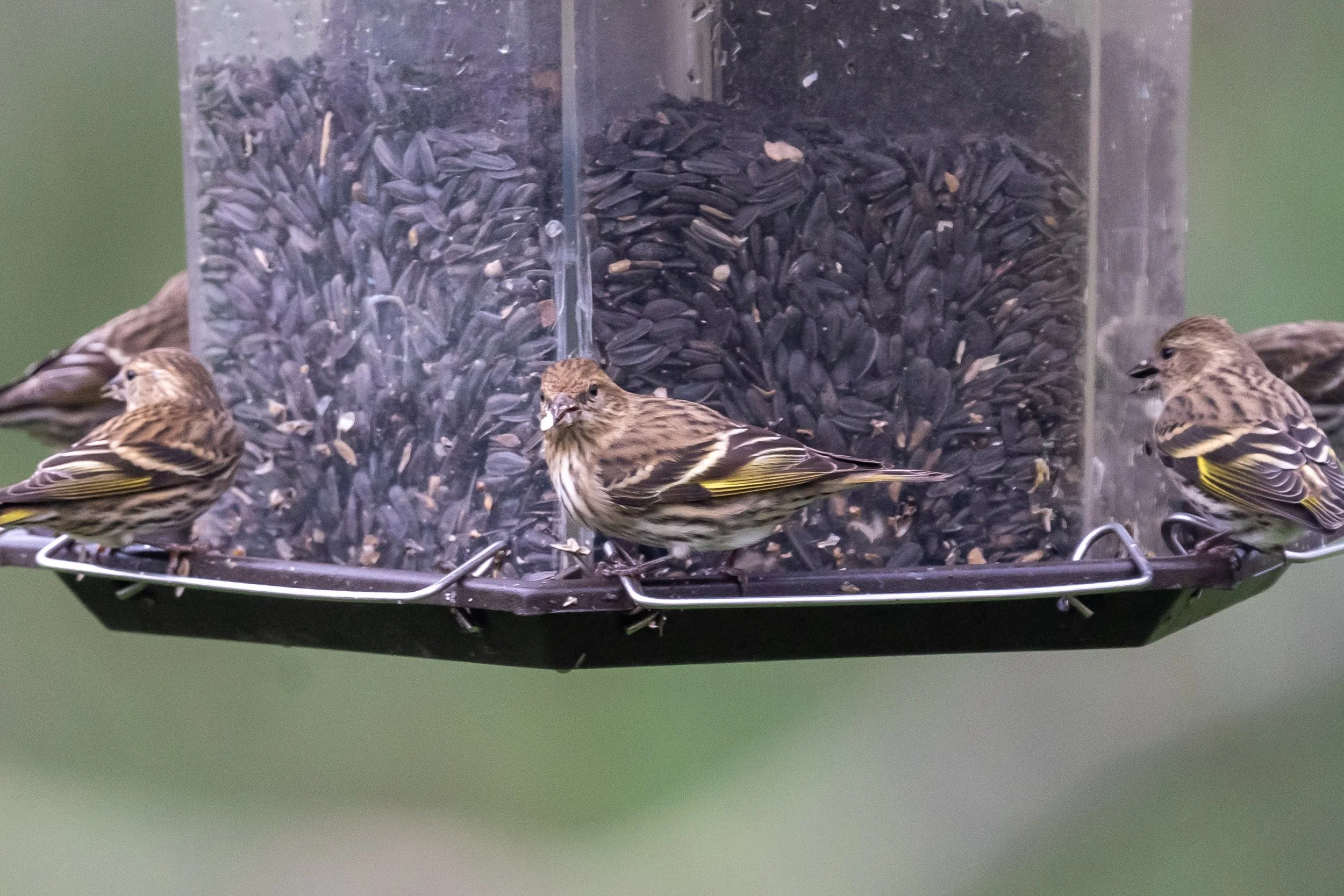
A flock of Pine Siskins (Spinus pinus) enjoying sunflower seeds at this hopper feeder.
One of the most basic and common types of feeders is the tube feeder. This feeder is a tube with multiple openings along the sides that let birds perch and collect seeds through the opening. It is important to consider the food type you use with this feeder because really small food types like thistle and crushed peanuts may fall out. Some tube feeders have mesh sides which are designed for these smaller food types, but will not accommodate larger food due to the fine openings of the mesh.
Hopper Feeder
Hopper feeders are very useful due to their versatility in what foods you can put into them. These feeders work by constantly refilling the bottom tray as birds eat the food, which is supplied by the basin full of food. This style of feeder can hold larger food types like sunflower seeds as well as really small food types like thistle without having it spill everywhere.
Platform Feeder
Another versatile feeder style is the platform feeder, which is a flat board that is either elevated on a post or hung up. Almost any food type can be put on these platforms so they are incredibly versatile. The drawback of platform feeders is that they can be easily raided by squirrels and other wildlife. Mount platform feeders on a post, since hanging platforms can easily swing and spill their seeds.
Suet cages are the best option for putting out suet, since you can place them almost anywhere, including the sides of trees where woodpeckers and nuthatches are likely to be.


Blue Ridge Winter Residents
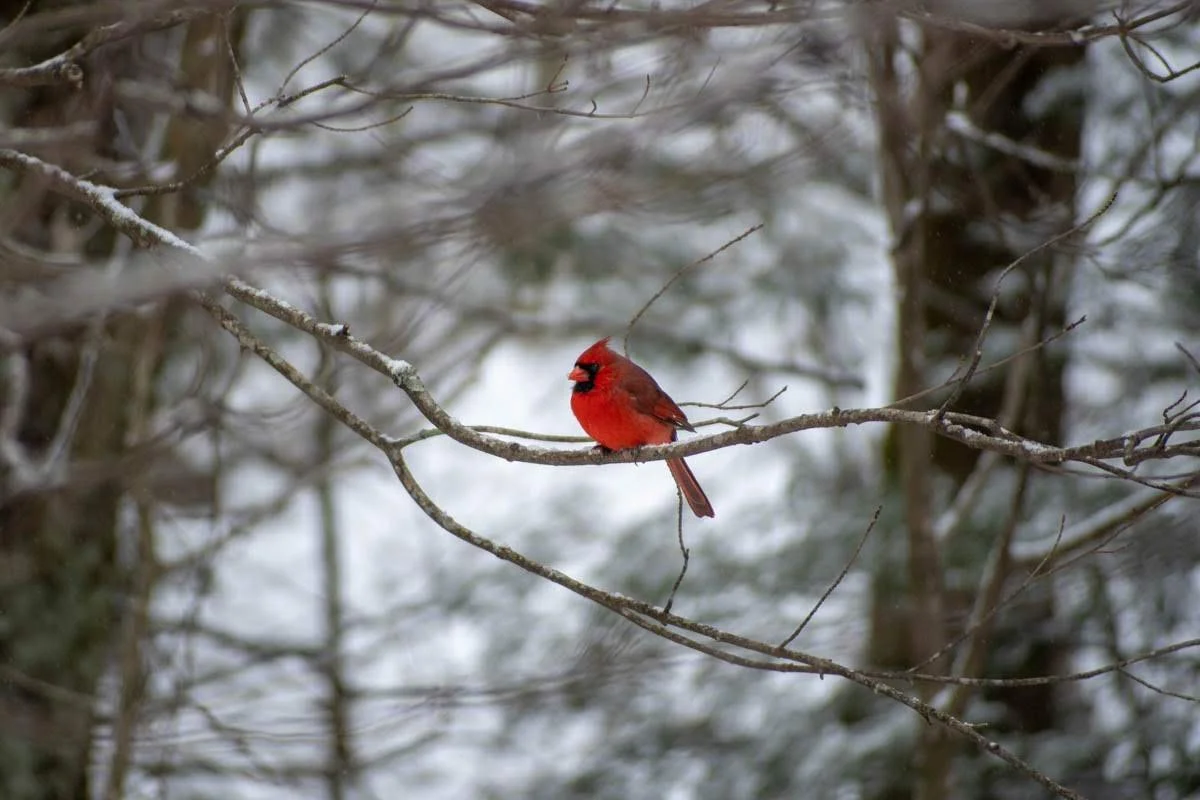
Wondering who might visit your feeder this winter? One of the most dazzling sights to see in your backyard is the official state bird of Virginia, the Northern Cardinal (Cardinalis cardinalis). The bright red of the male’s feathers will stand out brightly against the white snow and they are very fond of sunflower seeds!
Another brightly colored bird you might see in the snow is the Blue Jay (Cyanocitta cristata), a bright blue bird that’s related to crows. They are incredibly intelligent and large compared to other feeder birds, and due to their large size and assertiveness over food, you will likely see all the other birds leave your feeder when they come to feed.
American Goldfinch (Spinus tristis) are also fairly common in Virginia year-round. Males usually have a bright yellow coloration, but during the winter dull to a more olive-green coloration similar to the females. A small patch of bright red climbing up the side of a tree could be a male Downy Woodpecker (Picoides pubescens). These birds are primarily black and white with striking patterns, and the males have a bright red spot on the back of their head!
Not all birds have such bright colorations, but that doesn’t make them any less spectacular! A common sight on feeders, the Tufted Titmouse (Baeolophus bicolor) stands out with its prominent tuft of feather sticking up on its head.
One of the smallest birds you’ll see is the Carolina Chickadee (Poecile carolinensis), whose large black-capped head and round body make it one of the most adorable birds in Virginia. Another very round bird is the Dark-eyed Junco (Junco hyemalis)! These birds typically live in higher latitudes in the northern United States and Canada during the summer and migrate south to Virginia in the winter, but in the high elevations of the Blue Ridge mountains you can find these little birds year-round!
So, if you’d like to see these bird species and more in your yard and want to extend a helping hand to your avian neighbors, go ahead and set up a birdfeeder and fill it with some tasty food to share with them. You will surely be rewarded for your kindness!
