
Bark, Buds, and Branching: Winter Tree ID
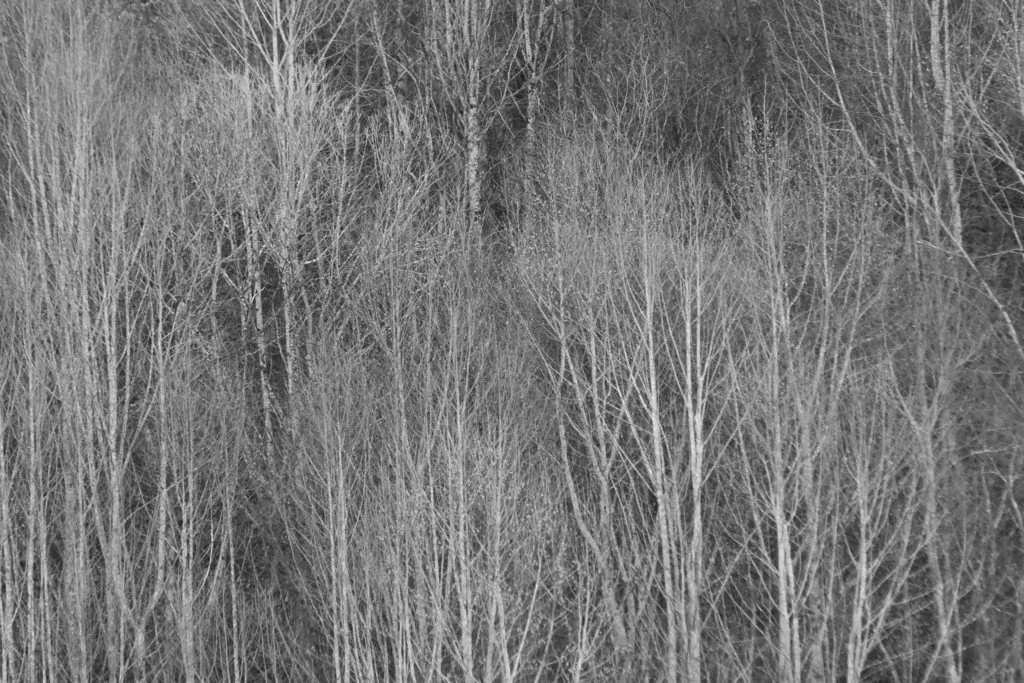
A stand of tulip trees (Liriodendron tulipifera) in winter.
When identifying a species of tree, most people just look at the leaves. This is a great method in the spring, summer, and fall due to the distinctive shapes of the leaves each species has! But in the winter, most trees drop their leaves and are left bare. So, how can you tell the species of a tree without their leaves? Look at what’s left behind! Features like bark, buds, and branching patterns are as as good tools as leaves in differentiating different tree species.
Bark
The best place to start when doing winter tree ID is to look at the bark. Many trees have very distinctive bark that sets them apart from other trees. Take the American Beech (Fagus grandifolia) for an example. The American Beech tree has very smooth bark that is mottled gray and white along the whole length. There aren’t many other trees in the Blue Ridge that have bark that is completely smooth like this.
Another good example is the Yellow Birch (Betulus alleghaniensis)! The bark of the Yellow Birch is a yellow-brown color and peels off in thin, horizontal strips all up and down the trunk.
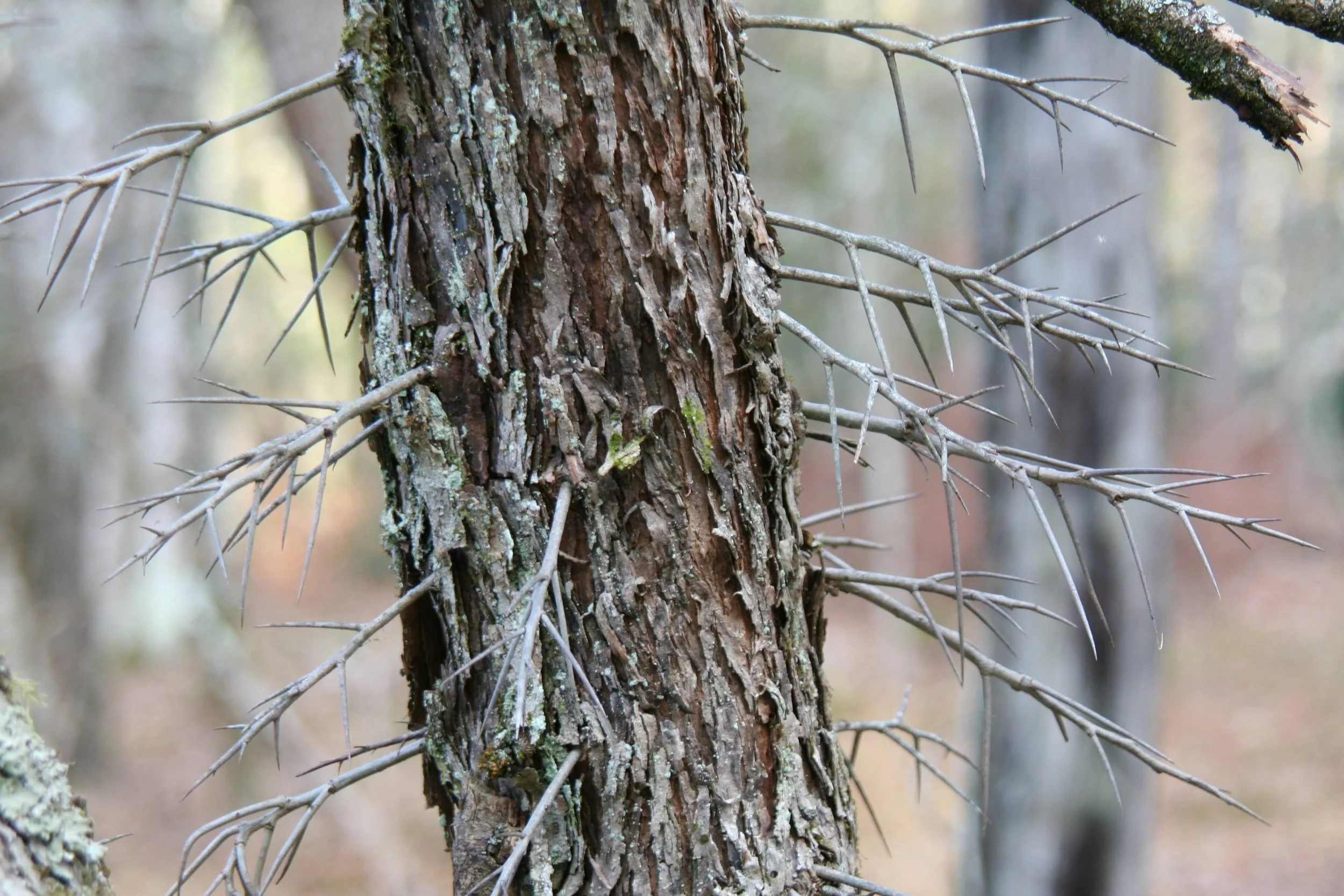
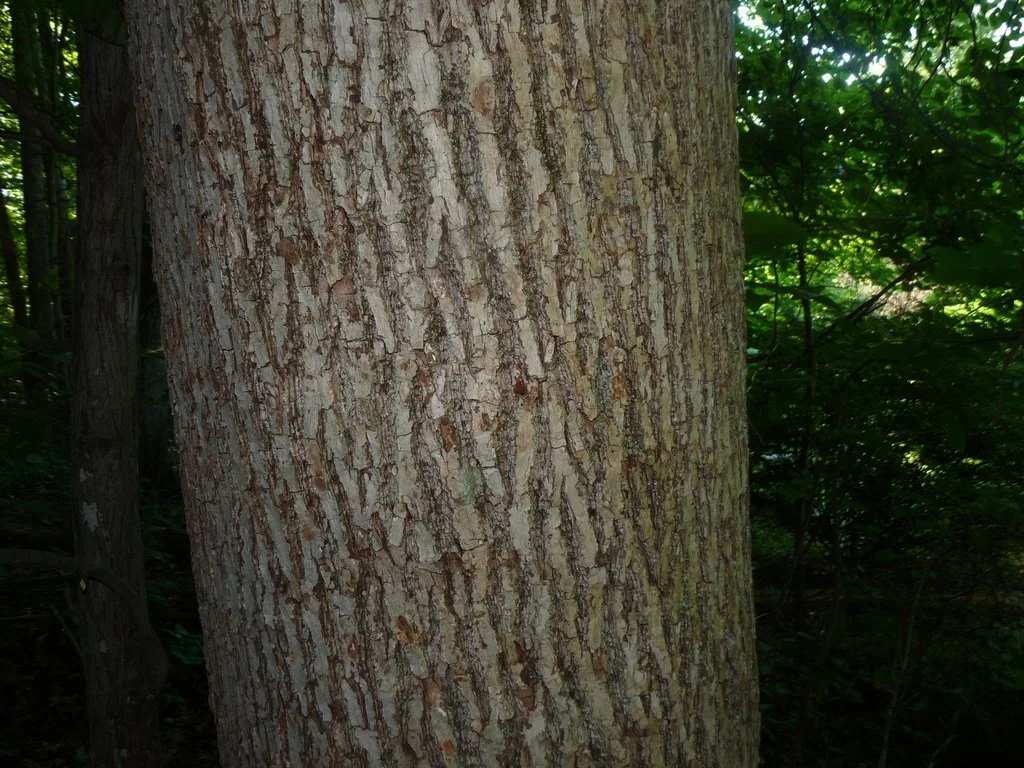
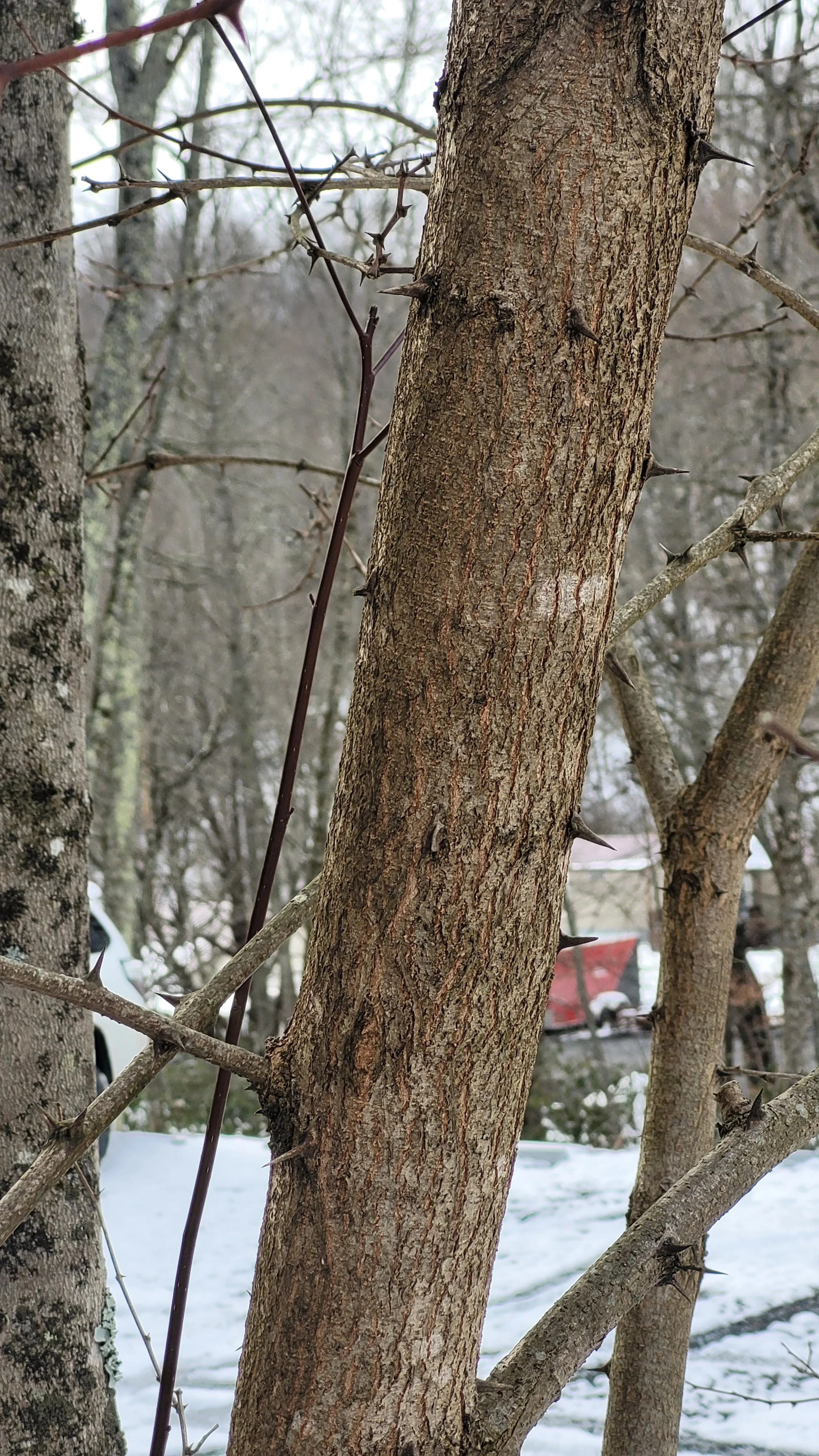
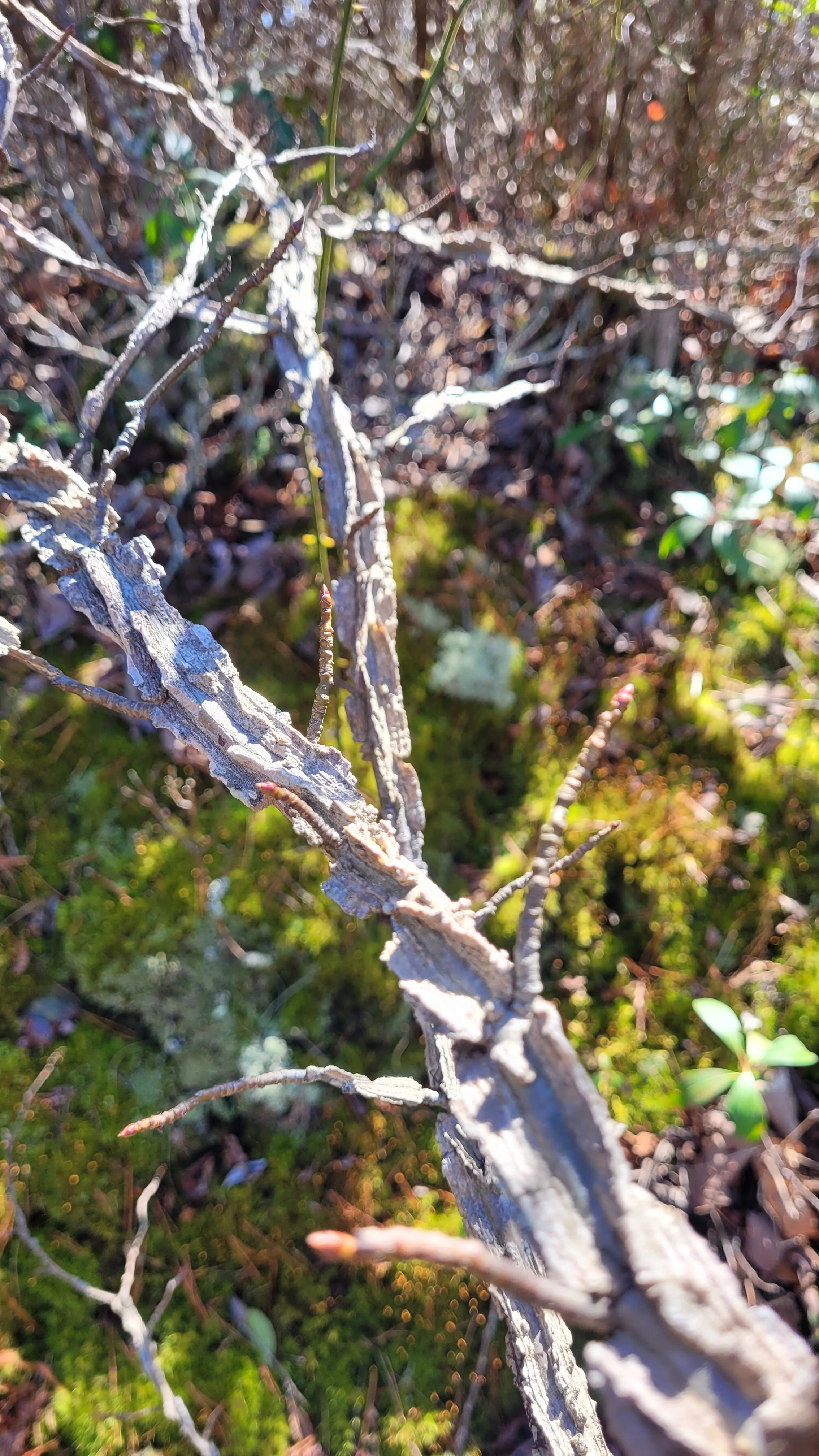
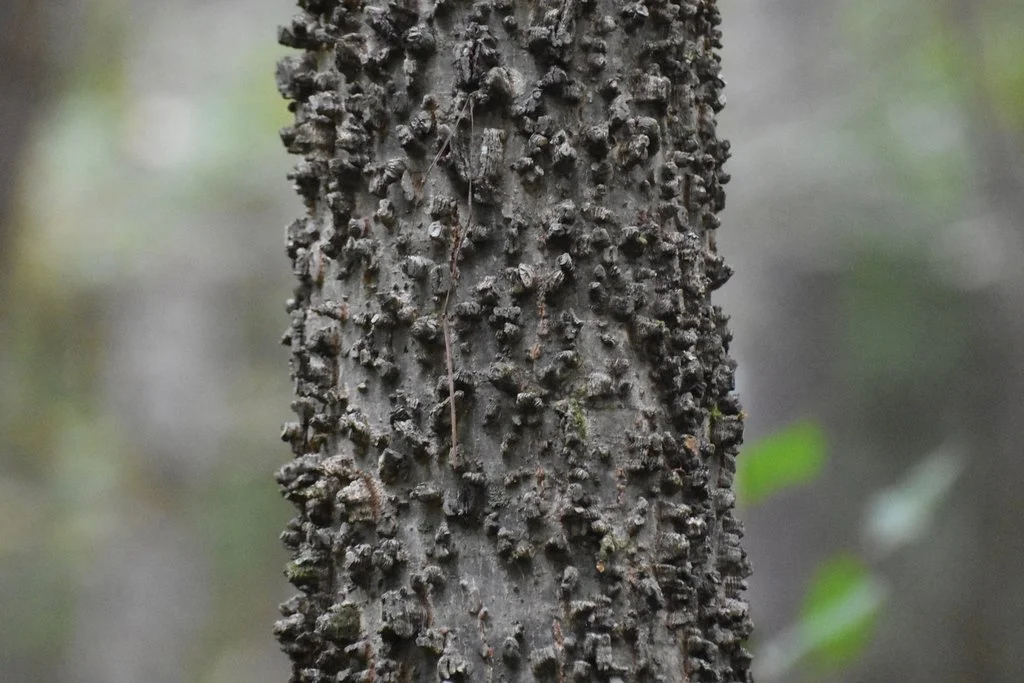
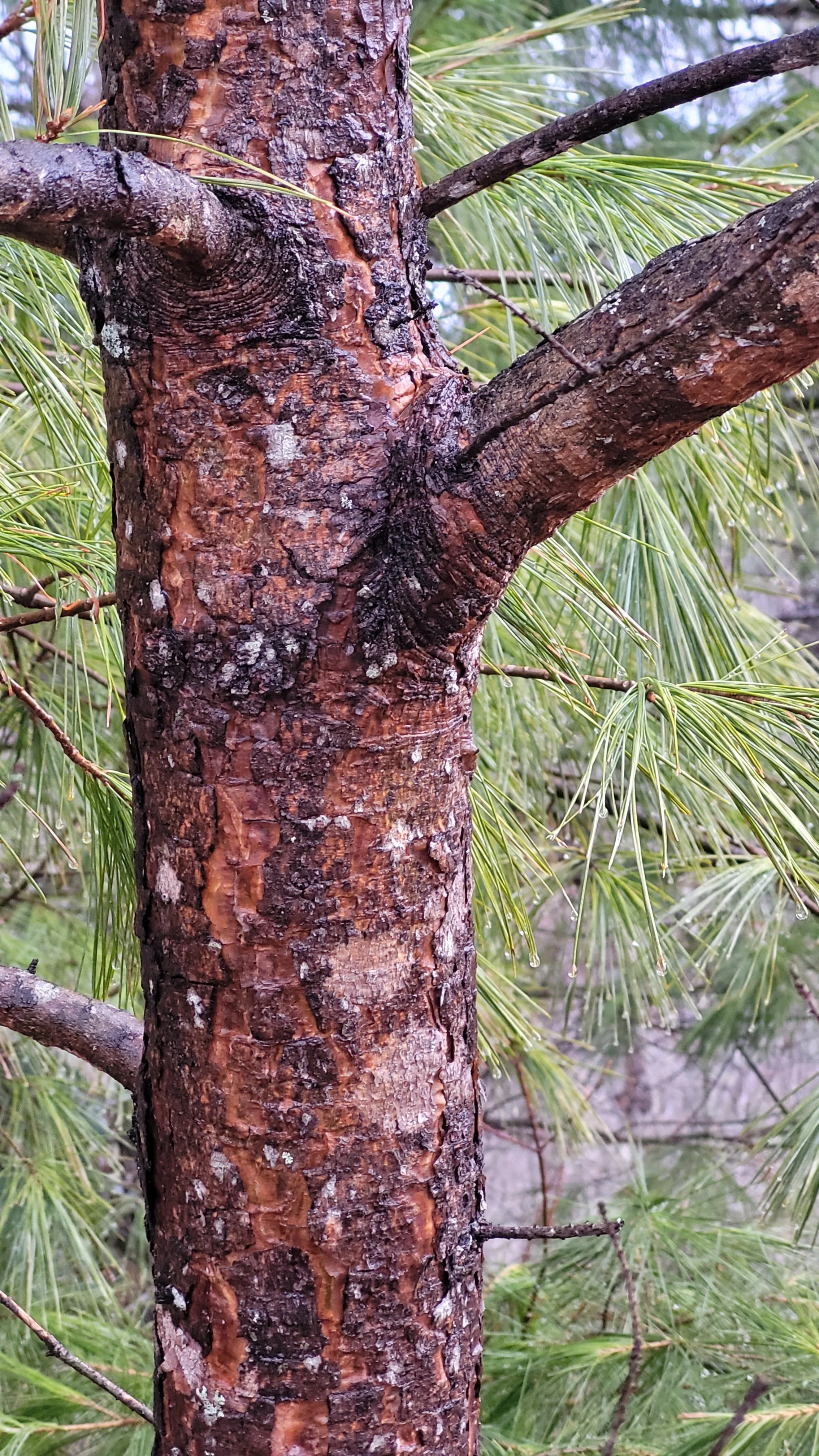
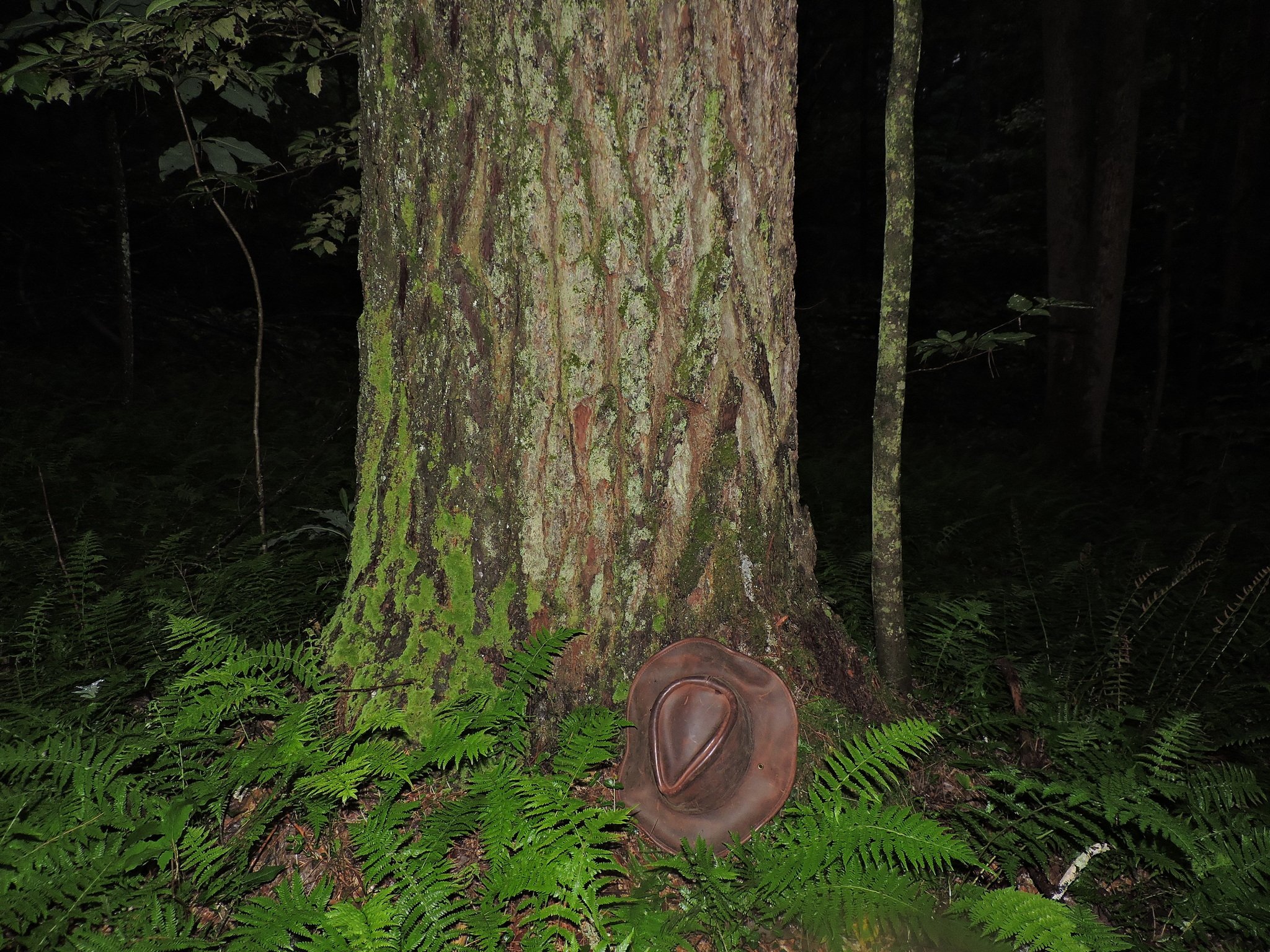
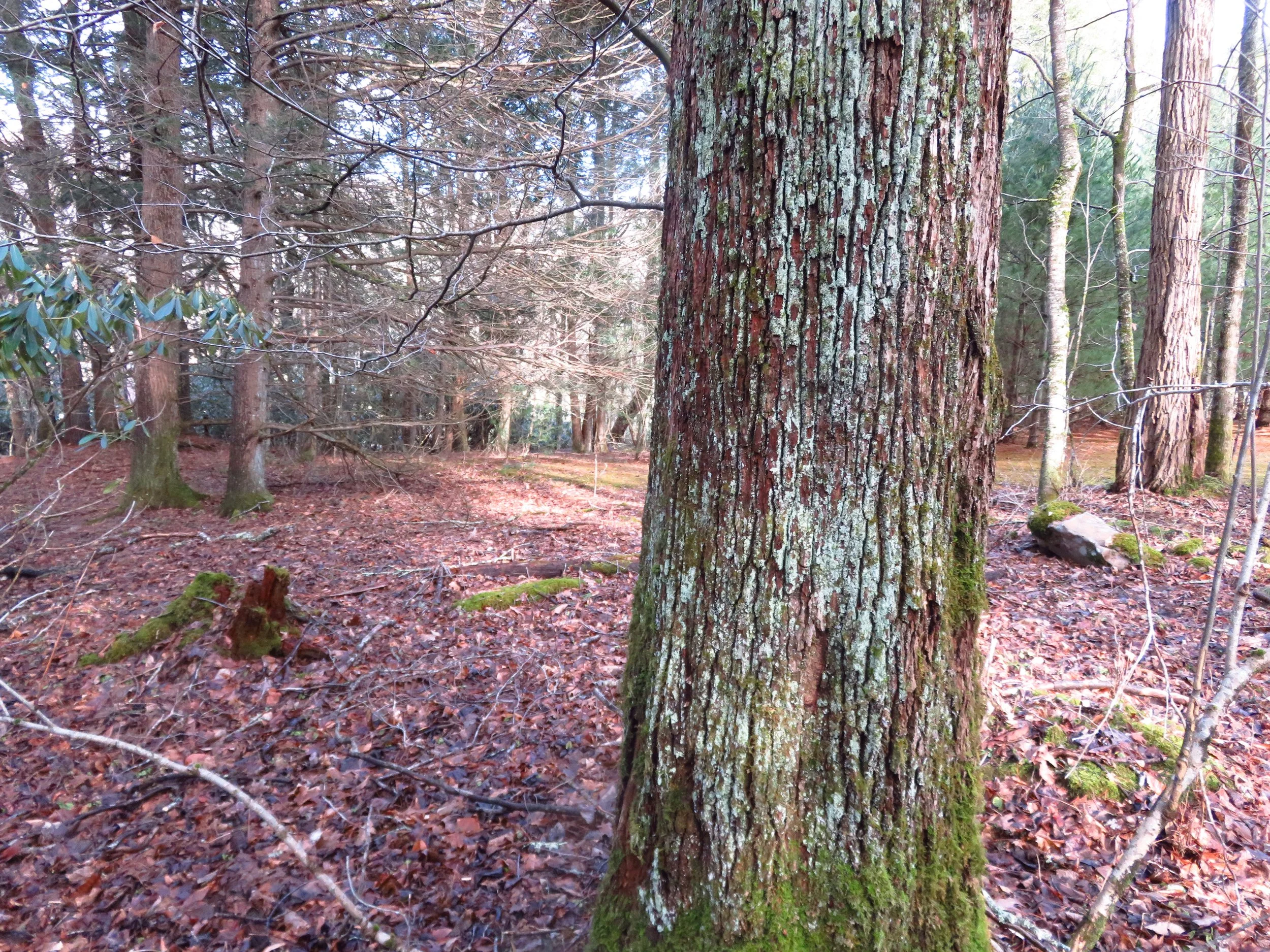
These are very distinctive examples, but many other trees can be more difficult to tell apart since they have similar bark to other trees. This is when you might want to move onto another distinguishing feature, like the buds!
Buds
Buds are the beginning growths of the leaves that will grow when spring comes around, all packaged up into little nodules that you can find all over the limbs of trees during the winter. These buds look different from species to species, making them a useful tool for winter identification when bark is too similar to easily distinguish two species. A good example would be comparing the buds of the Red Oak (Quercus rubra) and the White Oak (Quercus alba), which when mature can have very similar bark. White oaks will have small clusters of buds that are smaller and have a blunt point at the tip. Red oaks on the other hand will typically have clusters of larger buds that come to a sharp point.
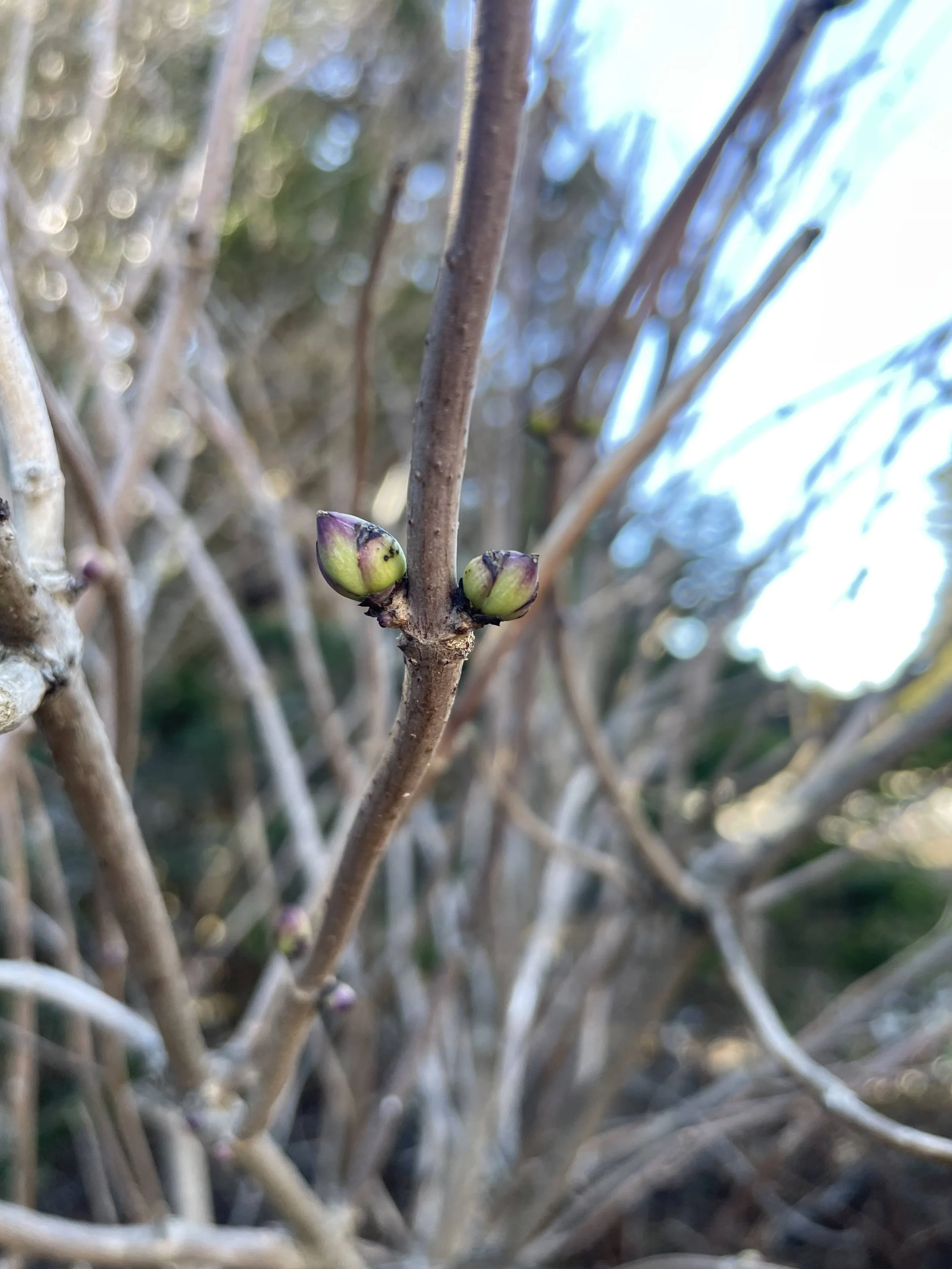
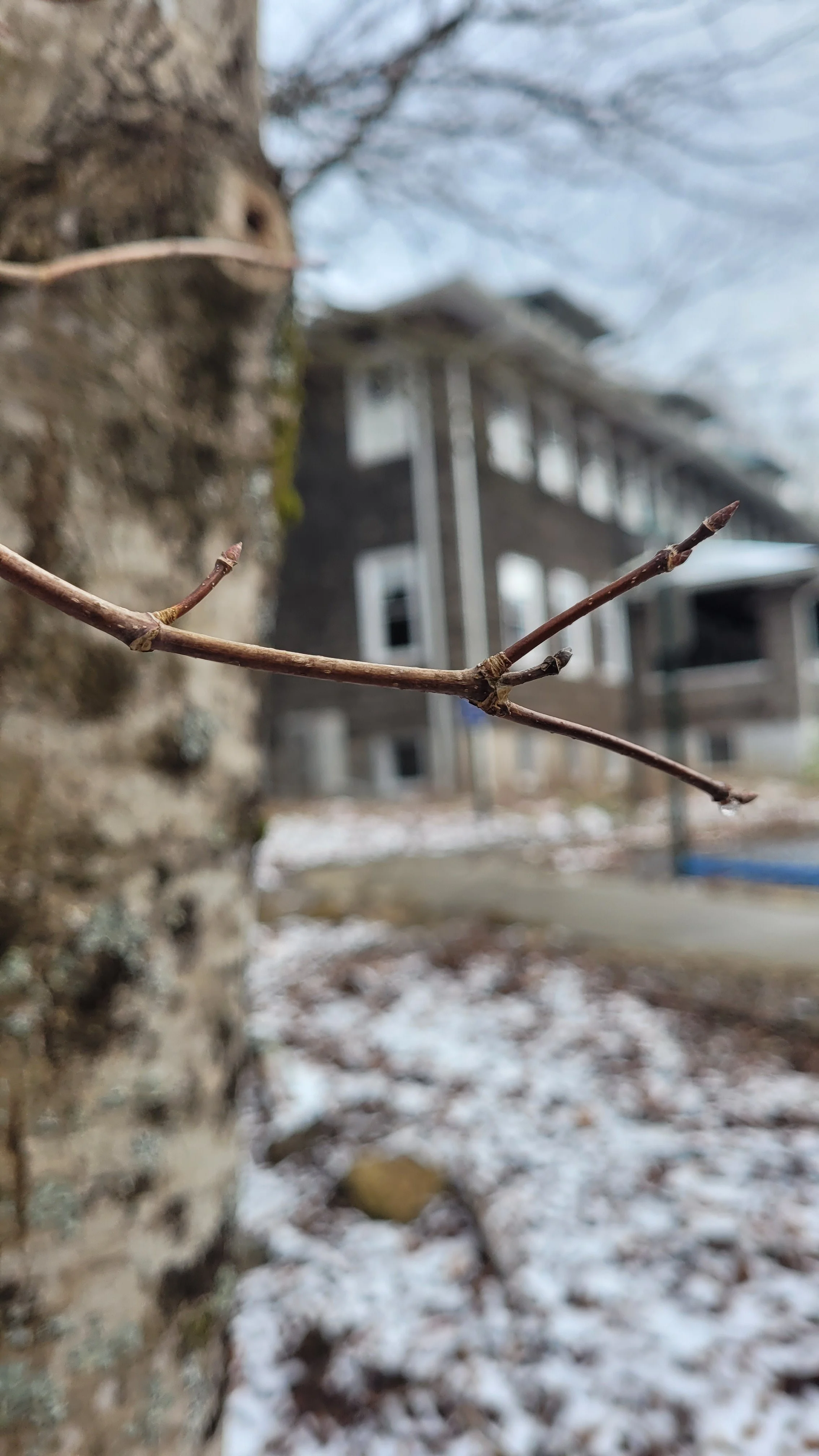
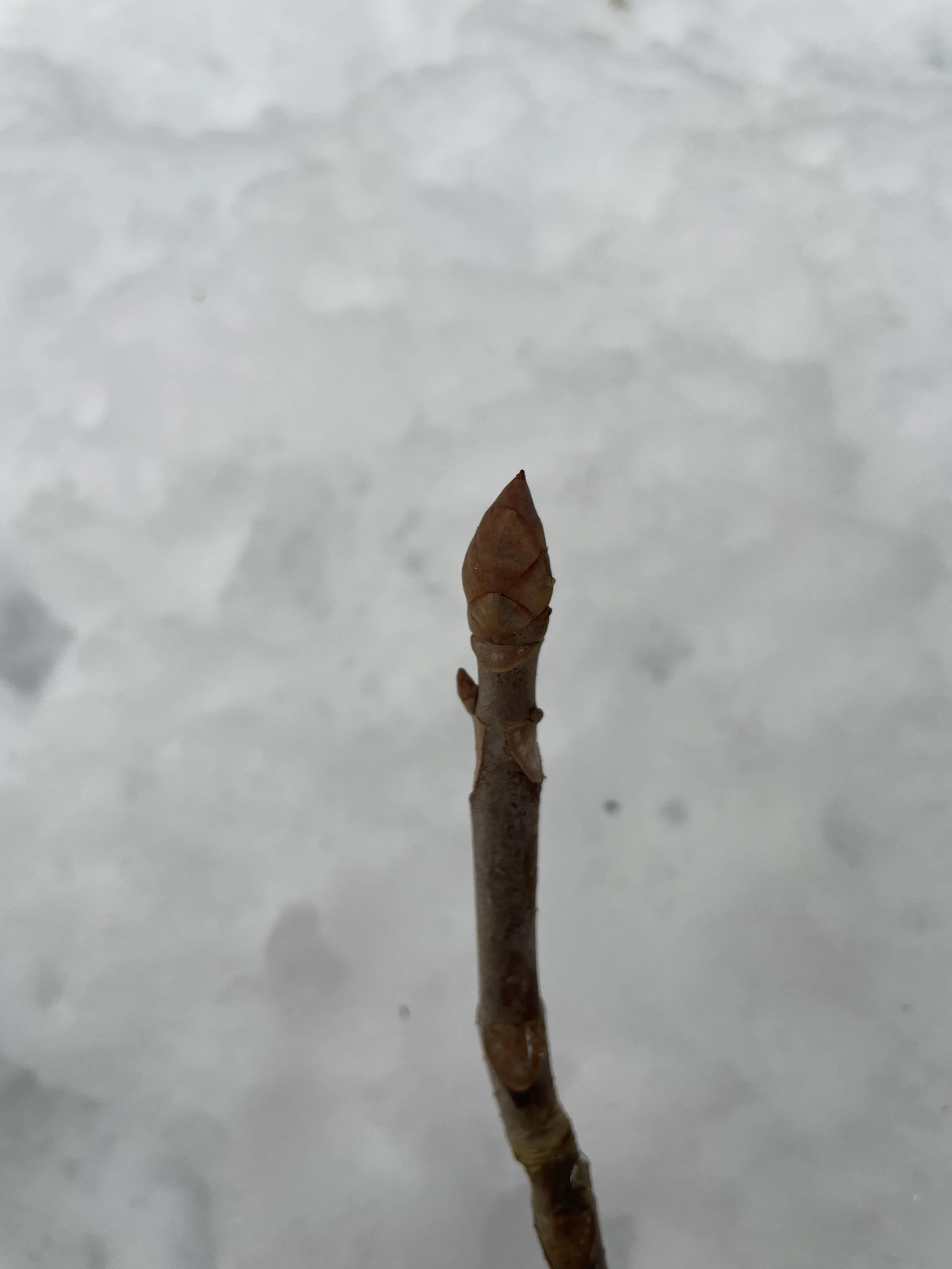
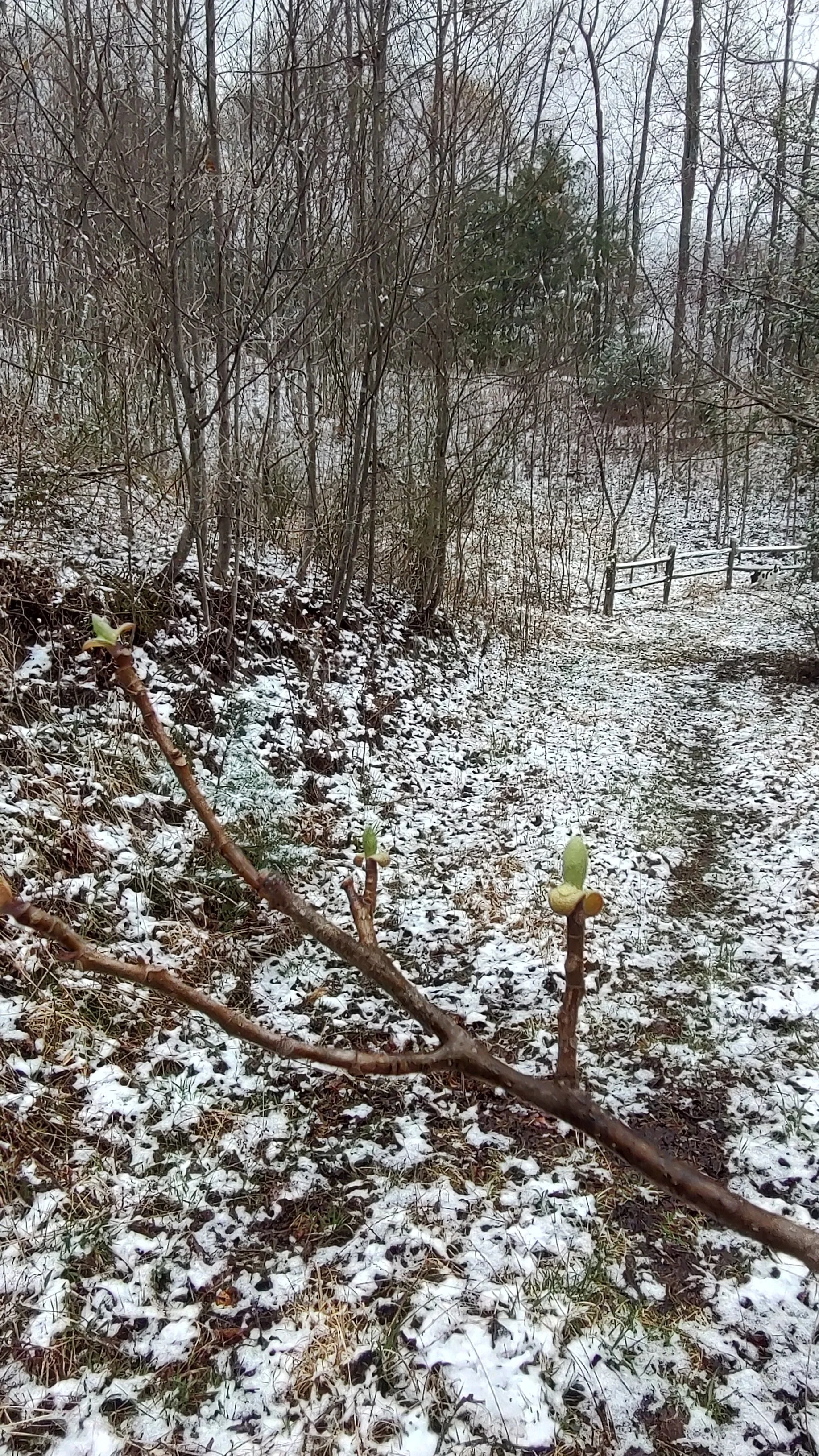
If you’re looking at a Sugar Maple (Acer saccharum) you might see that the buds are opposite each other on the branches. This organization of the buds can be useful for similar-looking buds that have different placements. When looking at the limbs of the tree, try to notice the arrangement of its branches. Which brings us to the last method of winter tree identification, branching patterns!
Branching
Looking at the branches of a tree can help you narrow down your options as you go about identifying a species of tree. There are two forms of branching a tree can have, either the branches grow opposite of each other or they alternate from each other. Most trees have alternating branches, so you will see that most of the time during your identification. However, there are several groups of tree species that have opposite branches, so if you see opposite branches you can quickly narrow down your search to these groups.
Opposite branching occurs in maples, ashes, dogwoods, horse chestnuts, and members of the caprifoliaceae family, or the honeysuckle family. A helpful acronym to remember this is MADCapHorse. Narrowing your identification to just these five groups will make the process way faster and easier, so it's always a good place to start. It cannot help you narrow down to the species level, but that’s what your skills in bark and bud identification are for!
