
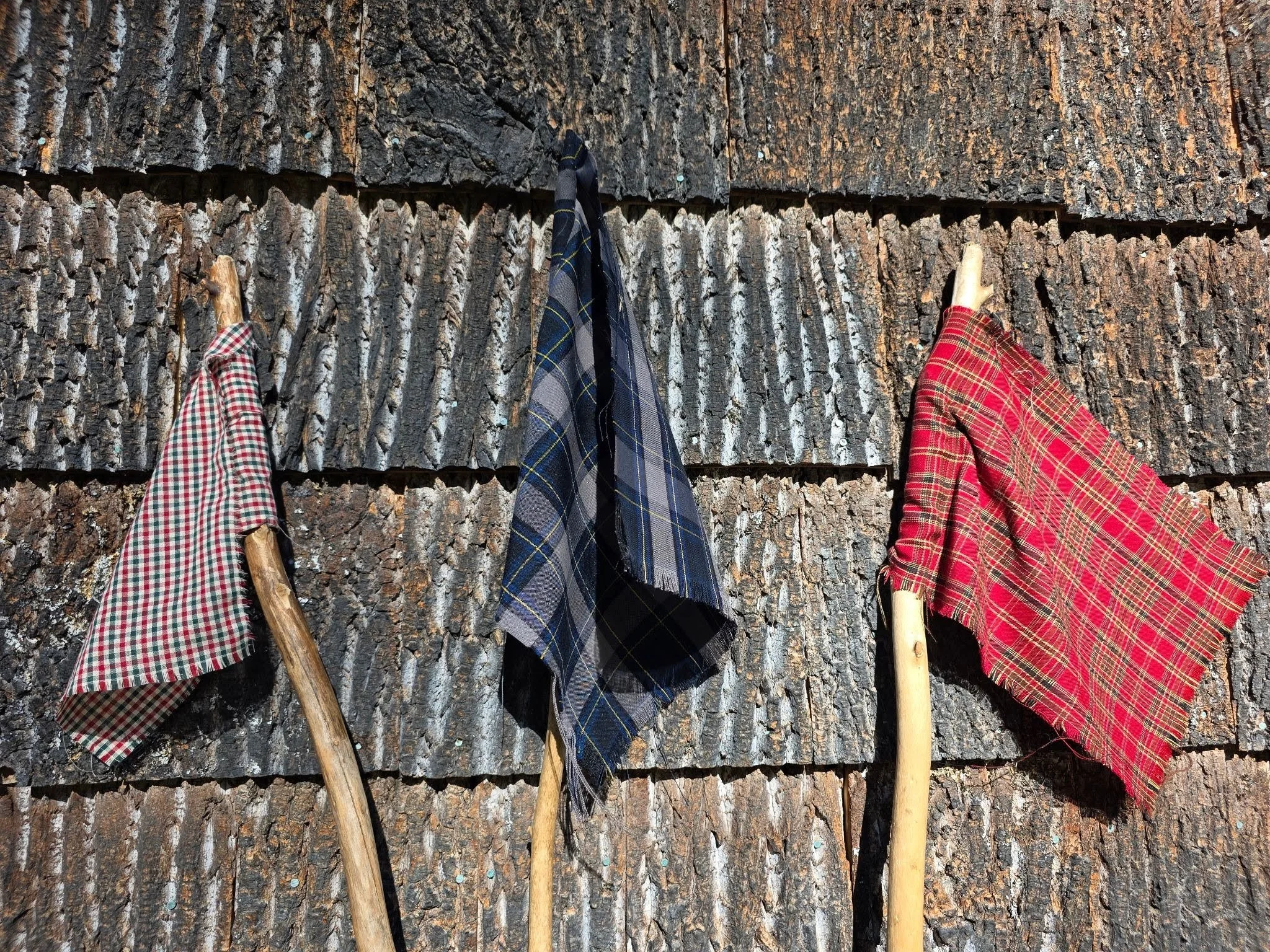
Scottish “tartans” are patterned fabrics.
Much of the culture of Appalachia arrived to the region with the immigrants who settled here from Scotland and Ireland: the Scots-Irish people. In the early 1700s, King James I of England also inherited the thrones of Scotland and Ireland. There was already plenty of unrest within and among these countries. England was facing economic depression, Scotland was Presbyterian, and since Ireland was recently acquired, its people had to be assimilated. The King attempted to solve these problems by seizing parcels of land in Ireland to establish plantations owned by English noblemen and imposing higher land taxes throughout the country. He also established many Anglican churches throughout Scotland and Ireland in an attempt to convert the people to the decreed religion of England.
The Scots-Irish felt forced out of their homeland by unfair rulers, religious persecution, and financial hardship. In turn, they forced the Cherokee and Yuchi out of their own homelands. But these settlers brought with them a heritage that lives on in these mountains to this day.
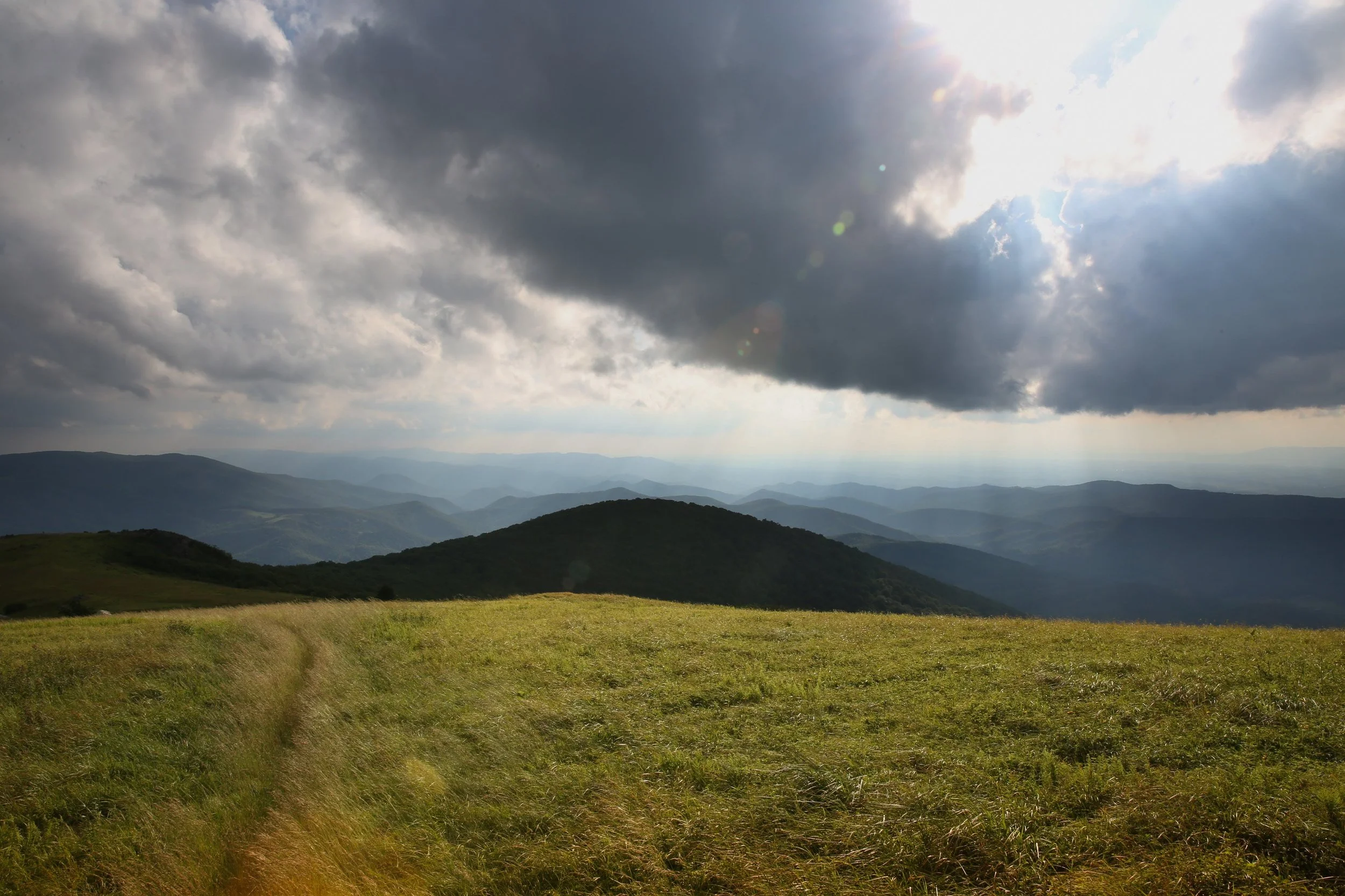
When the Scots-Irish immigrants arrived in America, they found that the English had already established port towns along the coasts, rivers, and piedmont regions. The Germans and Quakers had nestled into the fertile valley and ridge region, especially along where route 81 runs today. So the Scots-Irish pushed further south and west into the Blue Ridge mountains where winters are harsh, soil is loamy and acidic, and rugged terrain makes transportation difficult.
It may sound like these newcomers had to take the “leftovers”, but this region might very well have felt like home to those from the Scottish Highlands and the Emerald Isle. If we turn the clock back more than 1 billion years further, we would find ourselves on the supercontinent of Rodinia. The mountains that would become the backbone of the Blue Ridge formed during this time. When Rodinia broke apart, these mountains rode atop the precambrian continent of Laurentia until 280 million years ago, when it would collide again during the formation of Pangea. Finally, when Pangea rifted apart into the continents we recognize today, a splinter from these mountains was pulled onto the Eurasian continent. All of this to say that the very bedrock our mountains rest atop is the same that holds Ireland and the Scottish highlands, resulting in similar topography and soil conditions between these distant lands.
Although this land may have been strangely familiar to the newcomers, life wasn’t easy deep in the Blue Ridge. Along with their culture, they held onto their hard working attitudes and strong familial and community ties, which became crucial to life in these mountains. In isolated communities, they spent their days constructing homes and communal buildings, tending to farms, making clothes, and otherwise providing for their own families and those around them.
But when the day’s work was over, the fun would begin. Scotland and Ireland both have rich musical histories, so many settlers brought instruments we still play today. Songs from the Old Country would evolve in the New World into what we now call Old Time music, then eventually bluegrass. Dancing styles like flatfooting were born from the older styles of river dancing, and new line dances were written that a whole community could participate in. And, to the point of this article, they also brought their games.
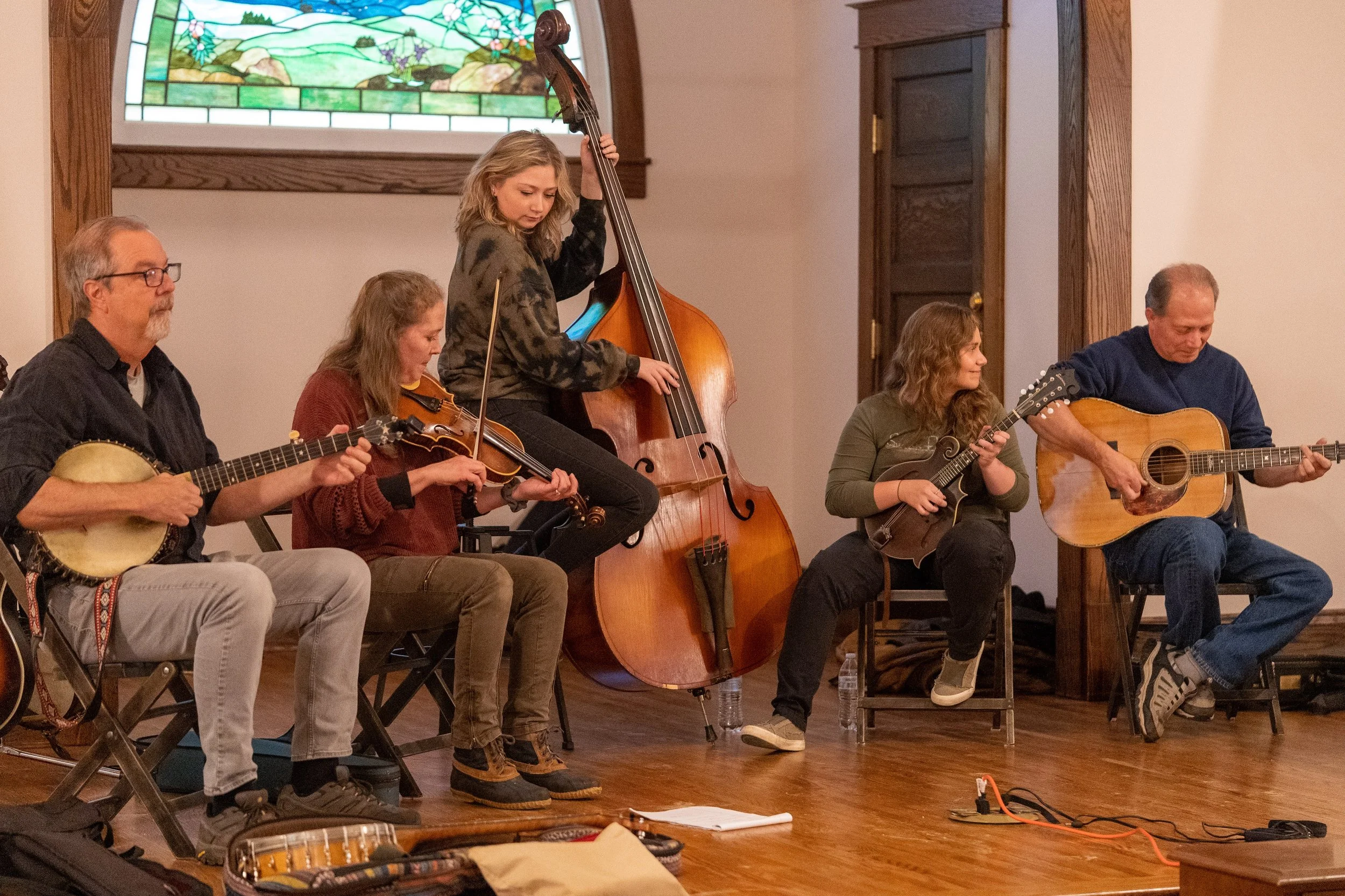
The Konnarock Kritters playing traditional old-time music in the Blue Ridge Discovery Center Chapel.
Back in the Old Country, the Highland Games were like the Olympics. While the record is thin for the early years of the games, bardic traditions carry tales of competitions to designate clan leaders and wider events for clans to display their strength, speed, and bravery. To kick off the annual games, competitors and spectators gather atop the highest local mountain. Each family, or clan, has a tartan; plaid fabric with a specific pattern and colors to the clan. Tartans can be worn as kilts, sashes, caps, and flannels, carried as bags and instrument covers, or put on a pole to fly as a flag. Distant cousins find one another by their tartans.
These people spent a lot of time working hard, so many of the games seem improvised from the tools and labor they were used to. But they are steeped in tradition. Sports were made out of who could lift the heaviest stones, throw hay bales the highest with a pitchfork, or race and wrestle across muddy fields. Music, storytelling, and dancing are all just as important aspects as the athletic games.
There is a huge variety of events that make up the traditional Highland Games. Here at the Blue Ridge Discovery Center, we have a few favorites that we enjoy playing with groups that join us.
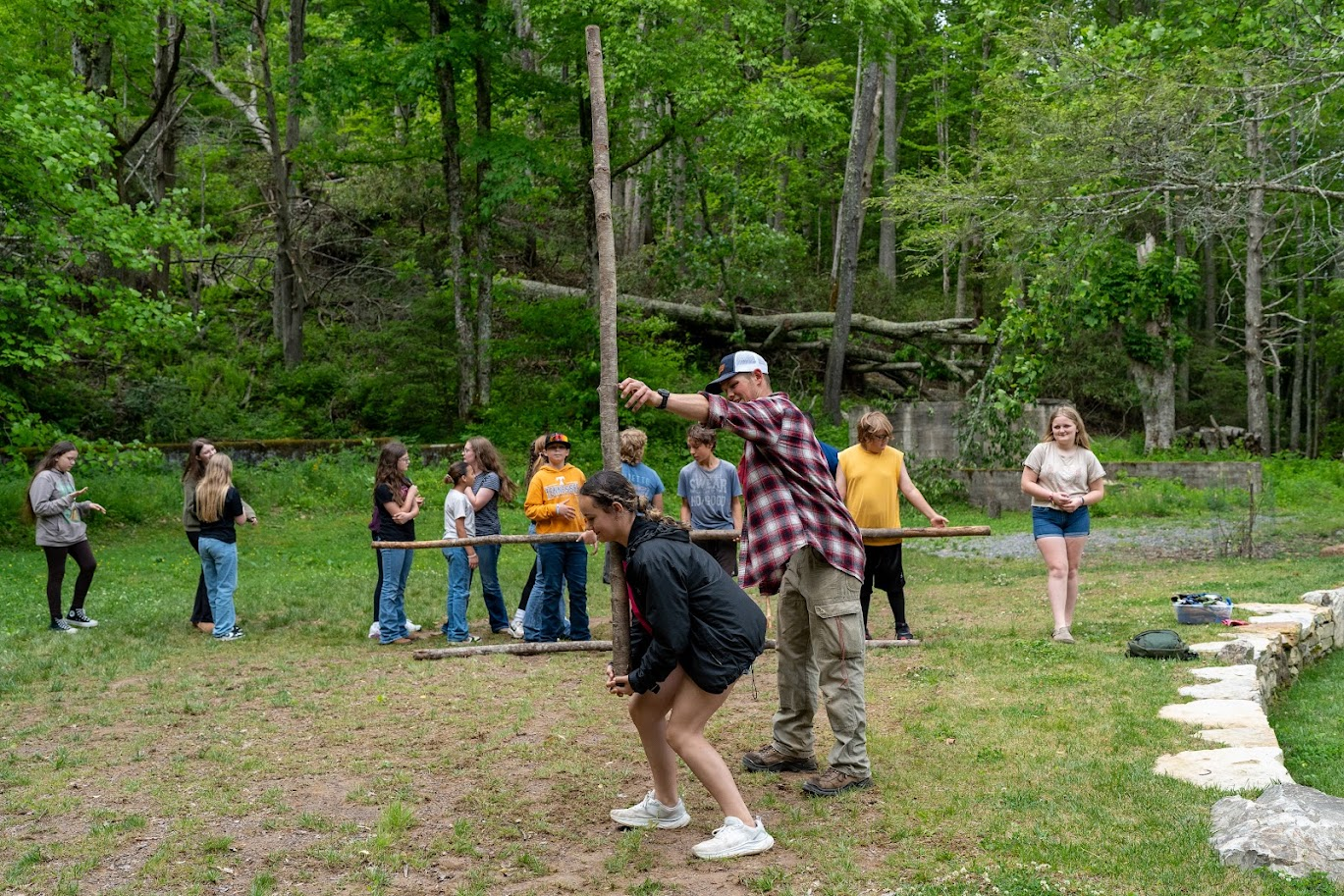
One of the most iconic Highland Games events is the caber toss. A traditional caber is made from the trunk of a larch or Scottish pine, measuring up to 20 ft long and 180 pounds though the size may vary with specific events. The tosser lifts the caber so it stands upright in his hands, tips it forward, and tosses it so that it flips end over end. Although it requires great strength to even compete, the caber toss is actually a game of accuracy. The goal is to flip the caber so that it lands pointing directly away from the tosser. A toss is scored by imagining the caber is the hour hand of a clock, i.e. a perfect toss would be scored 12:00, while slightly to the left would be 11:45.
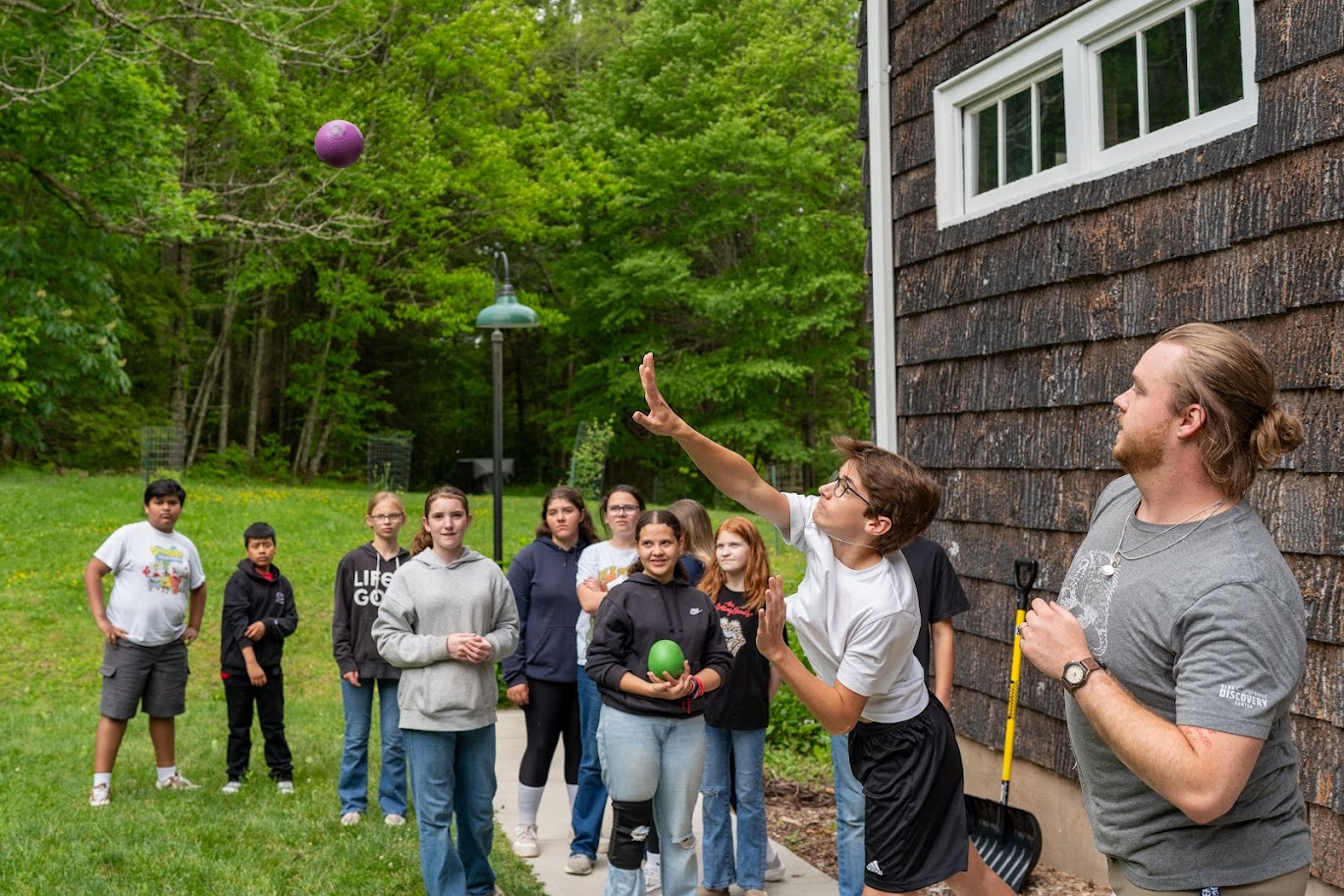
Many events have gained popularity outside of the Highland Games, such as Stone Put. Stone put is very similar to the shot put event in track and field, but rather than hurling metal shot, throwers are given large river rocks. A Braemar stone is typically around 20 pounds and smooth but irregularly shaped. Competitors must lift then toss the stone without any momentum-building swings or moving their feet. Points are earned for distance tossed.
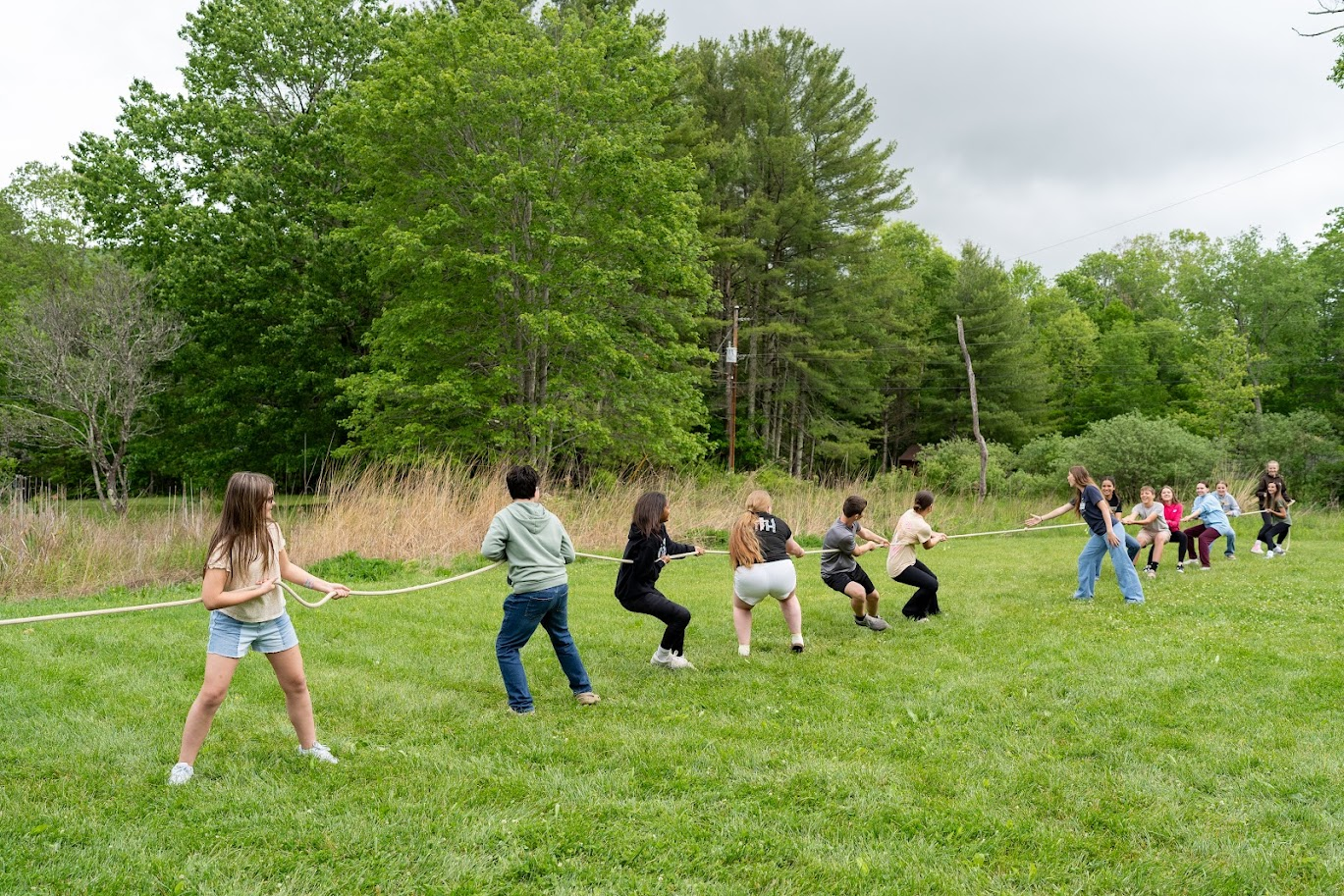
Tug o’ War has earned its place as a popular yard game among kids, but its traditional history runs much deeper than one might expect. In the Highland Games, Tug o’ War is among the most contested competitions. It combines strength, teamwork, and strategy, and gives the entire clan an opportunity to prove themselves. A team consists of 8 pullers (including an anchor) and one driver. A knot is tied 6 feet to either side from the center of the rope, and the team who pulls the other side’s knot past the center mark wins that round. The winning clan is decided by best of three rounds.
