
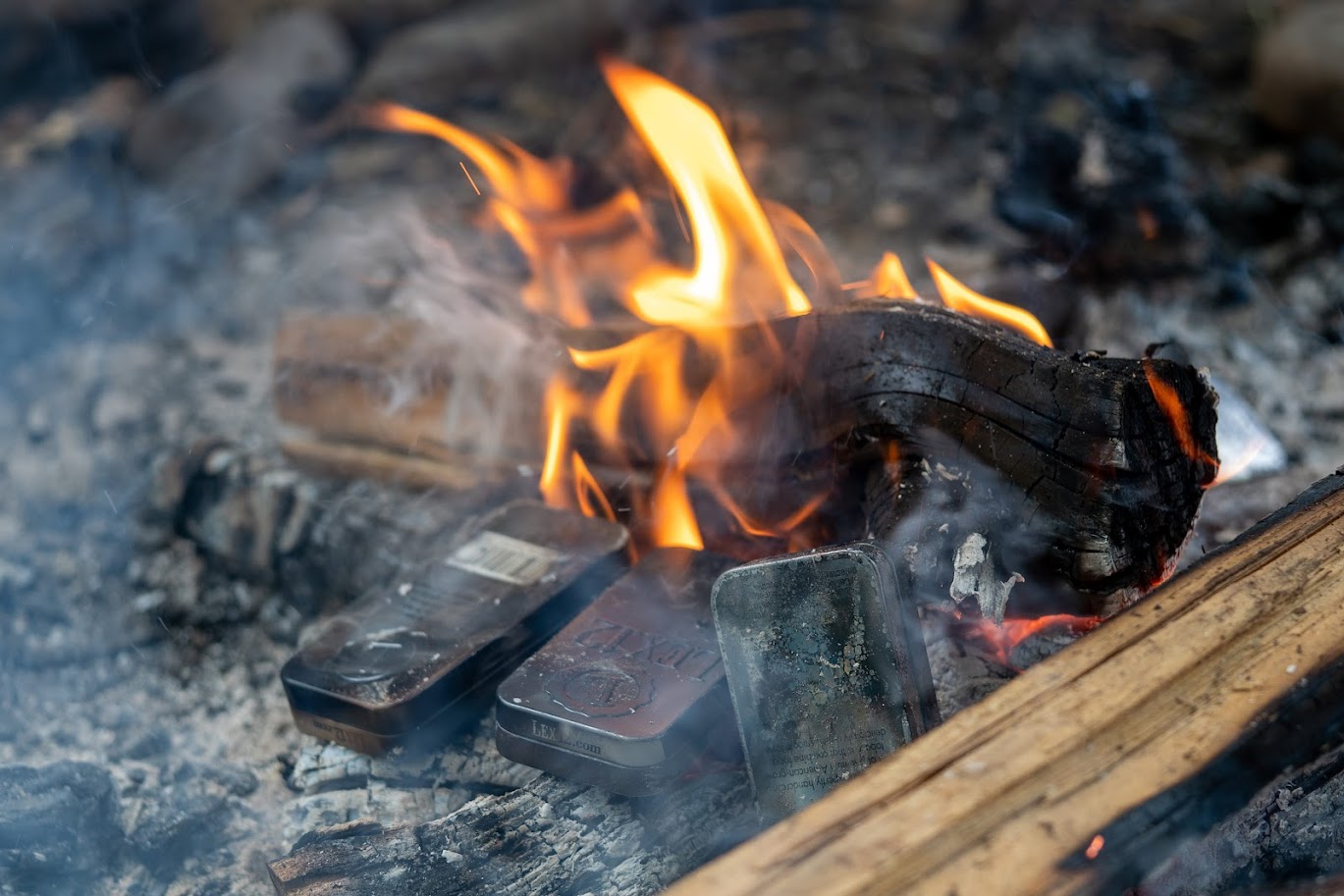
Fire is one of the most powerful forces in nature. With the power to reduce anything in its path to ashes, it has become something many people fear. However, fire does so much more good than it does destruction. It has been harnessed as a tool we have used for centuries for warmth, for cooking meals, for forging tools and powering machines. Not only is it a tool for humans, it is also a tool for many environments, including the Blue Ridge Mountains. The ecosystems of the Blue Ridge that have been developed for centuries were predominantly shaped by fires, both naturally occurring and created by humans.
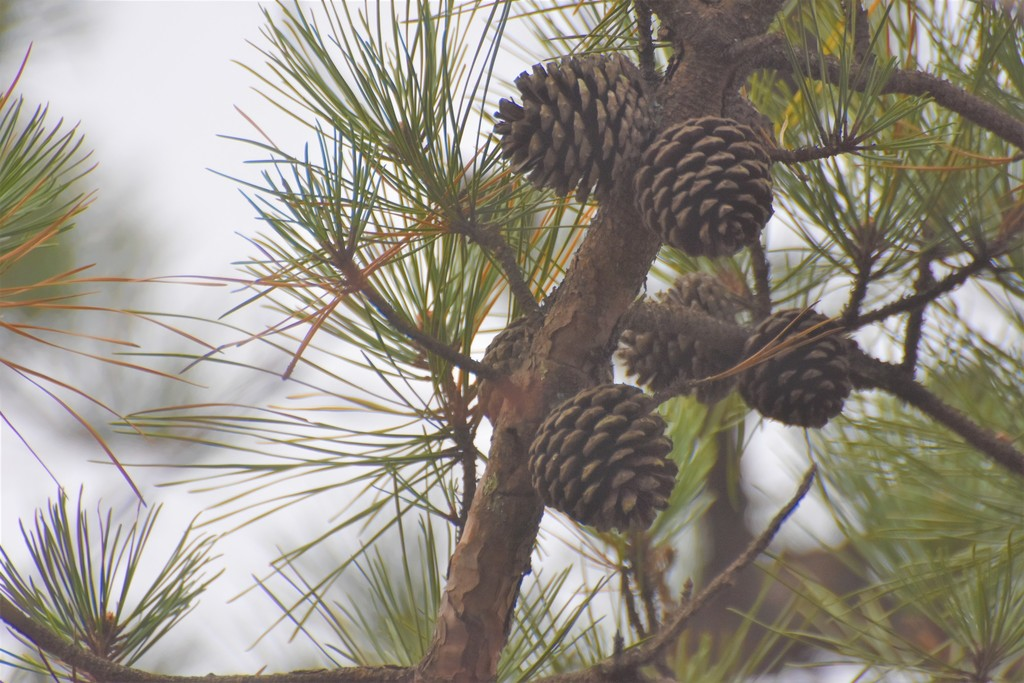
A fire-adapted Pitch Pine (Pinus rigida). Photo by Cade Campbell.
Trees are incredible record-keepers capable of logging environmental impacts in their growth rings. Years in which fires swept across Appalachia can be seen in individual growth rings, showing that fire used to be a prevalent occurrence. Other indicators of a fire-adapted ecosystem can be seen in traits of plants throughout the region. Pitch pine (Pinus rigida) is famously known for its resistance to fire with thick bark and high resin content. These trees, as well as Table Mountain Pines (Pinus pungens), also have serotinous cones. These types of cones are sealed shut with resin and require fire to release the seals and open up to distribute their seeds. Outside of these pines, many other trees and plants in Appalachia are adapted to withstand fires and rely on fires to clear the understory so that they can grow. So where did all of the fire go?
Not much is known about the fire history of the Blue Ridge before European settlements were established, mostly in part due to the extensive logging of the early 1900’s that has impacted the amount of data that can be collected. However, there is a lot of evidence that indigenous tribes routinely used fire as a management tool of different ecosystems, clearing land for farming and using it to selectively control the tree composition of forests near their villages. And long-standing evolutionary characteristics imply that fires were frequent enough to be impactful to biotic communities. When the logging ventures of the 1900’s hit the Blue Ridge, fires became much more rampant and unmanageable. With all of the canopy cover diminished and moisture leaving at a higher rate, the normally damp and cool ecosystems were left very dry. All of the debris left behind from logging was the perfect fuel for wildfires to spread rapidly. This also prevented the forest from regenerating as the new plants and tree saplings would burn before they could grow to withstand the fires.
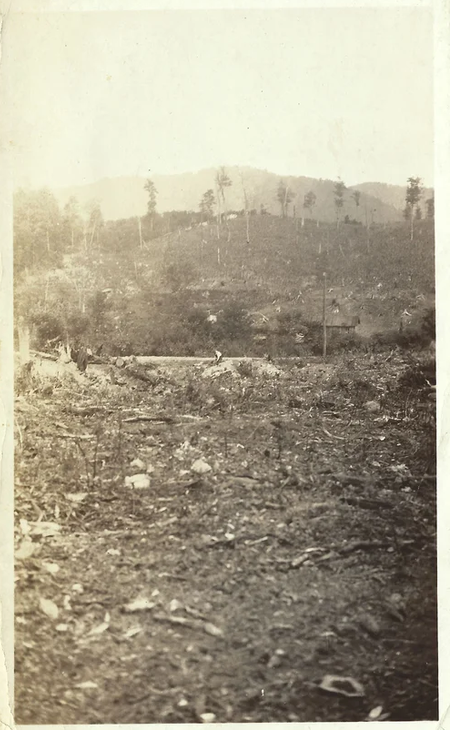
A logging scene in Konnarock. The heavy logging of the early 1900’s resulted in more fires and ultimately changed the composition of Blue Ridge forests entirely.
When the department of forestry realized that the wildfires were preventing the restoration process of the forests, they began implementing practices to prevent wildfires and suppress them when they arose. After a while of these practices, the forests of the Blue Ridge began to properly reestablish. While the fires became less of a serious issue, the practices did not lessen in their strictness. With no fire being allowed to be introduced into the ecosystem, the less fire-resistant species began to thrive and outcompete the species more adapted to fire. Oak and pine forests began to make way for forests more densely populated by maples. Table Mountain Pines and Pitch Pines became less successful and populous due to their serotinous cones not being able to open properly in the absence of flame. These fire suppression strategies caused a direct shift in how our forest ecosystems are composed.
With recent developments in understanding forest ecology, the study of fire ecology and its role in our local ecosystems has become much more prevalent. This has led to key practices in forest management being implemented to restore some of these fire dependent habitats. Acts such as prescribed burnings, where fires are started and closely monitored and managed, became a much more common practice, especially in open fields and mountain bald habitats. Suppression of wildfires is still a practice, however, it is geared more towards containment and minimizing damage to properties than outright extinguishing them. This allows wild areas to experience natural wildfires without endangering humans in any way. With the implementation of these fire management strategies, the hope is that there will be large success in revitalizing these fire dependent habitats and communities.
