Return to Mahogany Rock Hawk Watch
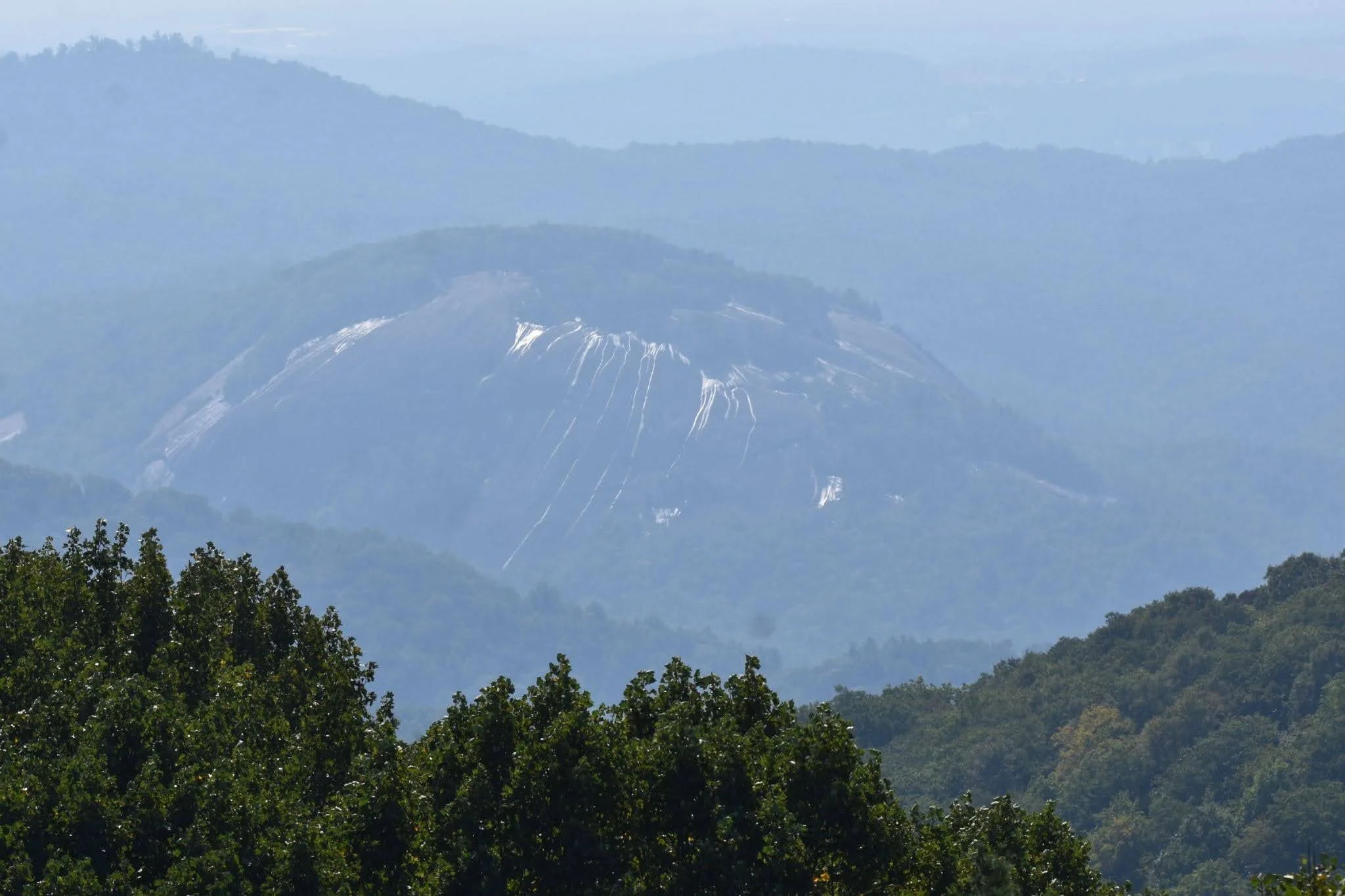
“It looks just like molten silver,” one of the visiting birders said, pointing to the reflective springs trickling down the granite dome of Stone Mountain below, as we watched broad-winged hawks spiral over the rolling hills.
After a brief hiatus due to Blue Ridge Parkway closures, the naturalists of Blue Ridge Discovery Center returned to the windy overlook where we stationed ourselves for the 2026 Mahogany Rock Hawk Watch. The warm, spiral winds along the ridgelines of the eastern fringe of the Blue Ridge Mountains form rising air currents called thermals. These thermals provide enough lift to carry raptors along the spine of the Appalachian Mountains, across the Deep South, and ultimately funneling through Corpus Christi, Texas where they join forces with other species on Mexico’s famous “Veracruz River of Raptors” where flights of up to five million birds of prey are not unusual, with daily totals in the hundreds of thousands.
As they make their way south, flights of broad-winged hawks (specifically) and their relatives condense into “kettles,” groups of migrating hawks that are sharing a thermal. At some sites, like Hawk Mountain in Pennsylvania and Rockfish Gap Hawk Watch in northern Virginia, counts of several thousand birds are not uncommon. Daily activity at these sites also usually determine the activity at Mahogany Rock, uploaded daily by volunteers and field technicians across Hawk Migration Association’s “HawkCount.org.” The Mahogany Rock Hawk Watch was informally started by expert hawk watcher Jim Keighton, who brought his middle school students up the rugged mountainside Green Mountain Fire Tower from the town of Sparta to record community science data on the enormous number of migratory hawks that passed over the mountain every late September. Inspired by Keighton, John “Master of the Skies” Alderman, began this official hawk watch at the more easily-accessible site at the Mahogany Rock Overlook near Milepost 235 of the Blue Ridge Parkway. Together, the two gathered data while also teaching the public about this incredible autumn phenomenon every year. Mahogany Rock became an official Hawk Watch site in 1986, and in the 2026 season, almost forty seasons of data have been collected here.
The highest count year produced 17,857 broad-winged hawks alone, in 1994. This unusual bumper year made Mahogany Rock one of the best hawk watch sites in the eastern U.S. at the time, and bolstered its status as an official Hawk Migration Association site. There are many fewer hawks that pass over the site in the present-day, and the 2026 totals of broad-winged hawks alone represent only 2% of the birds seen around thirty years ago. Although population decline might not be the only reason these birds’ numbers are dwindling at this site, this year (weather, changes in migration route, etc.), it definitely plays a role in the drastically lower numbers this year.
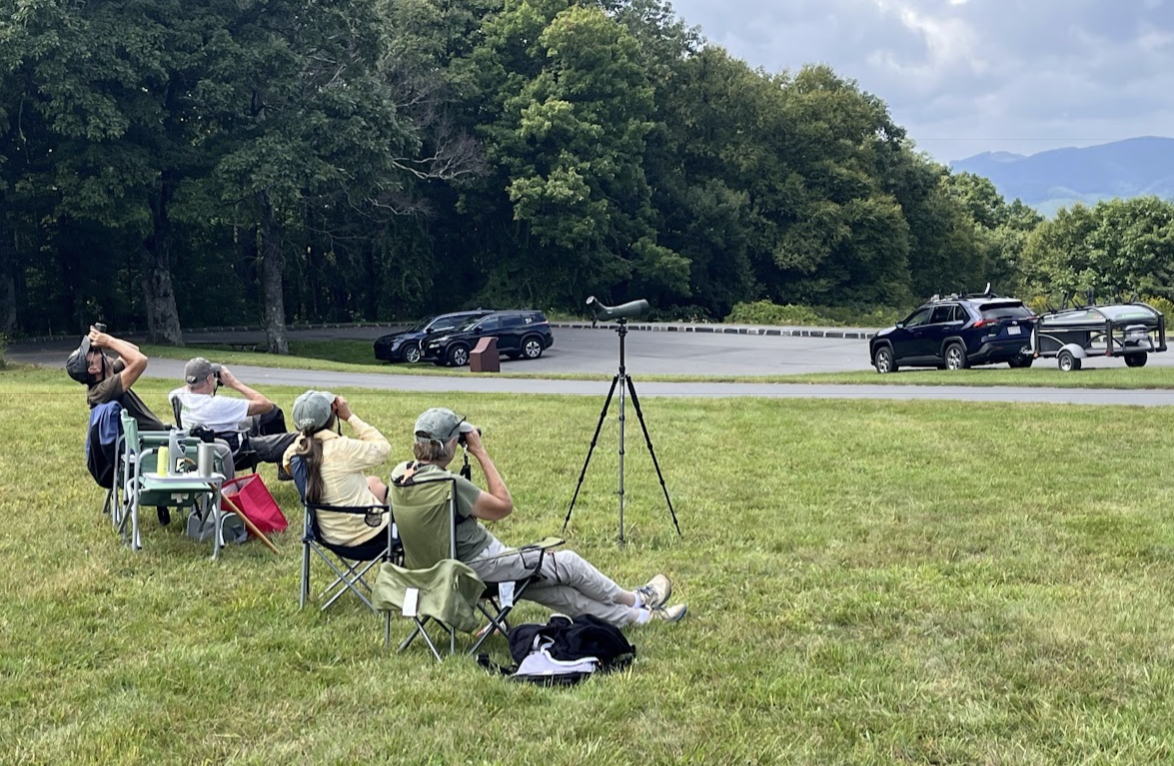
Devoted hawk-watchers gather at Mahogany Rock to contribute to the count. The more eyes on the sky, the more likely that distant “kettles” of broad-winged hawks, fast-flying birds like falcons, or unusual birds that need more detailed identification are noticed in time to be recorded. Raptors sometimes fly low and close overhead, allowing beautiful views and easy identification, but in many situations it is a challenge to both notice and identify the distant birds.
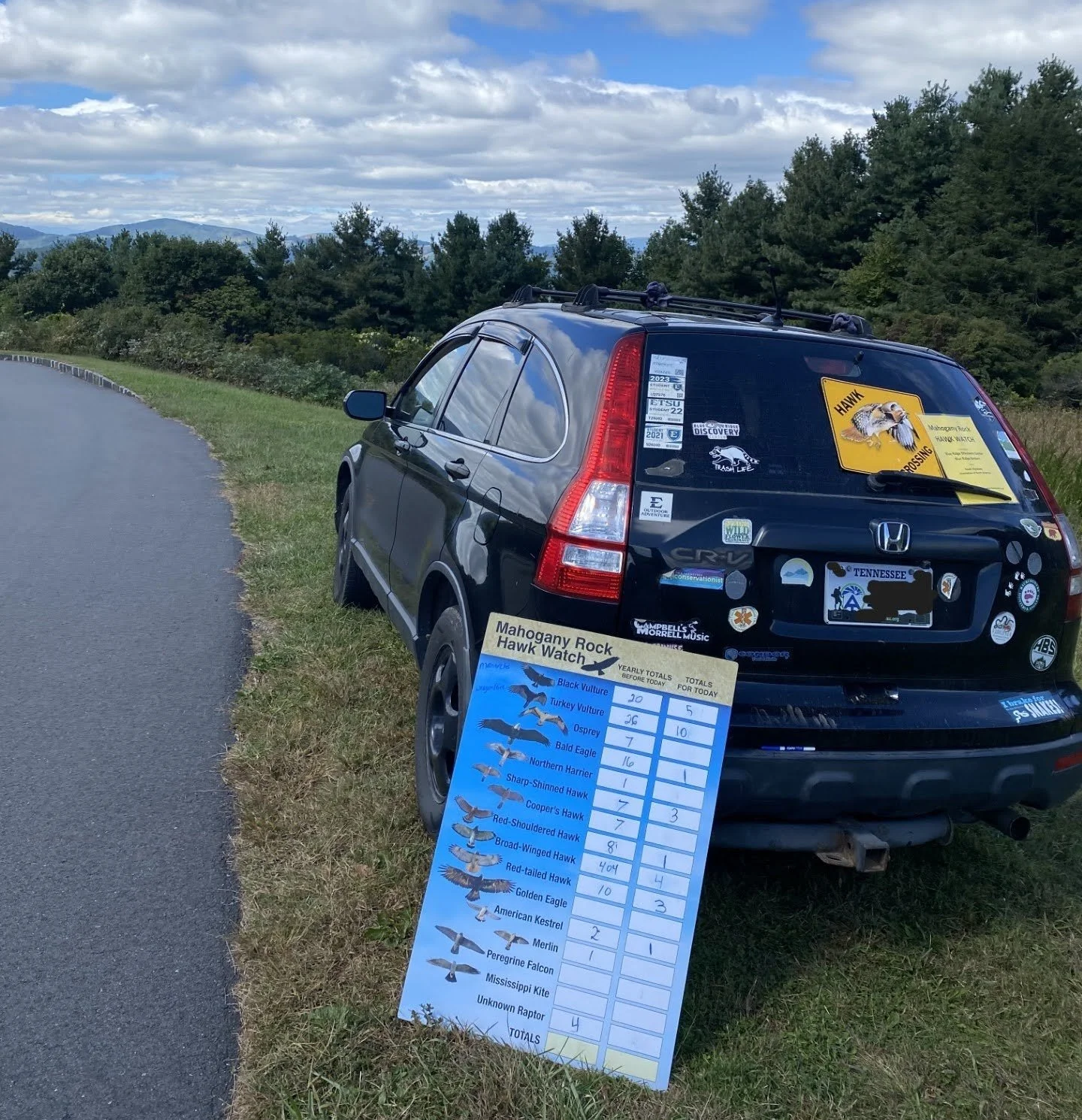
Our daily count is updated hourly on this board for anyone visiting the Blue Ridge Parkway to drive by and see our daily and annual totals. The Mahogany Rock Hawk Watch provides an excellent opportunity to share the wonder of hawk migration with the public, with many visitors remarking that they never knew there were this many different types of hawks, much less that they pass over our very own Blue Ridge Mountains!
It was amazing to me how many birders still hold a deep devotion to this hawk watch. We had birders returning from across the country, in the area for the season who were drawn to join this endeavor from fond memories watching large birds materialize from the ridge. The larger hawks, “buteos,” are the most common. They have broad wings and short, broad tails for soaring. “Accipiters” are considerably smaller than buteos with short wings and long tails for darting into more vegetated spaces. There are also a few eagle, vulture and falcon species mixed in with the migrating hawks, and there is always a chance that an unusual raptor from other regions will pass by overhead.
Here are the Mahogany Rock Hawk Watch 2026 Season Totals:

While these migrating raptors are usually high in the sky and distant, here are photos of some of the birds we observed this year!
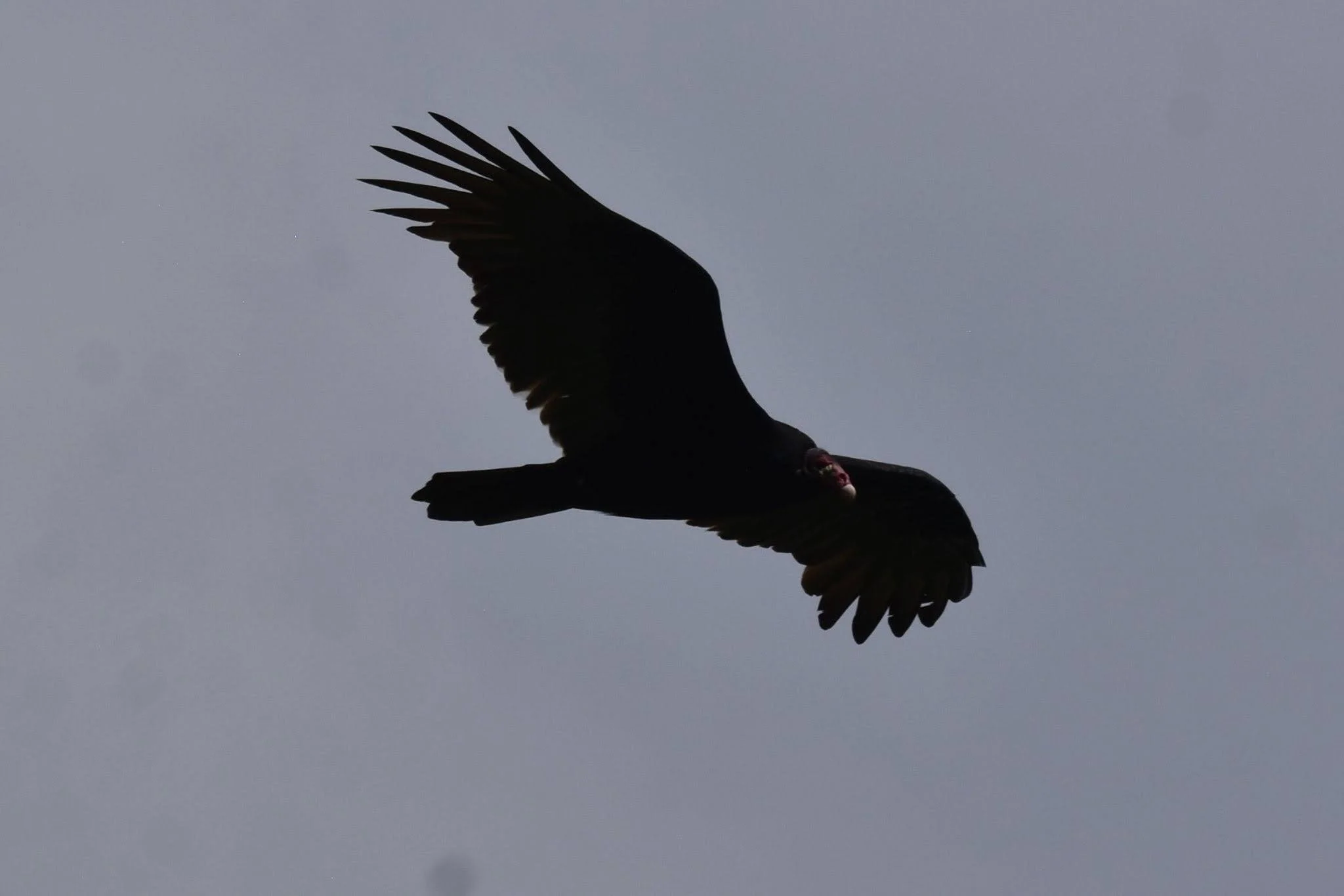
Turkey Vulture (Cathartes aura)
The Turkey Vulture is the most common soaring bird seen in the skies of the Blue Ridge Mountains. Some are year-round residents, but many of the birds seen in the autumn are migrants from the north where consistently subzero temperatures can severely damage the skin on their bald heads, which keep them safe from rotting carrion that would otherwise get stuck in their feathers while eating and lead to infection. They can be identified from over a mile away by their teetering flight pattern as they fly in circles (riding the same thermal air currents that the hawks use for migration, year-round) and v-shaped position of their wings. The similar Black Vulture (Coragyps atratus) has a shorter tail and mostly solid-black wings (as opposed to the dark brown of the Turkey Vulture) except for broad, white wing tips, and is a more southern, less migratory species.
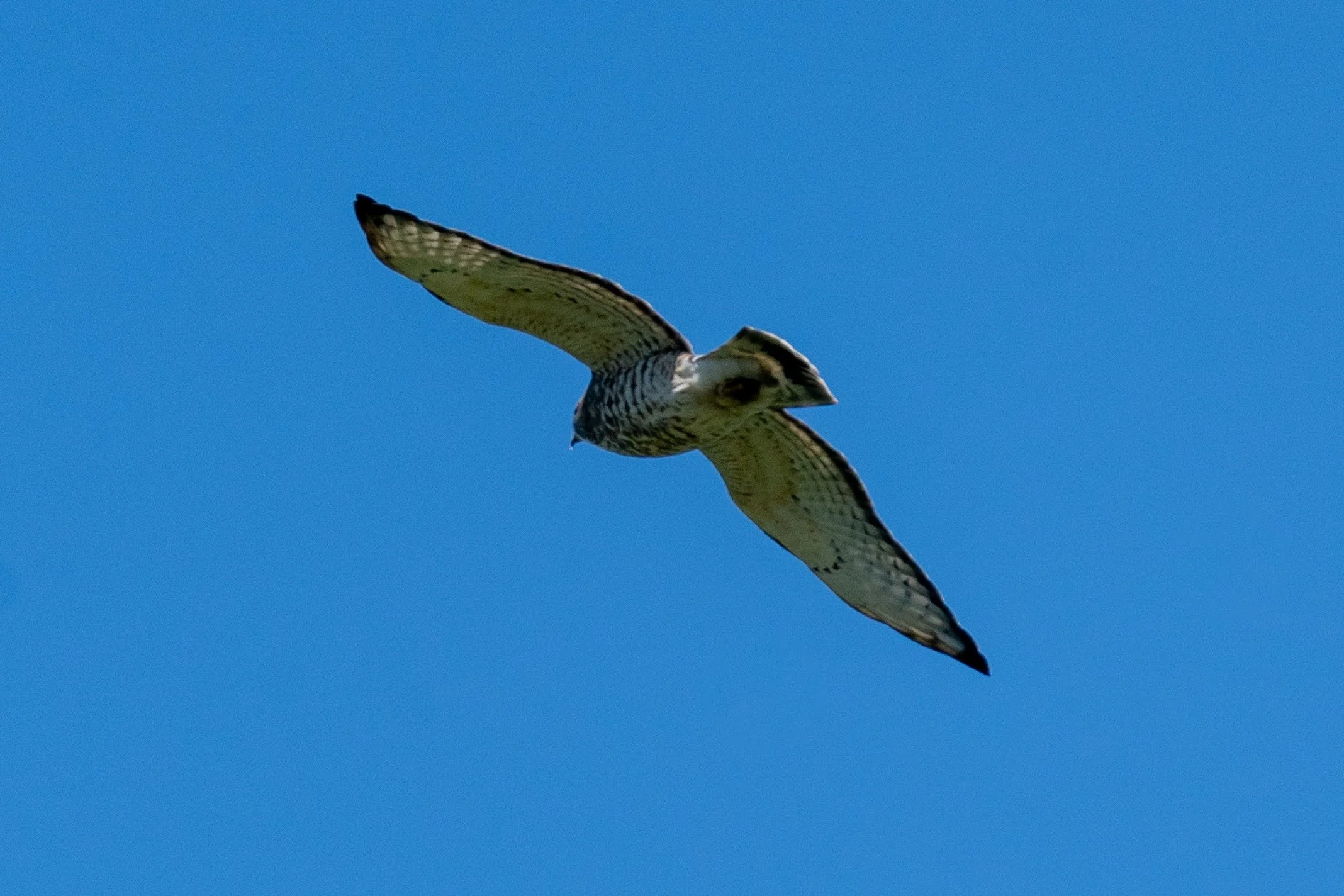
Broad-winged Hawk (Buteo platypterus), adult.
Broad-winged hawks are easily identifiable by their wide, flat wings even from great distances. Up close, they are beautiful birds with black-and-white barring across the body, and a prominent white band across the tail. Juvenile birds have the same shape, but look much more like other juvenile buteos with breasts streaked with brown teardrop-shapes. These are the most abundant migratory species, breeding en masse in the boreal forests of Canada, the northeastern U.S., and even the highest peaks of the Blue Ridge Mountains as far south as northern Georgia. They also have one of the longest and most impressive journeys of our native raptors that pass over Mahogany Rock, traveling deep into the rainforests and dry, mountain scrubland of South America as far south as Argentina.
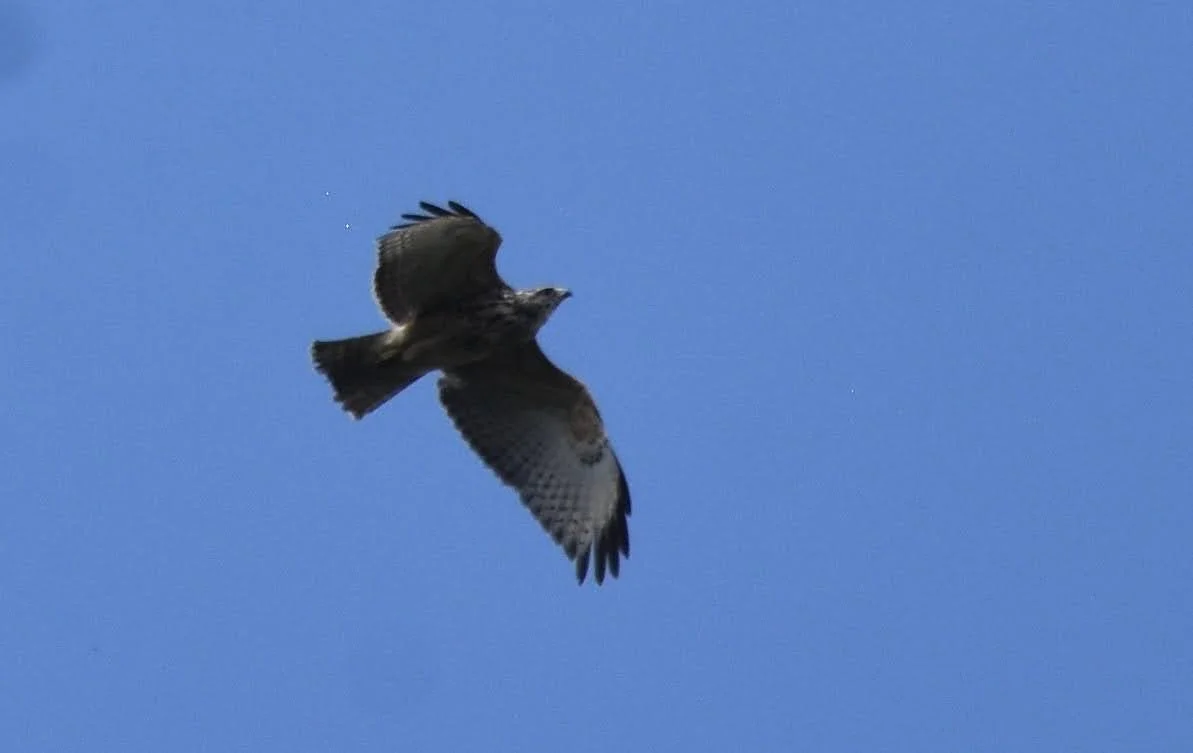
Red-shouldered Hawk (Buteo striatus), first-year
Red-shouldered Hawks are known for their swamp-dwelling nature, and are extremely abundant across the American South. Northern populations must migrate in the winter to avoid both extreme cold and food scarcity. While they mainly hunt small mammals and birds, red-shouldered hawks also depend heavily on herps; predominantly snakes and frogs in their wetland habitats along with large invertebrates like crayfish and young dragonflies. They can be identified by translucent crescents on their wings, which are longer and narrower than the BWHA, but smaller than a RTHA. Adults have unmistakable peppermint-striped breasts with vibrant orange-red and white contrast, rufous shoulder patches, white chevrons on their contour feathers, and a striking black-and-white banded tail. Immature birds have a finely-streaked breast and are stockier birds than BWHA.
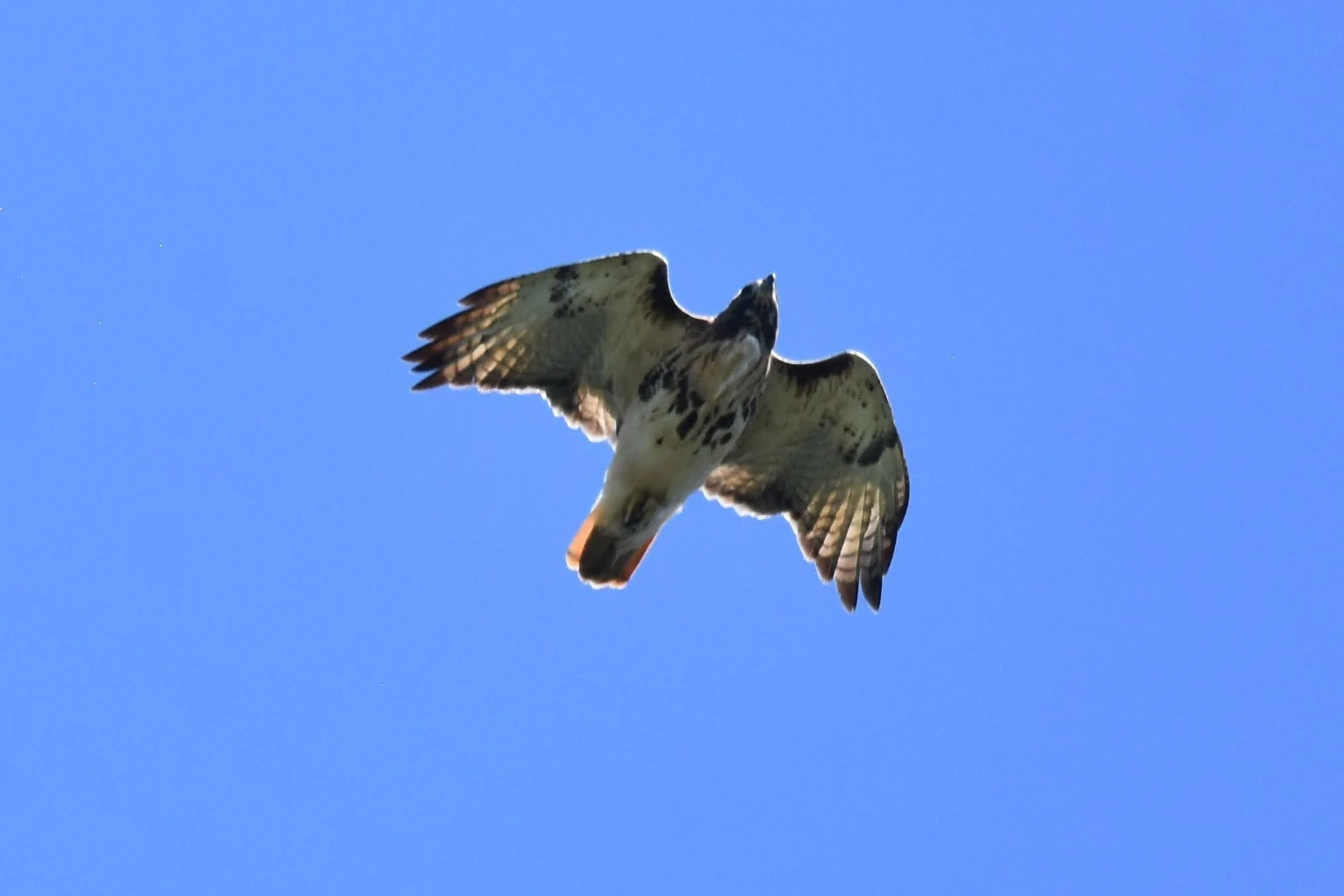
Red-tailed Hawk (Buteo jamaicensis), adult
Red-tailed Hawks are the largest of the common buteos, capable of hunting rabbits and squirrels. They often “stoop” in migration, pausing midair and using wind currents to hover and scan for food. Named for a namesake red tail as adults, juveniles have a light-brown banded tail instead. A key identification feature for all ages of RTHA is the band of dark spots along the breast, with a solid-white belly below. There are also resident Red-tailed Hawks at Mahogany Rock, which patrol their territory even as migratory relatives pass through in enormous numbers. Northern populations leap-frog over the southern ones. Even if birds in Virginia’s Blue Ridge do migrate, they usually do not migrate far. Birds that nest in the Canadian boreal forest travel much farther south, even down to the Gulf Coastal Plain to spend the winter. Additionally, red-tailed hawk calls (a single, sustained screech) are often used in movies as Bald Eagle calls, when eagles actually have a much less intimidating but beautiful crescendo of piping, seabird-like notes.
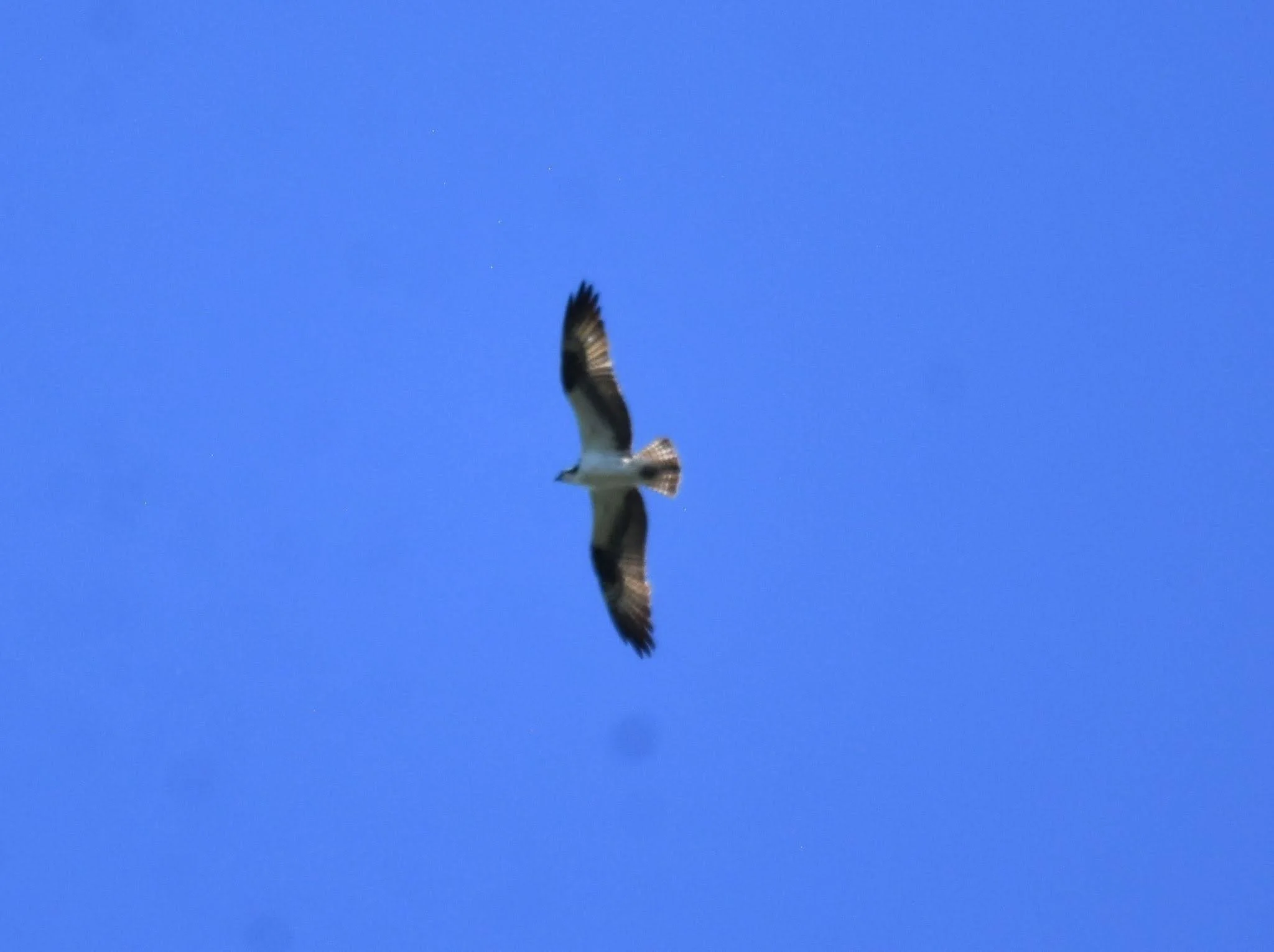
Osprey (Pandion haliaetus)
Ospreys occur worldwide where there are abundant fish populations and temperate climate conditions. North American ospreys migrate to the southern U.S. and Central America after breeding across the continent along large rivers, lakes, and coastlines. They have extremely long, narrow wings adapted for both active and passive soaring over the powerful winds over ocean beaches and large reservoir lakes, muscular enough to pull the birds from the water while wrangling fish. Ospreys are also essential dispersal agents of fish to new wetlands. Isolated ponds, bogs, and even new watersheds are often “seeded” with fish species when an osprey drops wriggling prey in flight. They are easily identifiable by this shape, but also by the contrasting white and semicircle patterns on each wing just behind the remiges (flight feathers), finely-banded tail, and dark, emboldened eyestripe.
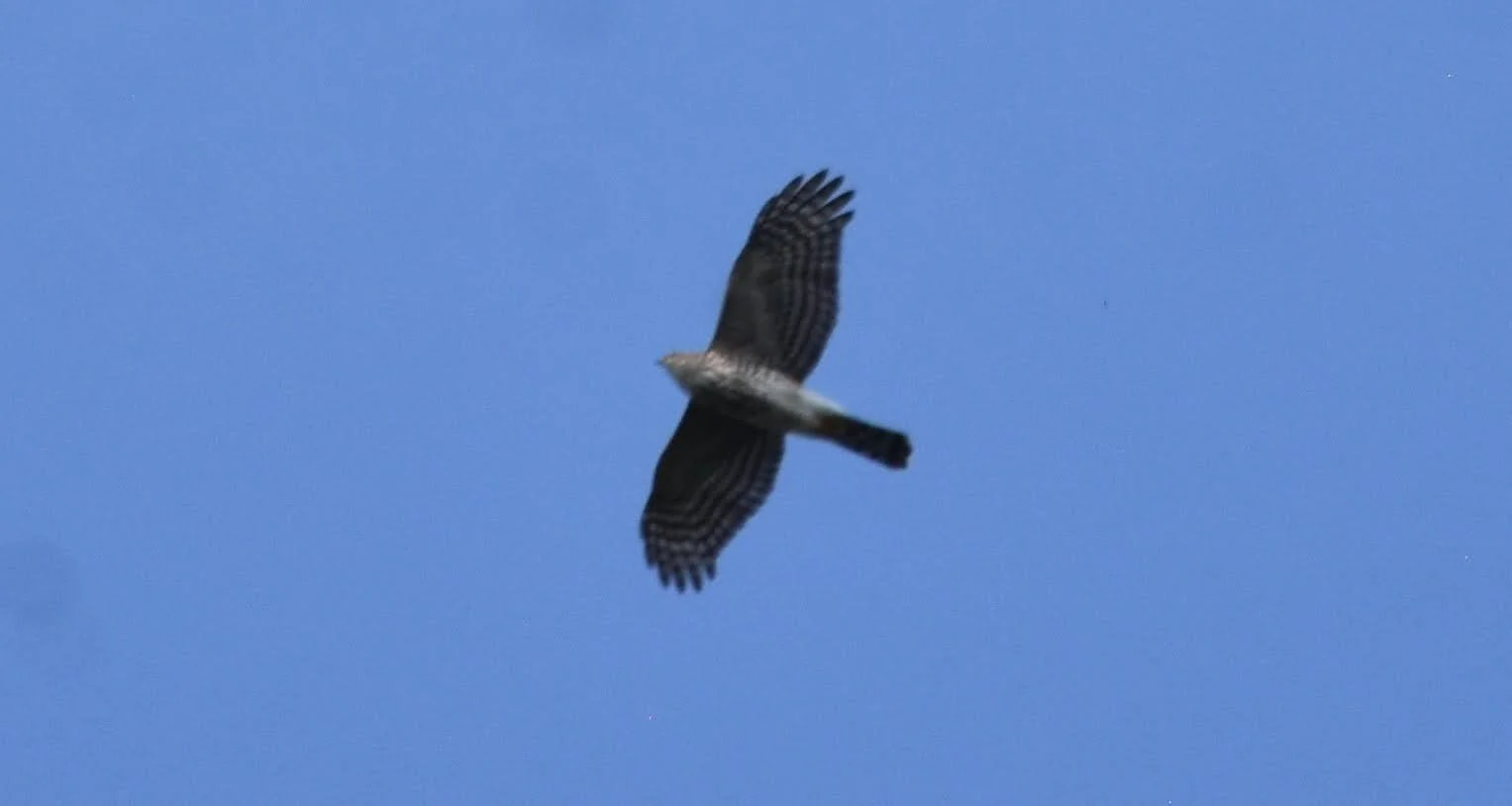
Cooper’s Hawk (Accipiter [Astur] cooperi), immature
This is our largest regular “accipiter-type” hawk (regularly) observed at Mahogany Rock. They have proportionally short wings and a long, banded tail with a rounded tip. They use this tail like a rudder, steering them into forests and thickets in pursuit of their favorite prey, small songbirds but they will also eat a variety of small vertebrates and large insects. Short wings enable them to dodge into tight spaces and make sudden turns to capture prey. Traditionally, they were known as “sparrowhawks,” like their Eurasian relatives. These birds have a flat, squared head when perched. Adults have vibrant blue backs with orange-and-white bands across the breast, while juveniles have fine brown streaking on a white breast with a brown back.
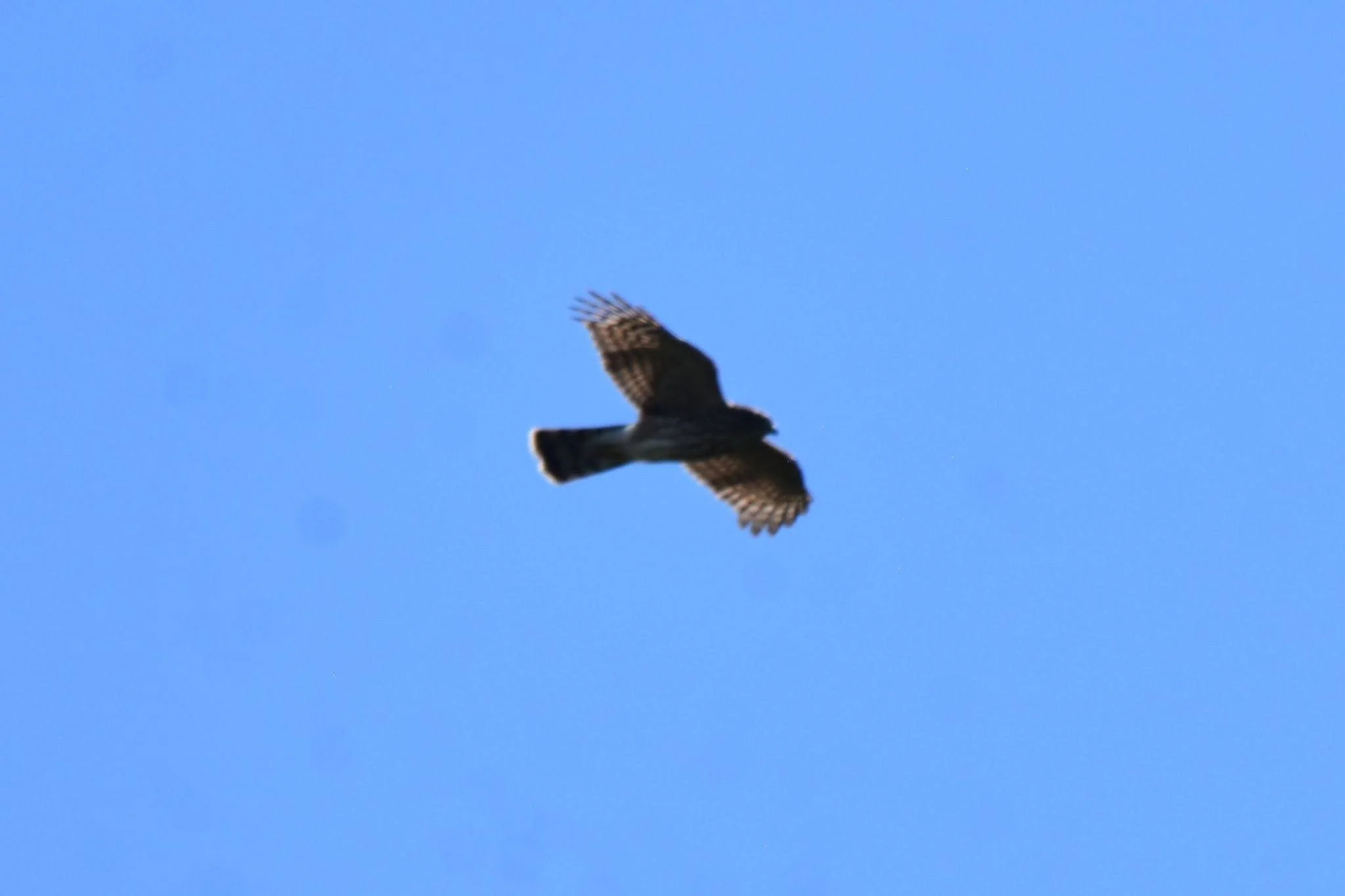
Sharp-shinned Hawk (Accipter striatus), immature
The Sharp-shinned Hawk is almost identical in appearance to the Cooper’s Hawk, but is even smaller with a squared tail and even shorter wings and head. They are capable of diving into even denser vegetation to hunt even smaller and more reclusive birds than their larger relatives. Adults look almost identical in pattern, but have a rounded head with a dark “hood” running from their red eye to the nape of their neck. Immature birds have mostly brown bodies, with broader streaking than the immature Cooper’s Hawk. This particular individual captured a snake and was carrying it into the thermal, when the snake retaliated and bit the hawk and was promptly dropped from the sky. It appeared to be a nonvenomous colubrid (probably a garter snake), but disappeared into a tall hedge of Devil’s Walkingstick (Aralia spinosa) before we could positively identify it.
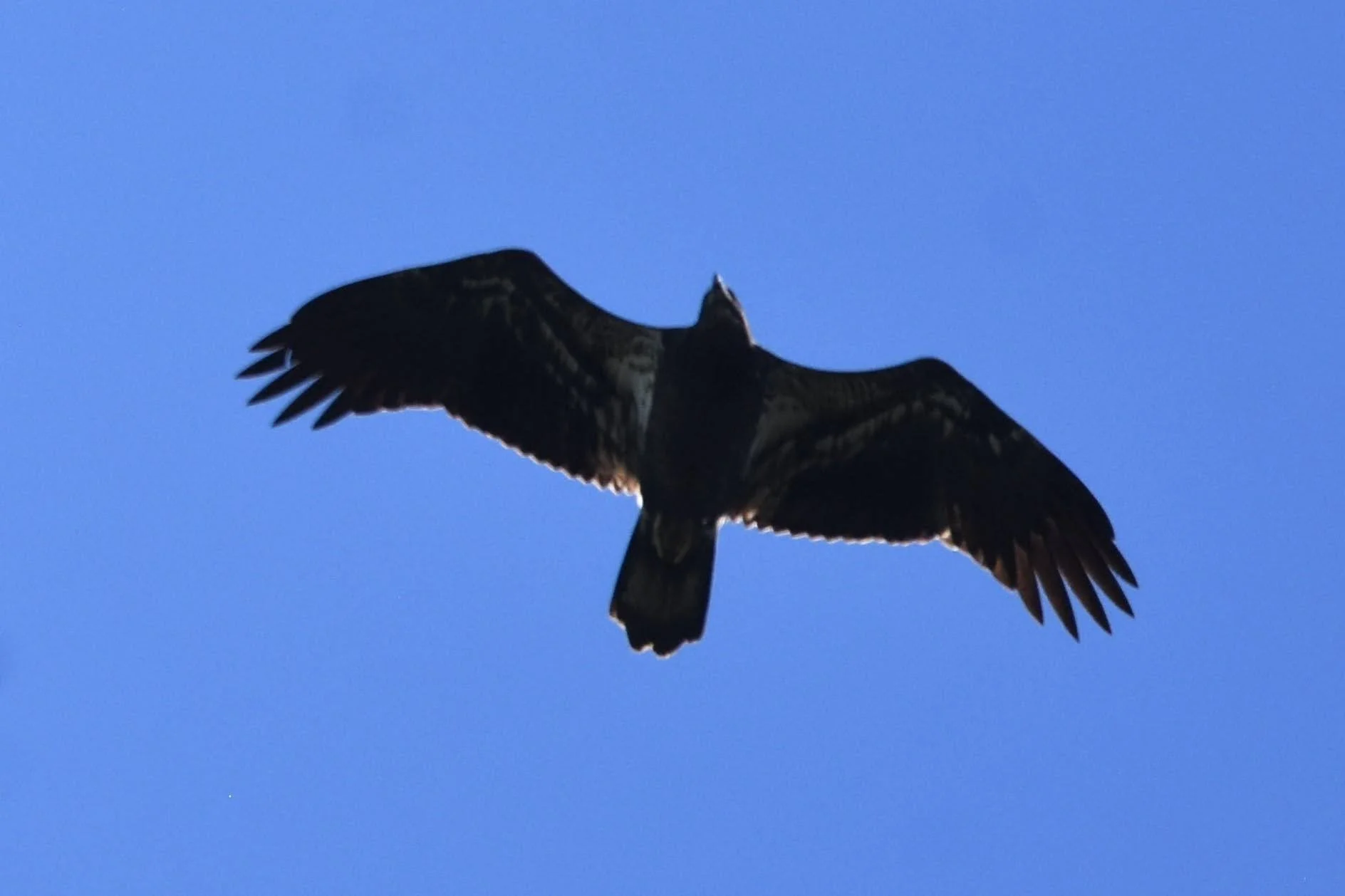
Bald Eagle (Haliaetus leucocephalus), second-year
Many people assume that eagles without a bright white head and tail are golden eagles, but in reality, very few eagles anywhere in the eastern U.S. are true golden eagles instead of immature bald eagles. It takes five years, each with a distinct plumage pattern, for a bald eagle to develop the famous adult coloration. First-year birds are almost entirely brown, with golden feathers on the head, back and wings just slightly differently arranged from the adult golden eagle. Second-year birds are mostly dark brown, with bright white armpits (young golden eagles have white patches halfway along their wings). Third-year birds are often mostly-white, with concentrated white near the head and tail, and fourth-year birds look almost like adults, often with only some splotchy brown on the tail, white on the back and wings, and a bold brown eyestripe. Bald eagles are smaller, with proportionally larger beaks and the almost completely flat wings in flight (as opposed to the dihedral wing shape in vultures, hawks, and golden eagles). They are predominantly fish-eating eagles, although they eat a variety of prey. Golden Eagles prefer the open country of high-elevation areas and prairies, and mainly reside in the interior U.S. and western mountains, capturing prey including small deer and foxes on rare occasions.
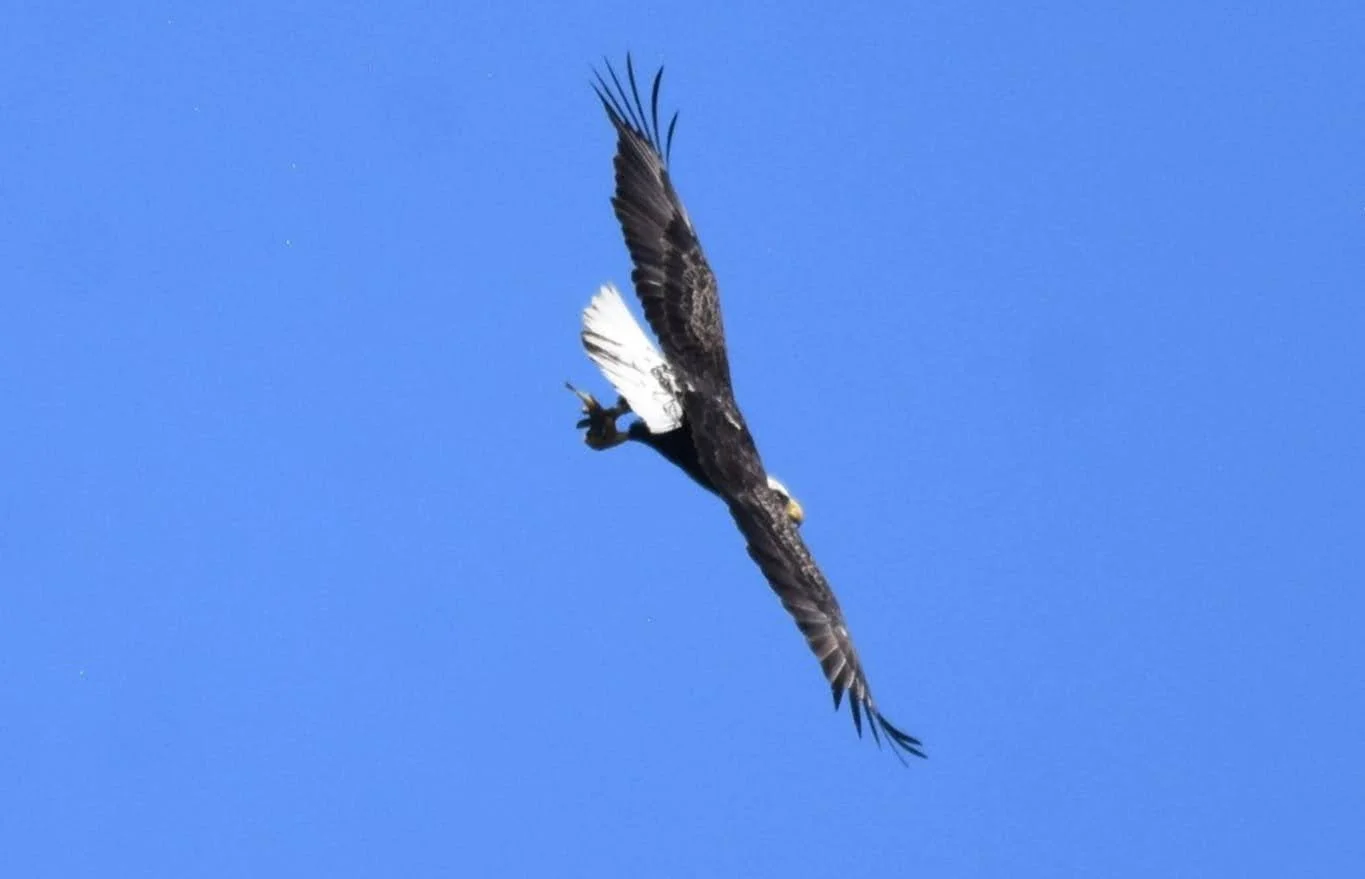
A fourth-year Bald Eagle (Haliaetus leucocephalus) carrying a bluegill fish. Many migratory raptors will carry food for hundreds of miles, clasped in their talons. Opportunities to hunt are uncertain in-transit, so many hawks and eagles bring an unconventional picnic.
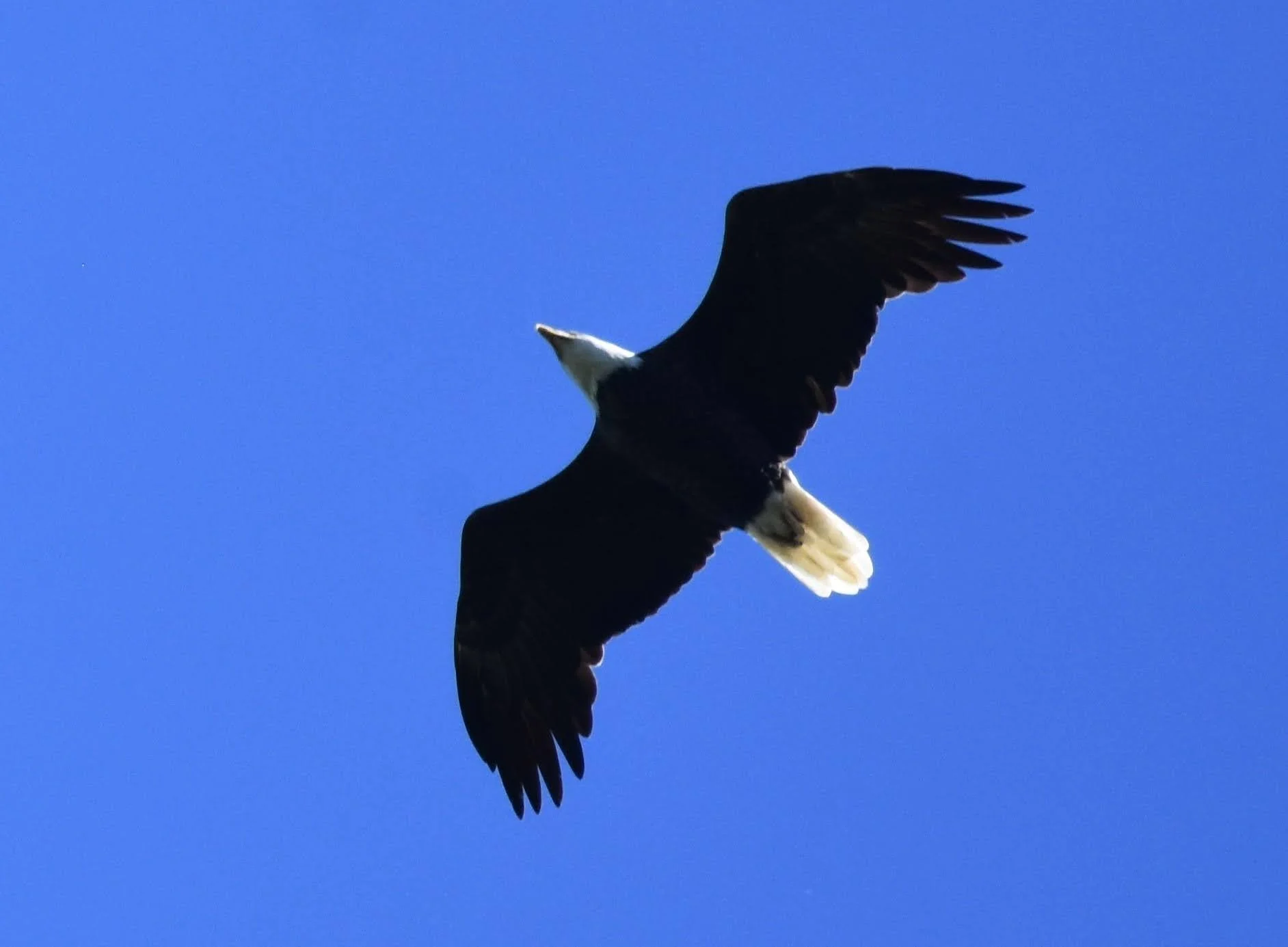
Bald Eagle (Haliaetus leucocephalus), adult
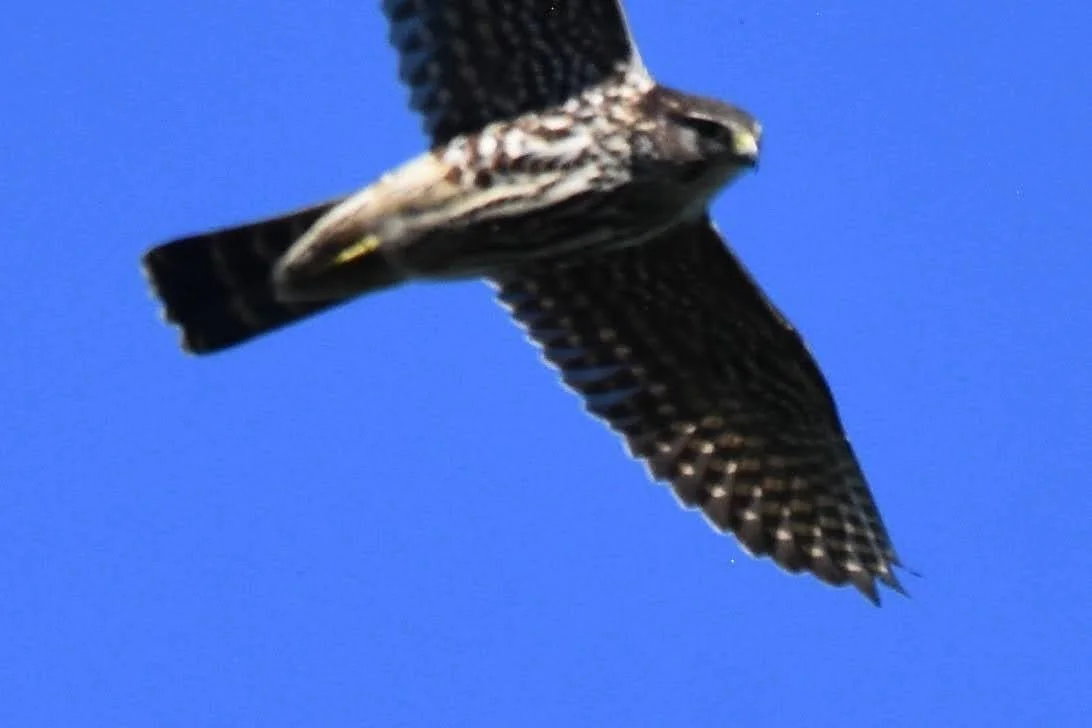
Merlin (Falco colombarius), adult. Most falcons are small and fast, usually darting low over the treeline when they are spotted on the hawkwatch. The Merlin breeds in boreal forest, and passes through our region only during migration. Compared to the American Kestrel, they are darker with a dark mask, bands that appear as spots on the wings, and a densely-streaked breast.
There are also some honorable mentions which are not hawks, eagles, vultures, or falcons, depicted below.
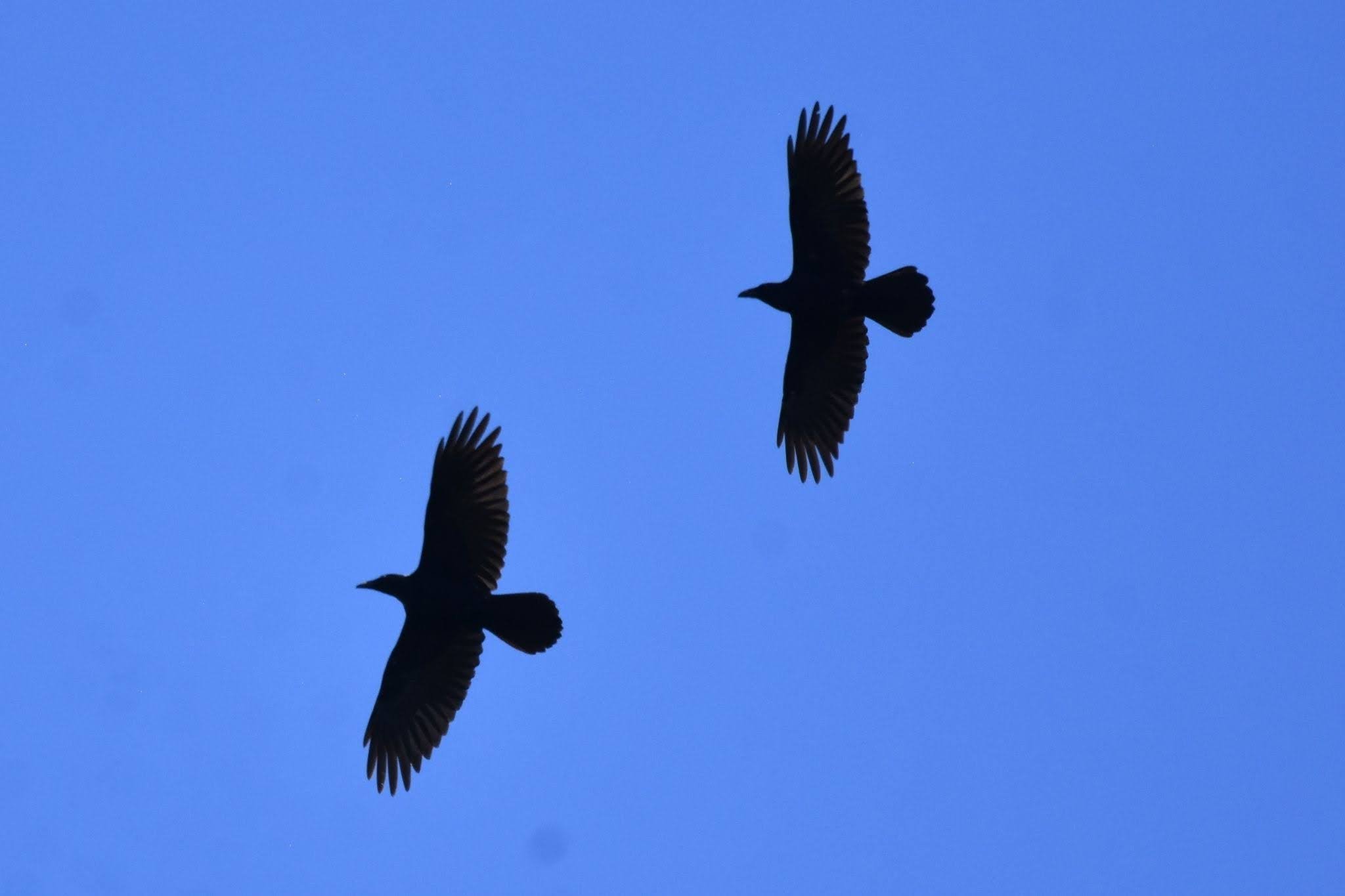
Common Raven (Corvus corax) pair in a bonding flight. While similar to raptors in their soaring flight, and similar in their love for carrion and small prey animals, they are corvids instead alongside crows and jays. Dozens of these birds soar with the migrating hawks over Mahogany Rock.
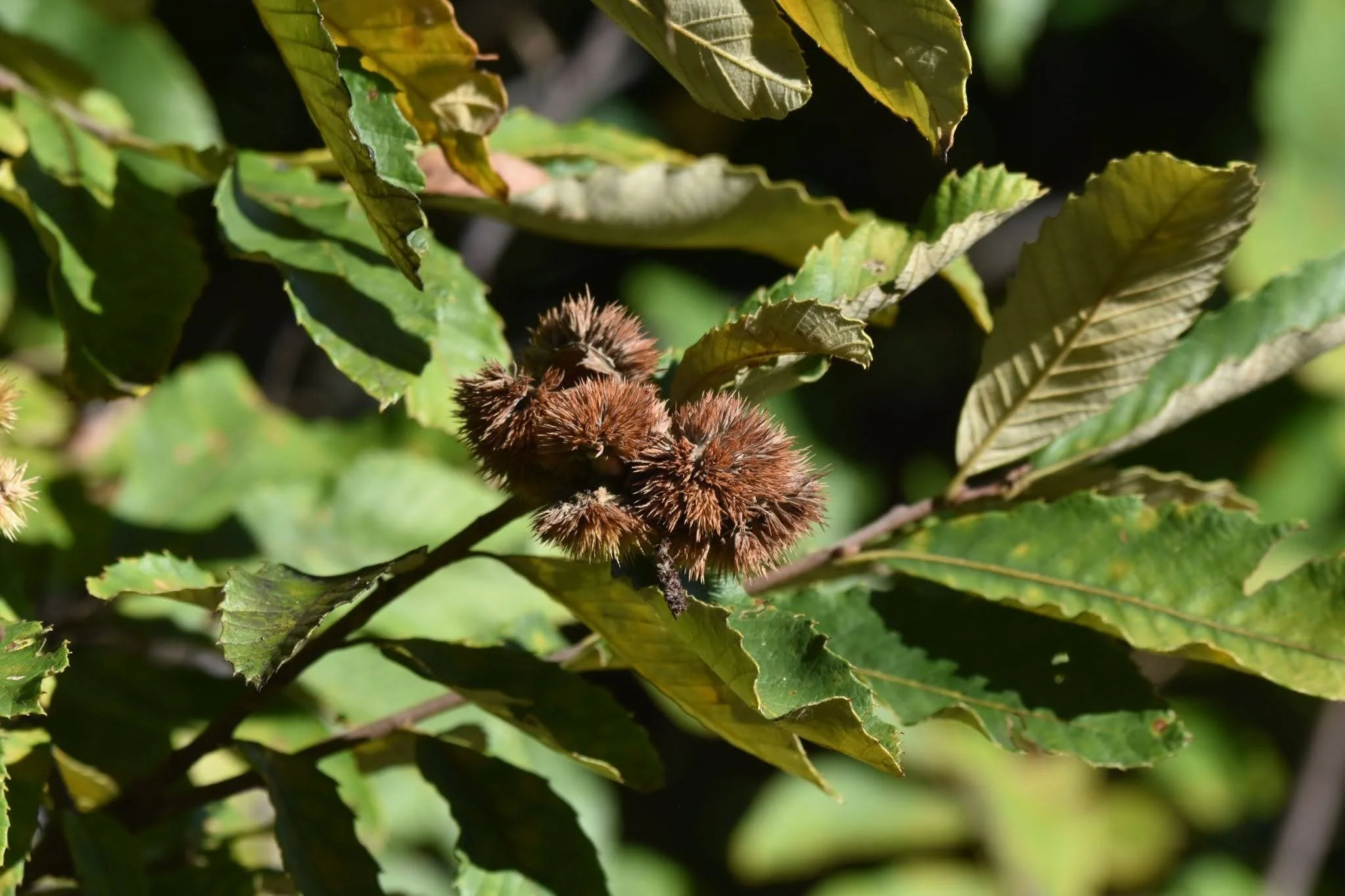
Allegheny Chinquapin (Castanea pumila) and a variety of nonnative and hybrid chestnut species were fruiting abundantly along the Blue Ridge Parkway, feeding the squirrels and wild mice that will become food for our thousands of passing hawks.
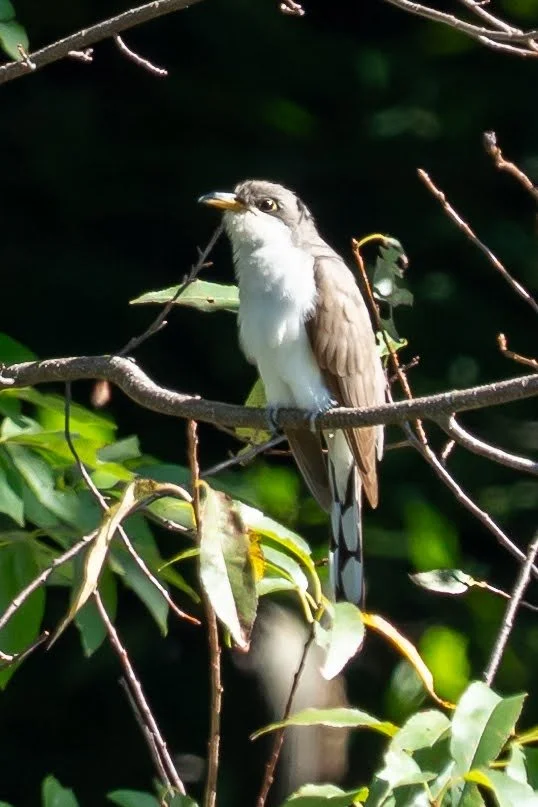
A Yellow-billed Cuckoo (Coccyzus americanus) passing over Mahogany Rock with countless other migratory songbirds including Rose-breasted Grosbeak, Tennessee Warbler, Bay-breasted Warbler, Magnolia Warbler, and a variety of other species.
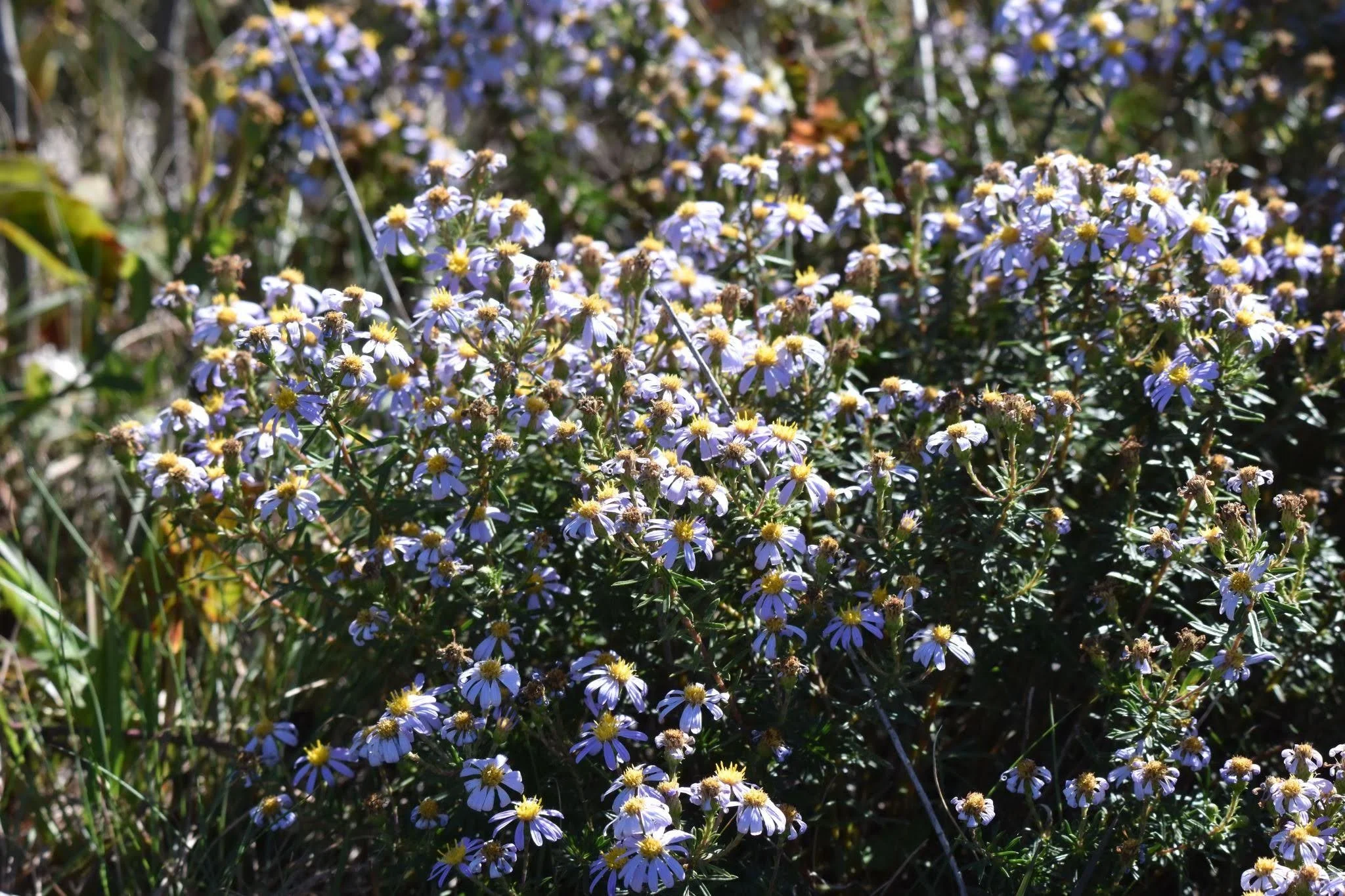
An abundance of Flax-leaved Asters (Ionactis linariifolia) in full bloom along the parkway.
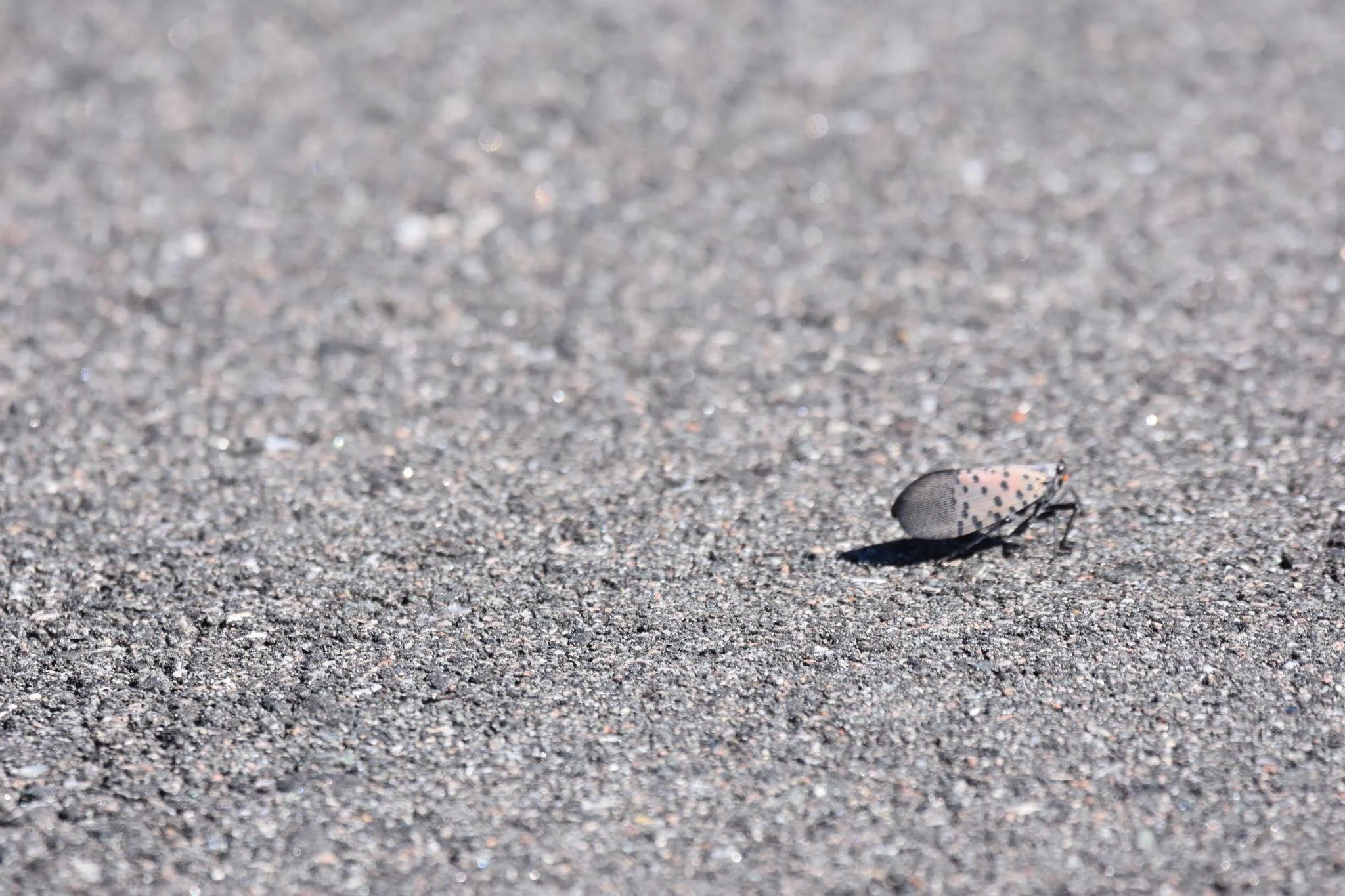
Unfortunately, many individuals of the newly introduced Spotted Lanternfly (Lycorma delicatula) were seen through binoculars at high altitude, dispersing across the mountains. This one landed on the parkway. As beautiful as these large, butterfly-like insects are, they are a destructive invasive-exotic species and a real threat to the temperate forests across North America.
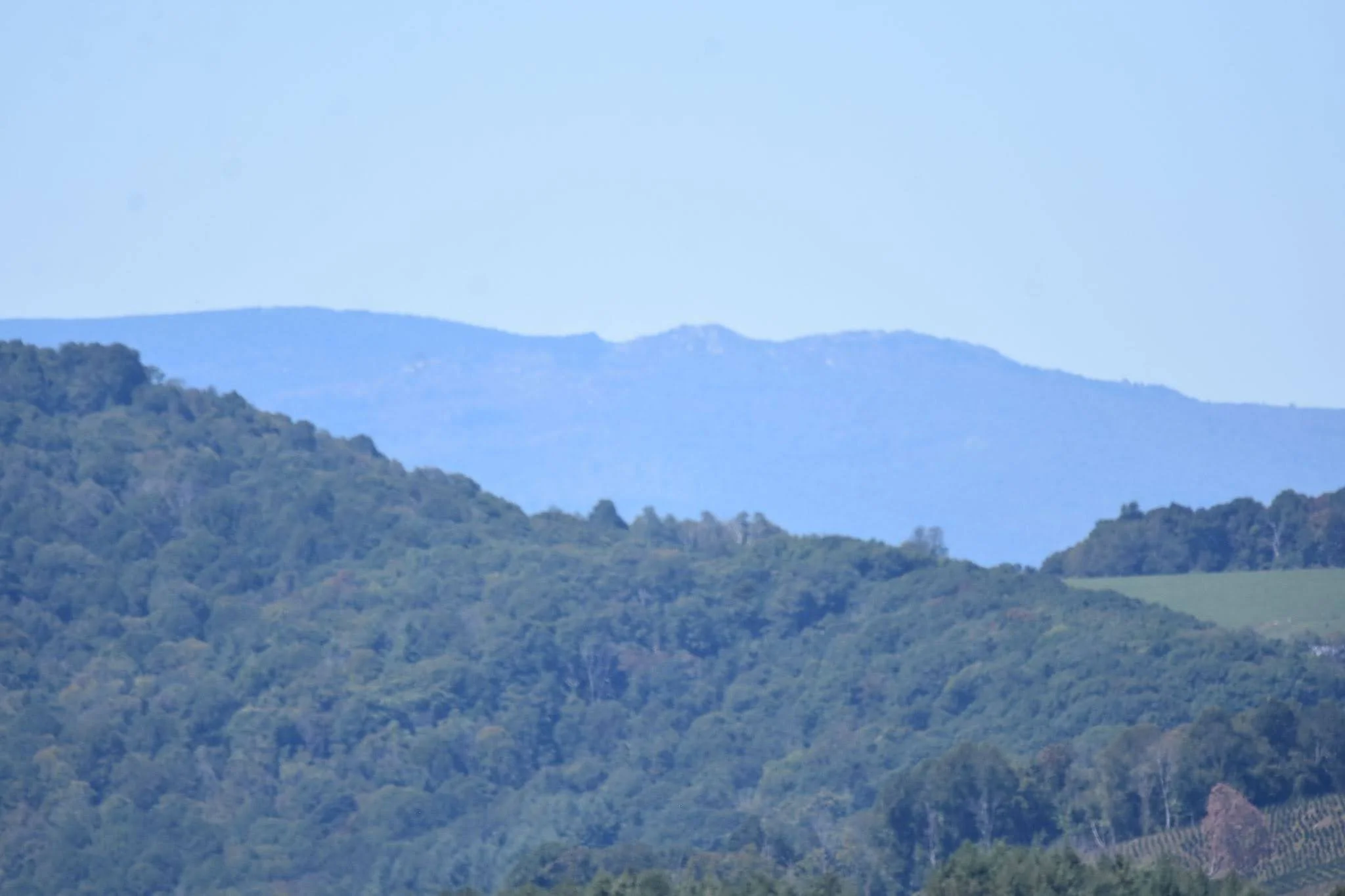
The view of faraway Mt. Rogers from Mahogany Rock, across the state line. You can see the spruce-fir forest of the summit to the left and the rock outcrops of Wilburn Ridge to the right.