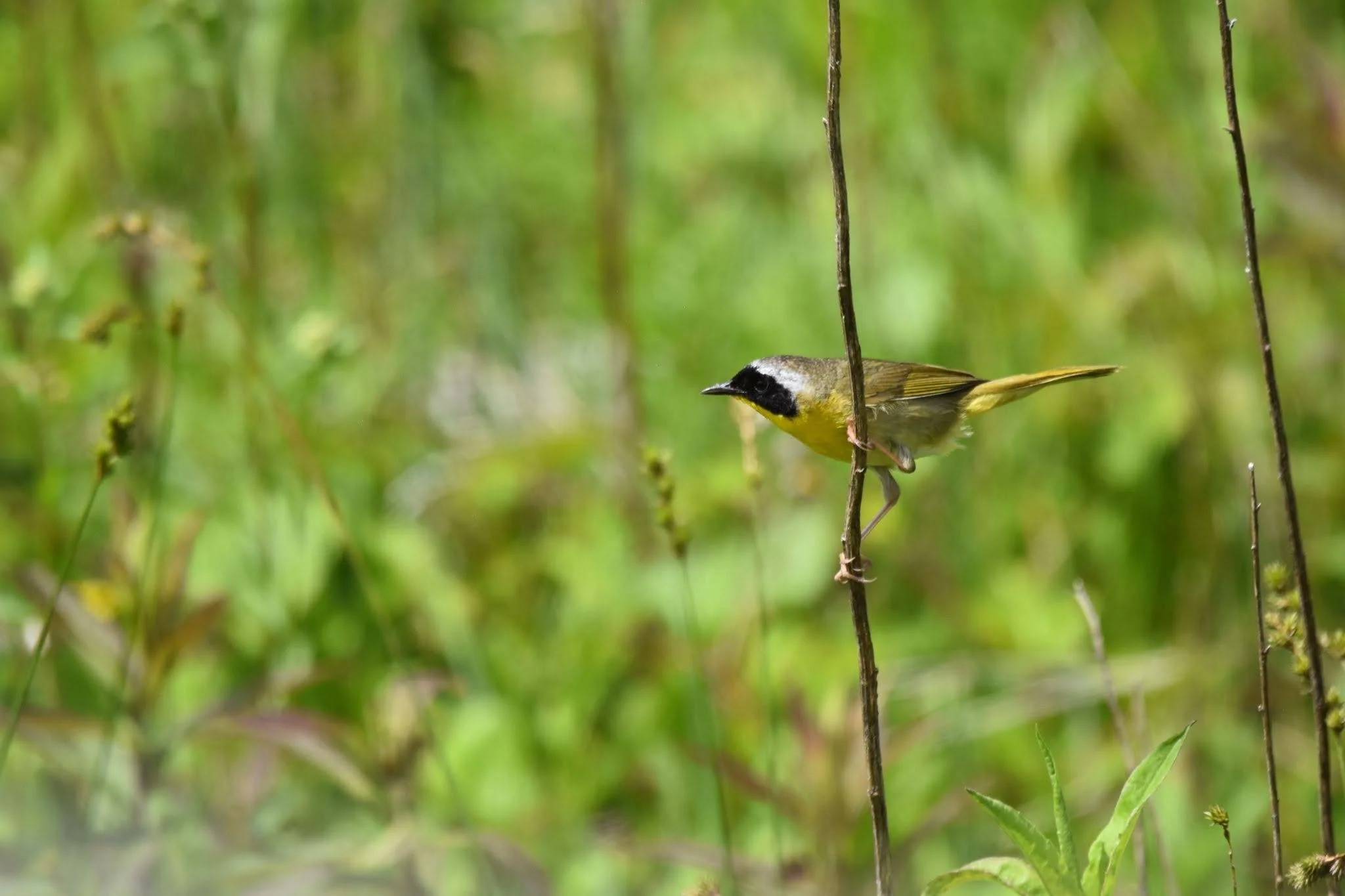
A Common Yellowthroat (Geothlypis trichas) perched on a branch.
Ornithology Camp 2026 was an outstanding expedition across Virginia’s highest peaks and into the most picturesque valleys, tracking down species never before seen on Blue Ridge Discovery Center excursions and ending a total count of a record-breaking 101 species!
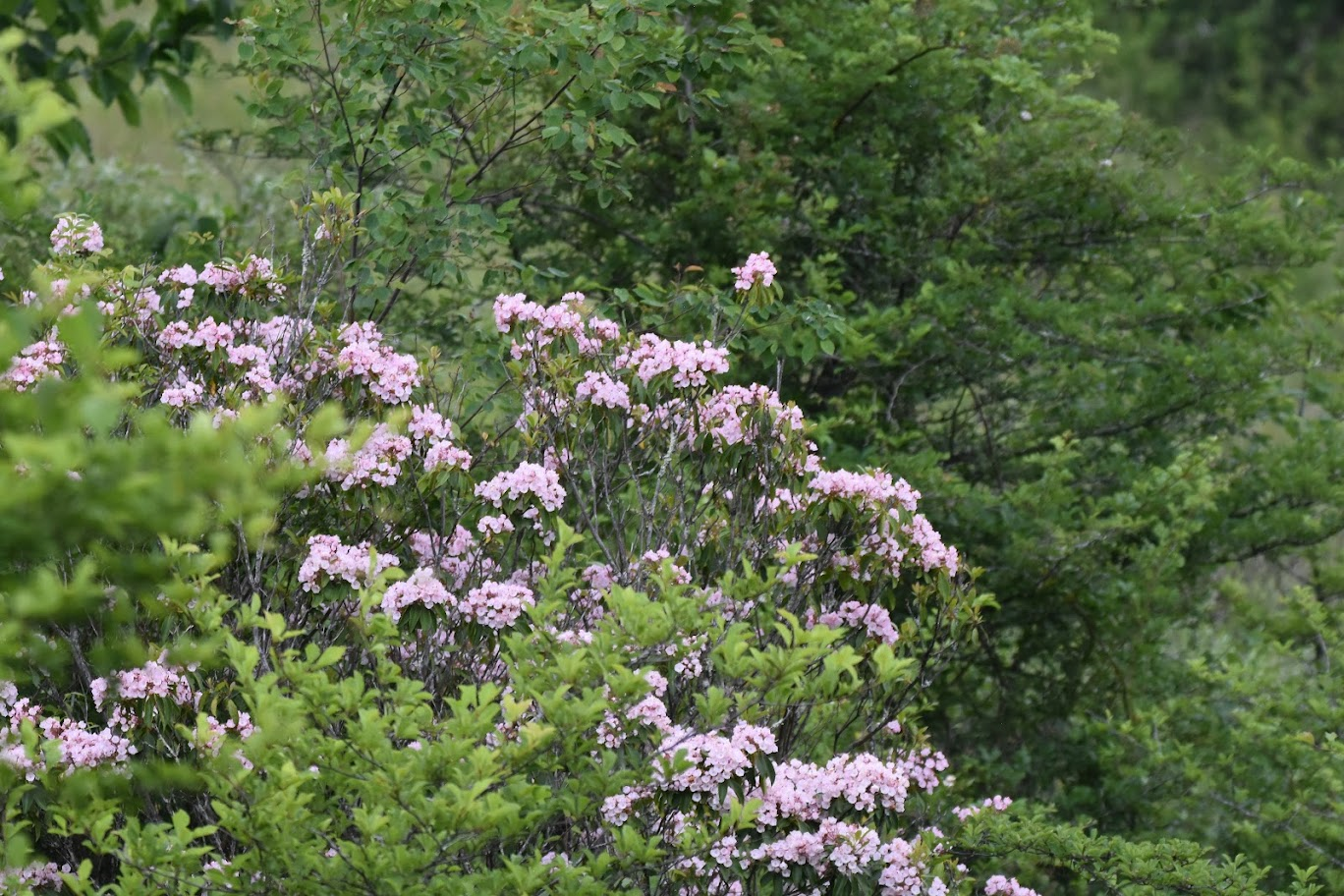
Flowering mountain laurel at Grindstone Campground.
The first evening involved an introduction to birdwatching, including a review of “life lists,” birding techniques, binoculars, field guides, and most importantly, birding ethics. Each young birder was also tasked with becoming an expert on one native species of bird, on which they would present a research project at the end of the week. They were introduced to the resources in our natural history library, equipment, and other supplies they might need. After that, everyone was ready to do some birding. We found most of our campus birds around the rain garden and wetland boardwalk. Ruby-throated Hummingbirds (Archilochus colubris) visiting front porch feeders, Cedar Waxwings (Bombycilla cedrorum) gathering in a tall pine tree, and nesting Red-winged Blackbirds (Agelaius phoeniceus) carrying food to their young nestled in the cattails. After dinner and a campfire with s’mores, our evening was spent participating in a survey of the elusive Northern Saw-whet Owl (Aegolius acadicus), found only at the highest elevations of the Blue Ridge Mountains outside of Canada and the far northern U.S. We were unsuccessful in our search for owls, but had an incredible show of blue ghost fireflies and “dismalites,” tiny glowworms that live in the entangled roots of the spruce forest.
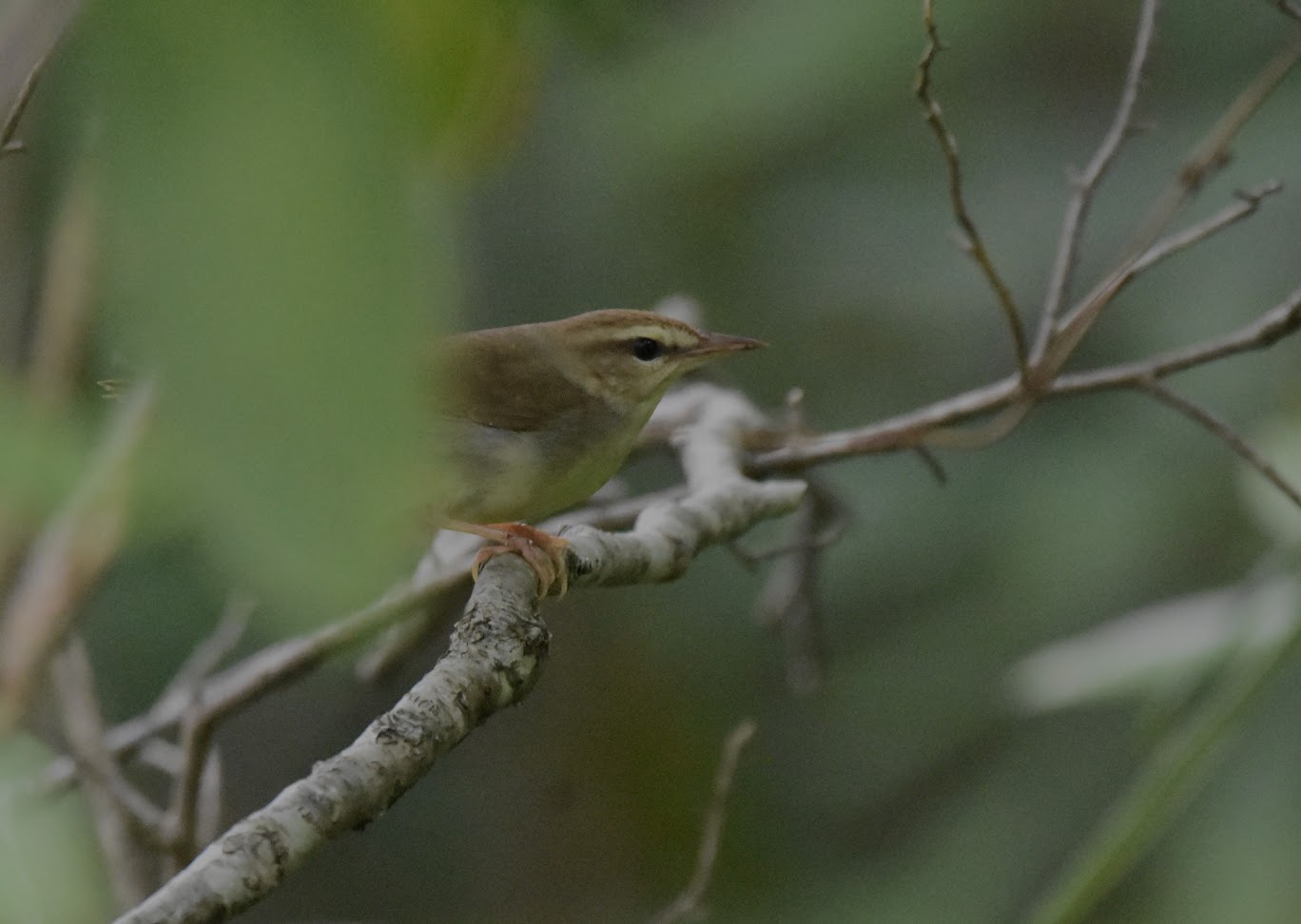
The friendly Swainson’s Warbler we found in the bog.
The next morning started early, traveling into the mountains with retired wildlife biologist and expert birder Allen Boynton, exploring some of the mid-elevation cove forests. Budding ornithologists had a chance to practice recognizing hidden birds that are tricky to identify by song, including a myriad of warblers, flycatchers, and vireos such as Least Flycatcher (Empidonax minimus) and Blackburnian Warbler (Setophaga fusca). On a Forest Service road, we were able to capture vivid glimpses of mountain-dwelling Scarlet Tanager (Piranga olivacea), Hooded Warbler (Setophaga citrina), Blue-headed Vireo (Vireo solitarius), and Chestnut-sided Warbler (Setophaga pensylvanica). In a bog near Grindstone Campground, we stopped to watch Common Ravens (Corvus corax) soar low overhead, making their loud, raucous calls. Then, hearing the song of a male, had excellent views of a Swainson’s Warbler (Limnothlypis swainsonii), Allen Boynton called the bird into view. This large but nondescript warbler was once rare in the region, but is becoming more common in rhododendron thickets, forested swamps, and sphagnum bogs. Deeper in the forest, we found the much more colorful cousin of this warbler, the Canada Warbler (Cardellina canadensis), alongside Black-throated Blue Warbler (Setophaga caerulescens), Ovenbird (Seiurus aurocapilla), and Black-throated Green Warblers (Setophaga virens). Before leaving, we also watched a singular male Red Crossbill (Loxia curvirostra) perch on the tallest branch of a hemlock tree, giving us a second rare bird of the morning. A conifer specialist, these birds are virtually nonexistent in the Southern U.S., but nomadic flocks thrive in the spruce-fir forests and giant hemlocks of the Mt. Rogers area.
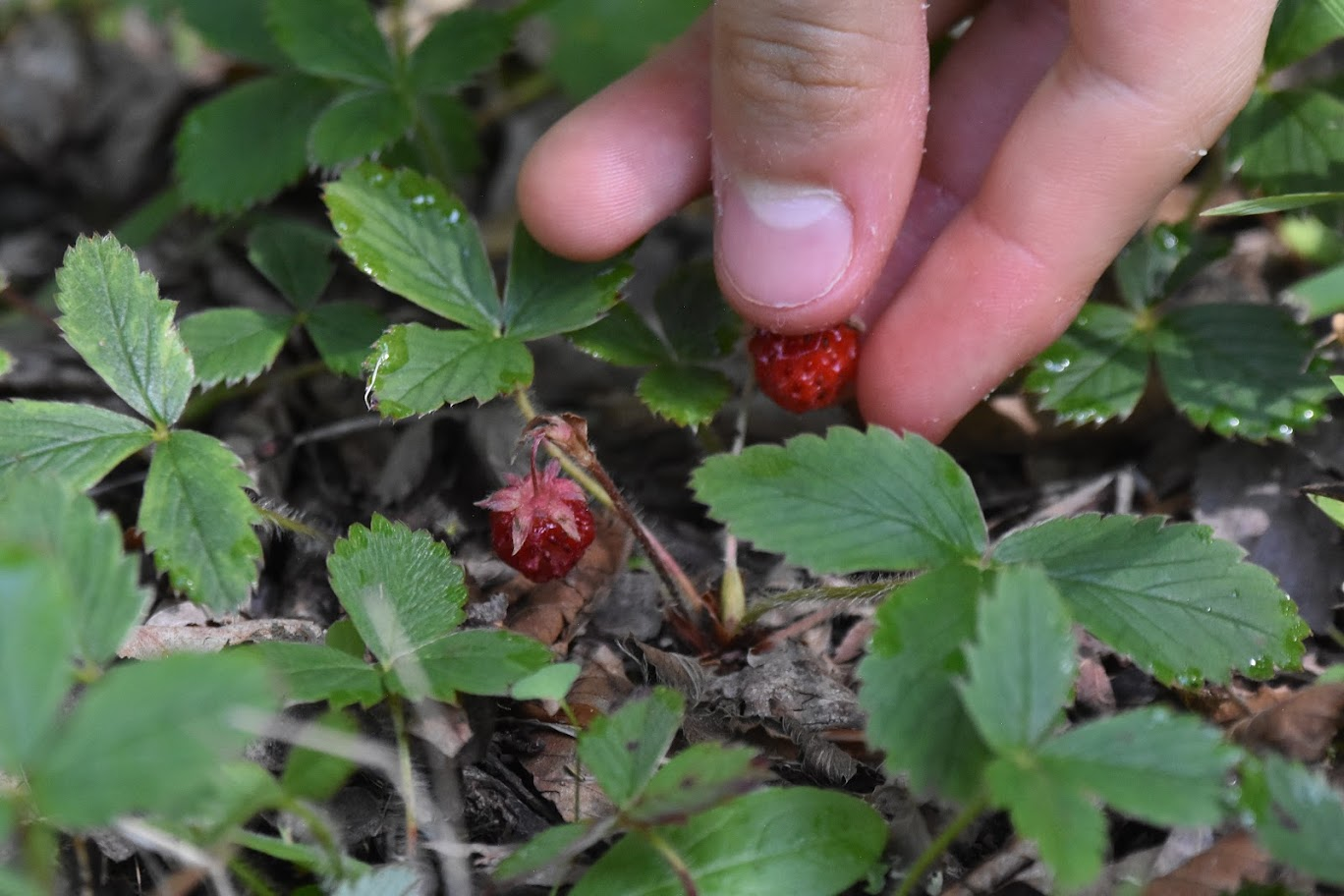
Wild Virginia Strawberries (Fragaria virginiana), an ancestor of cultivated strawberries, were ripening on the ground everywhere around Grindstone Campground, and served as a delicious treat to native birds and some young foragers in our group alike.
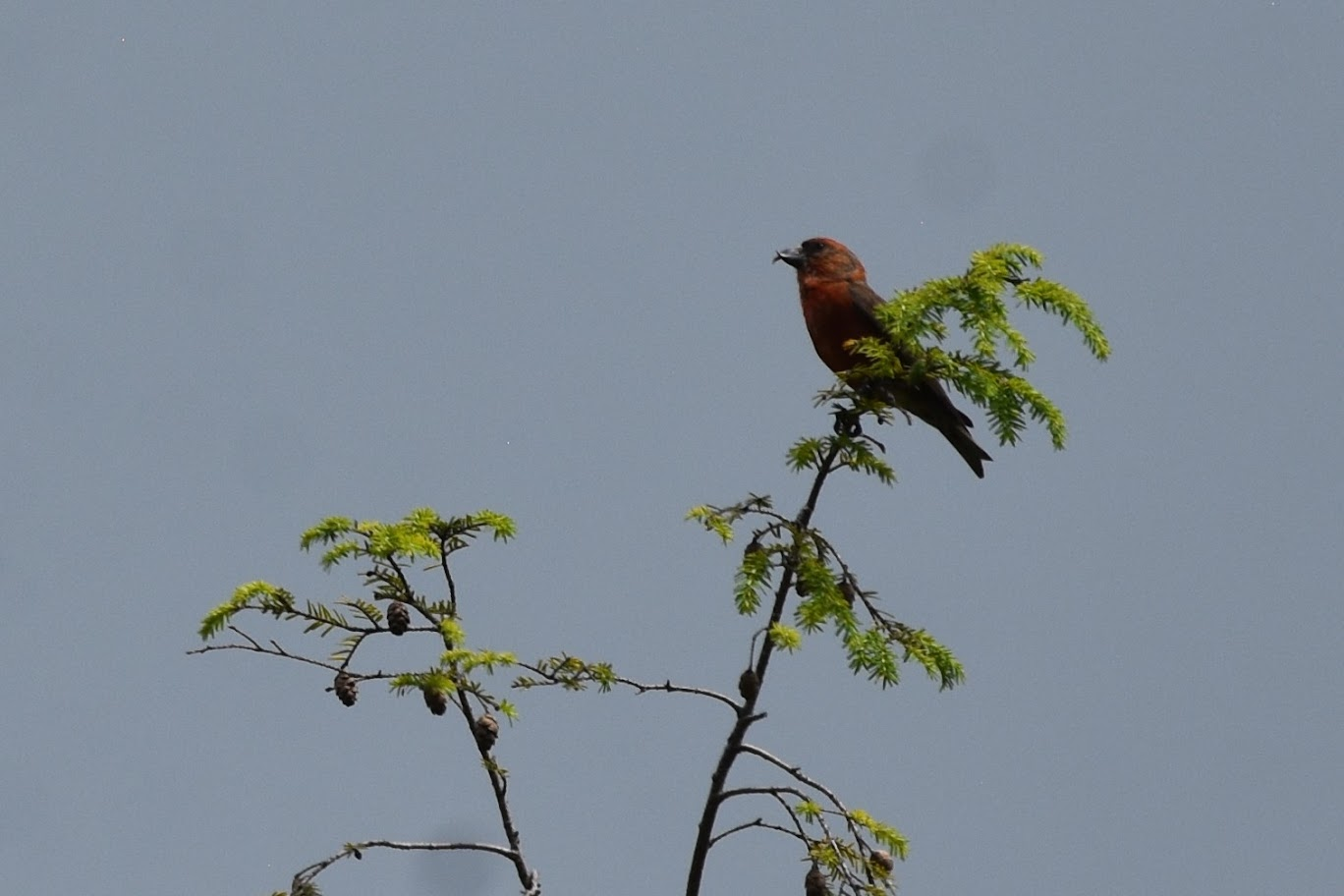
The lone male Red Crossbill, stopping briefly to feed on hemlock cones.
The first afternoon was spent in the Saltville Wellfields, the only inland salt marsh ecosystem in the entirety of the Appalachian Mountains. Monica Hoel, an expert birder and the authority of wildlife in this uniquely specialized habitat in Saltville, guiding the young birders on a trek in search of cuckoos and other species that lurk in the marshes. Swamp hibiscus, Osage orange, and saltmarsh bulrush surround large synthetic lakes from historic salt mines, and fern-flanked limestone forests brought even more birds. Excellent views of a Yellow-billed Cuckoo (Coccyzus americanus), a large caterpillar specialist with a mysterious afternoon song, were acquired deep in the marsh, alongside wetland birds like Green Heron (Butorides virescens) and Great Blue Heron (Ardea herodias), and a myriad of low-elevation birds like White-eyed Vireo (Vireo griseus) and Orchard Oriole (Icterus spurius). After sunset, a few hours were spent on the Blue Ridge Discovery Center trails to find the resident family of Eastern Screech Owls (Megascops asio).
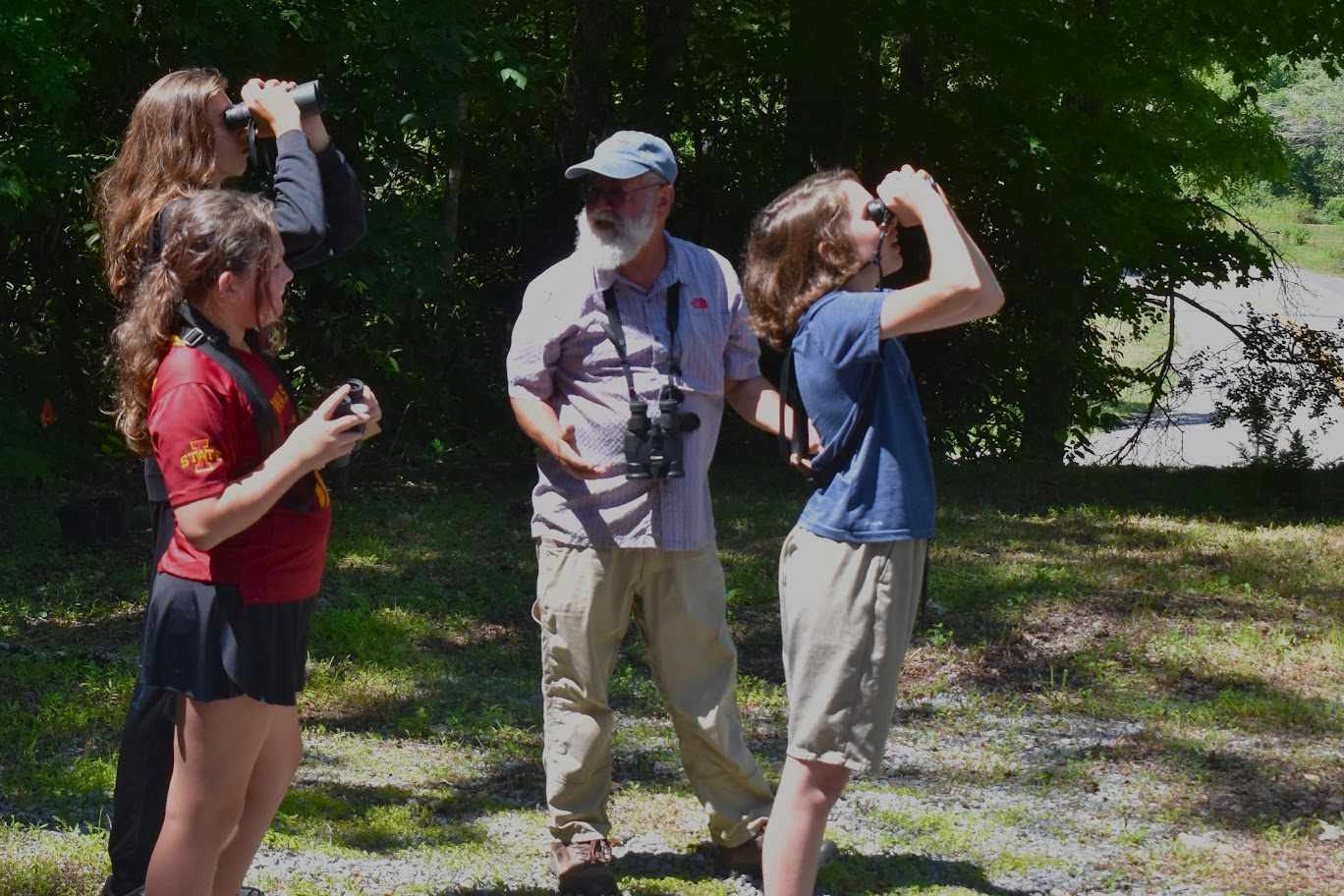
Dr. Hopp explains to campers how they can locate hidden nests by observing the parents’ behaviors, using an American Robin nest as an example.
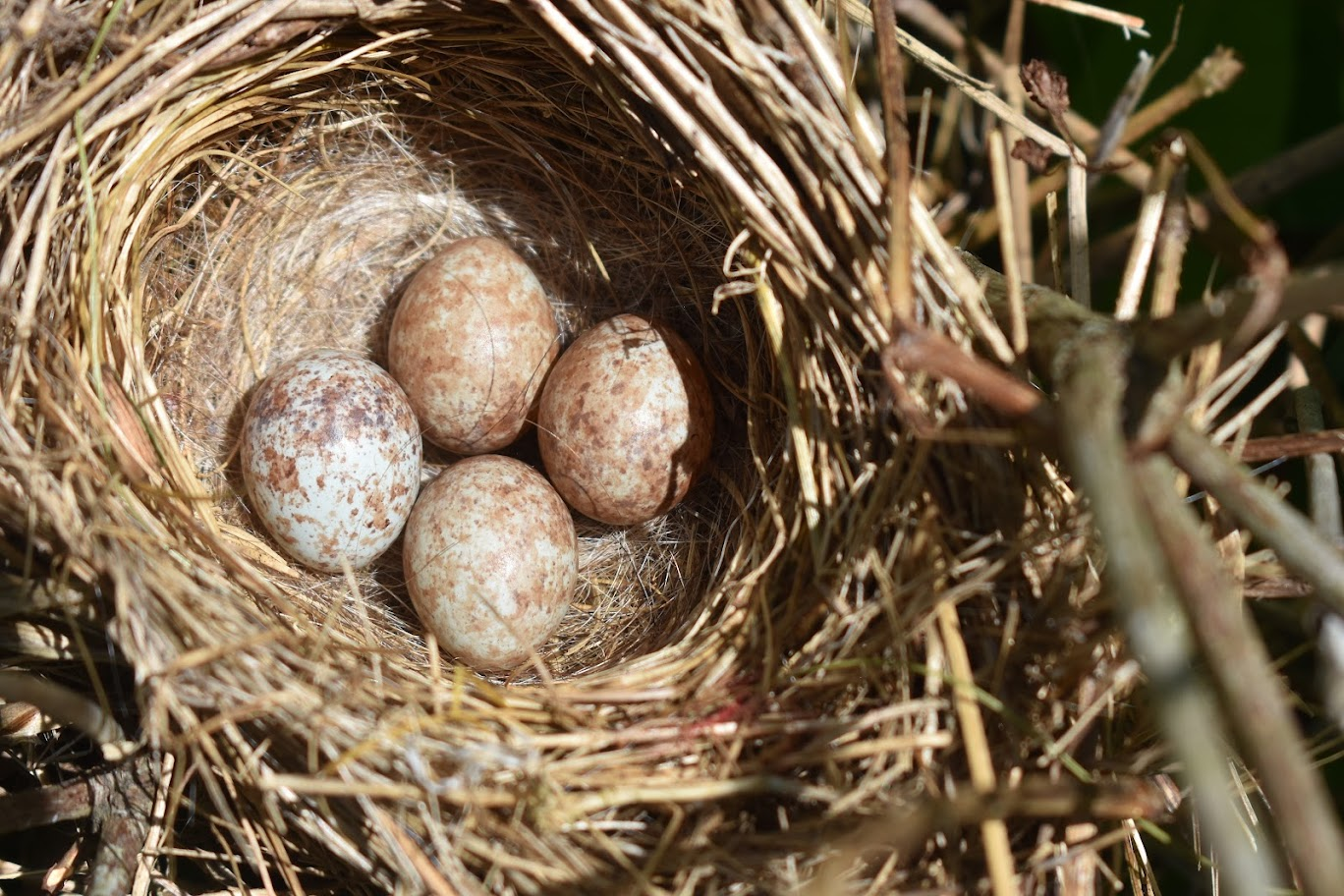
Song sparrow nest in the rain garden.
The next morning started bright and early at 6:00 am, conducting point count surveys on Whitetop Mountain. Heavy fog and brutal winds were unrelenting, but a variety of species were recorded including the rare Vesper Sparrow (Pooecetes gramineus), Indigo Bunting (Passerina cyanea), Red-breasted Nuthatch (Sitta canadensis), and large flocks of Pine Siskins (Spinus pinus)! After devouring a hearty brunch of breakfast burritos after descending the mountain, the afternoon was spent learning about bird behavior from ornithologist and board president Dr. Steven Hopp, and how to use behavioral observations to find bird nests. Students split into teams, and ventured into the forest to see if they could use bird behavior to track down a nest. We found the moss nest of an Eastern Phoebe (Sayornis phoebe) full of chicks outside the library window on a security camera, a Song Sparrow (Melospiza melodia) nest full of eggs in a mountain laurel bush in the rain garden, and a few American Robin (nests high in the canopy.
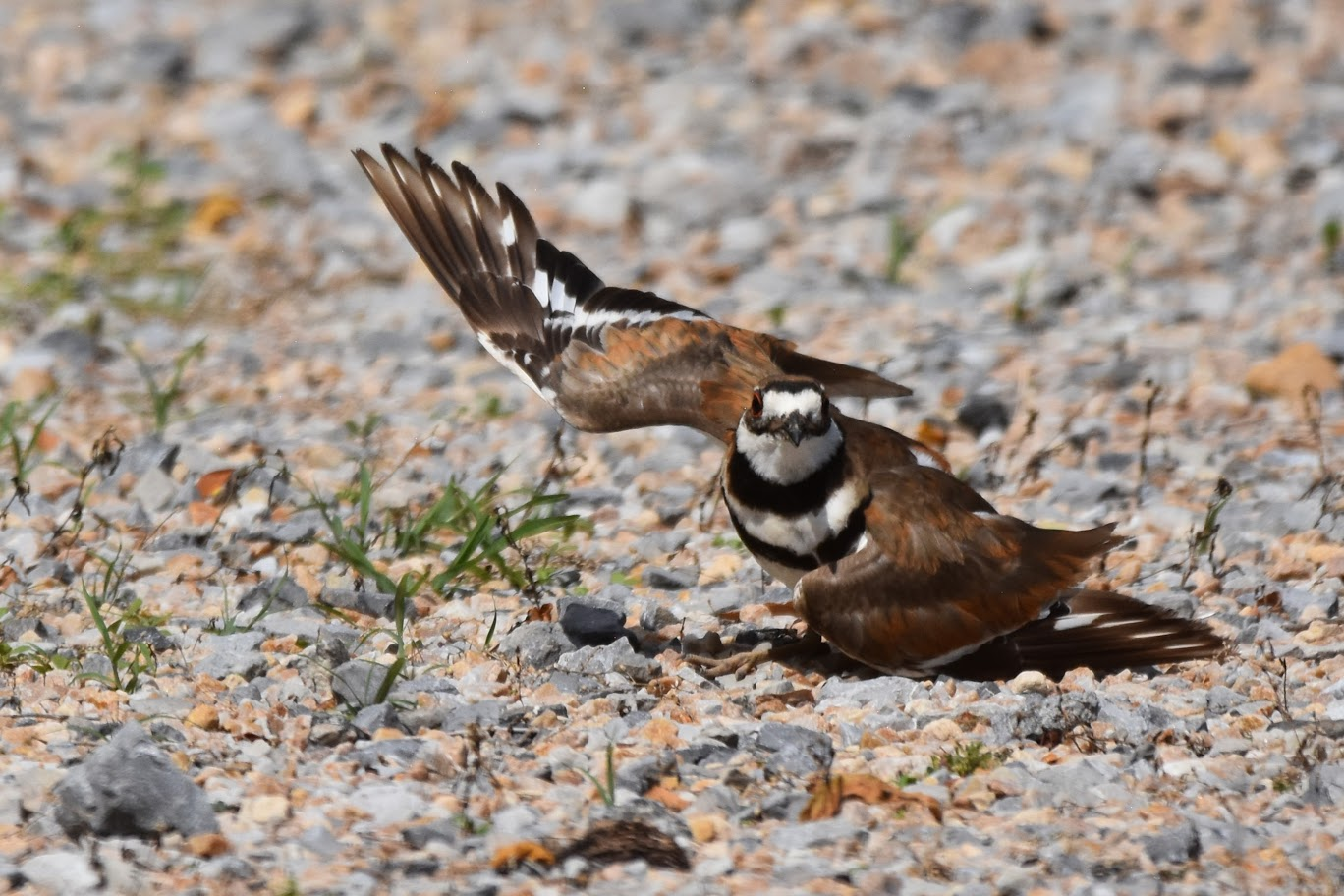
The mother Killdeer, in the midst of her “broken-wing display.”
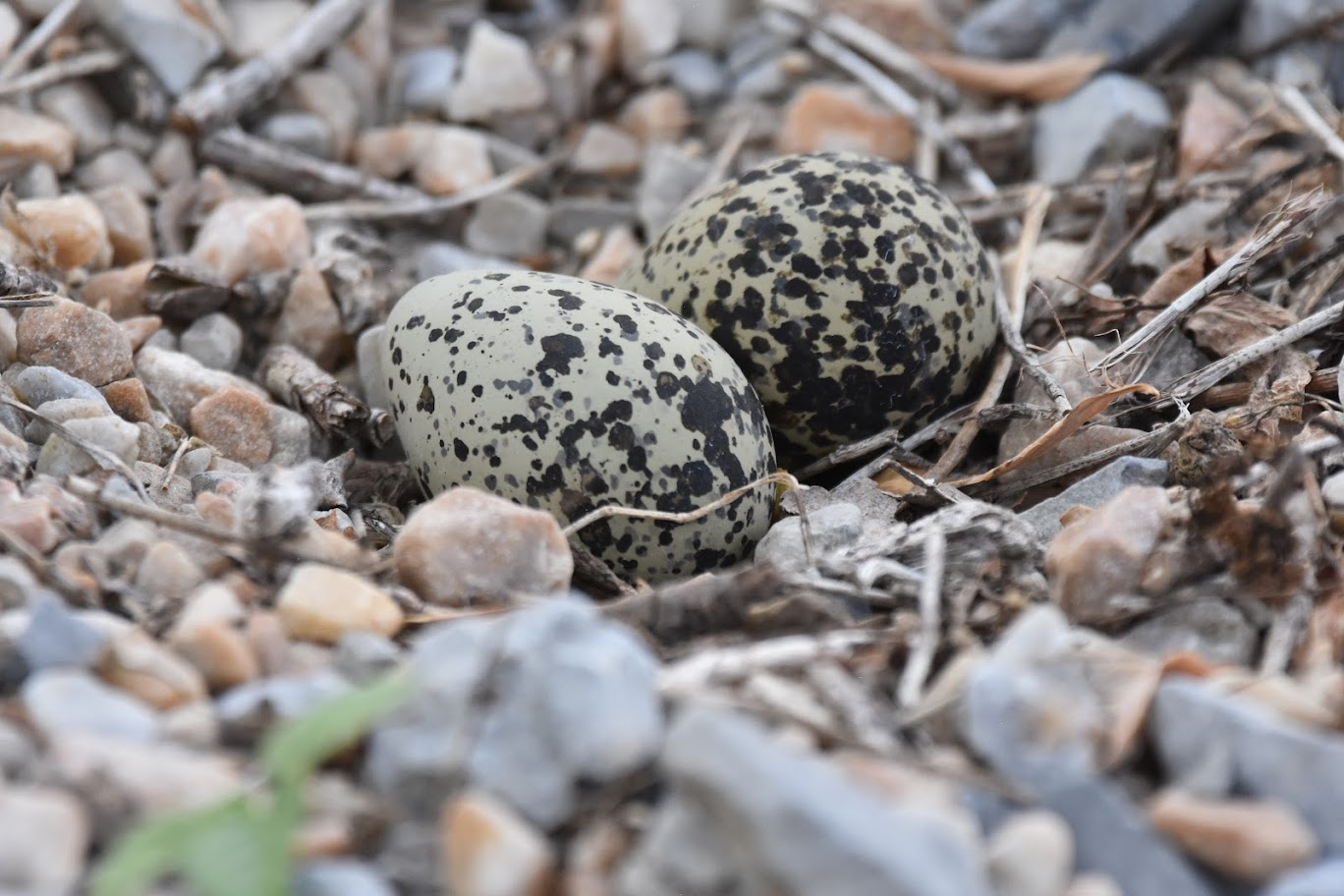
Two eggs in the Killdeer’s nest.
After we watched these birds, we traveled to a private farm on the South Fork of the Holston River with Dr. Hopp, where we found a number of new birds. A mother Killdeer (Charadrius vociferus) was observed defending her nest in a gravel road, showing us a “broken-wing” display to lead us away from the nest. We left her alone, and moved on to find American Kestrel, Eastern Meadowlark, Red-headed Woodpecker, and Great Crested Flycatcher along the river.
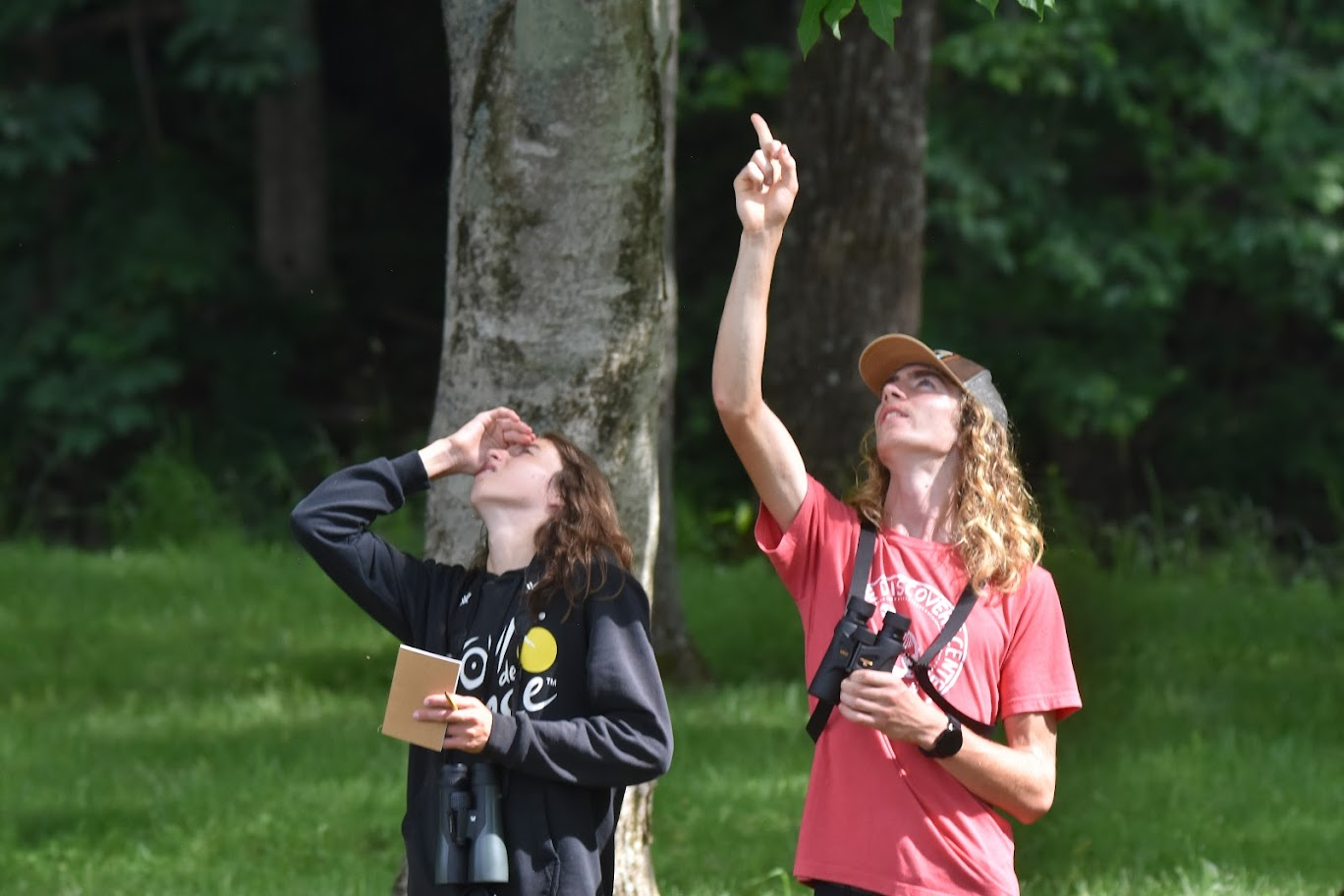
Trying to identify small birds in the canopy of sycamore trees along the river.
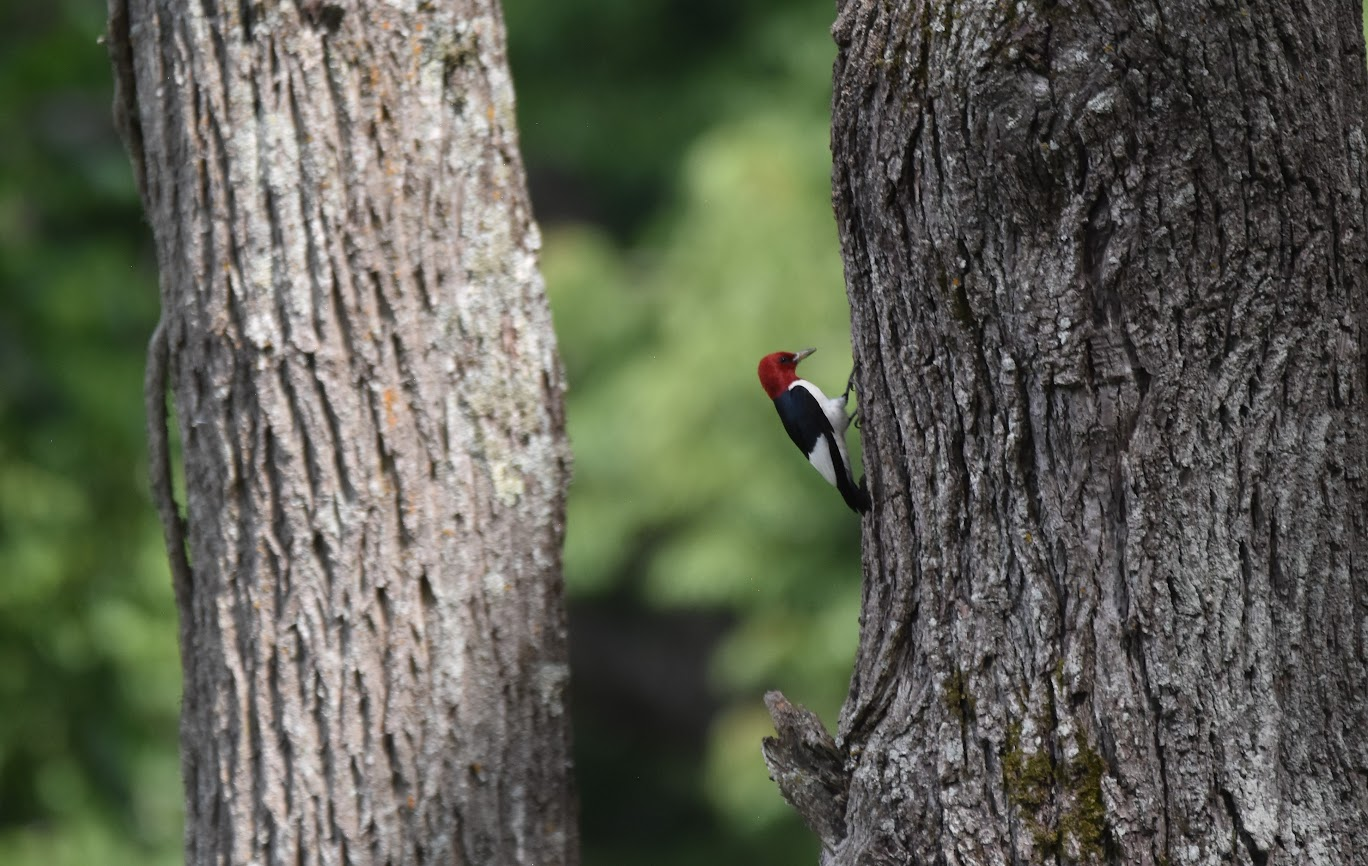
Red-headed Woodpecker (Melanerpes erythrocephalus).
On our final night, we traveled to the northwestern edge of the Mt. Rogers massif on the fringe of the Raccoon Branch Wilderness, to search for the rapidly-declining Eastern Whippoorwill (Antrostomus vociferus), the most iconic bird of the Appalachian darkness. As soon as we stopped the van, a lone, male whippoorwill was heard singing just inside the treeline. We soon were able to spot him, perched in the canopy of a pitch pine, wobbling with every echoing song. Historically, a night without whippoorwills was unusual in the mountains of Southwest Virginia. But with insect declines, habitat destruction and light pollution, this was the first whippoorwill many of our young birders had ever seen. In awe, we marveled at the elegant silhouette of the bird, when a southern flying squirrel careened into the same tall pine. As the airborne squirrel zipped through the canopy running and gliding between the trees, the whippoorwill sang for a few minutes longer before diving deeper into the forest. We walked farther into the wilderness along a logging road, hearing at least a dozen more whippoorwills.
An "excellent" photo of the Eastern Whippoorwill.
Our final morning was spent exploring Buller Fish Hatchery, where we gained a few more species such as a pair of Baltimore Orioles (Icterus galbula), a singing Willow Flycatcher (Empidonax traillii), a Wood Duck (Aix sponsa) perched on a wooden bridge, and another rare species; a large flock of Common Mergansers (Mergus merganser) hunting for minnows in the South Fork of the Holston River. Around half of the young birders were seeking to boost the species count, while another half was more interested in the behavior of the birds. After our “scramble” at the fish hatchery, there were 99 species on the week’s list. With only one species left to get an even one hundred, the final two species were found at executive director Lisa Benish’s property. Surprisingly, they had eluded the campers for the entire week; the Pileated Woodpecker (Dryocopus pileatus) and Hairy Woodpecker (Leuconotopicus villosus).
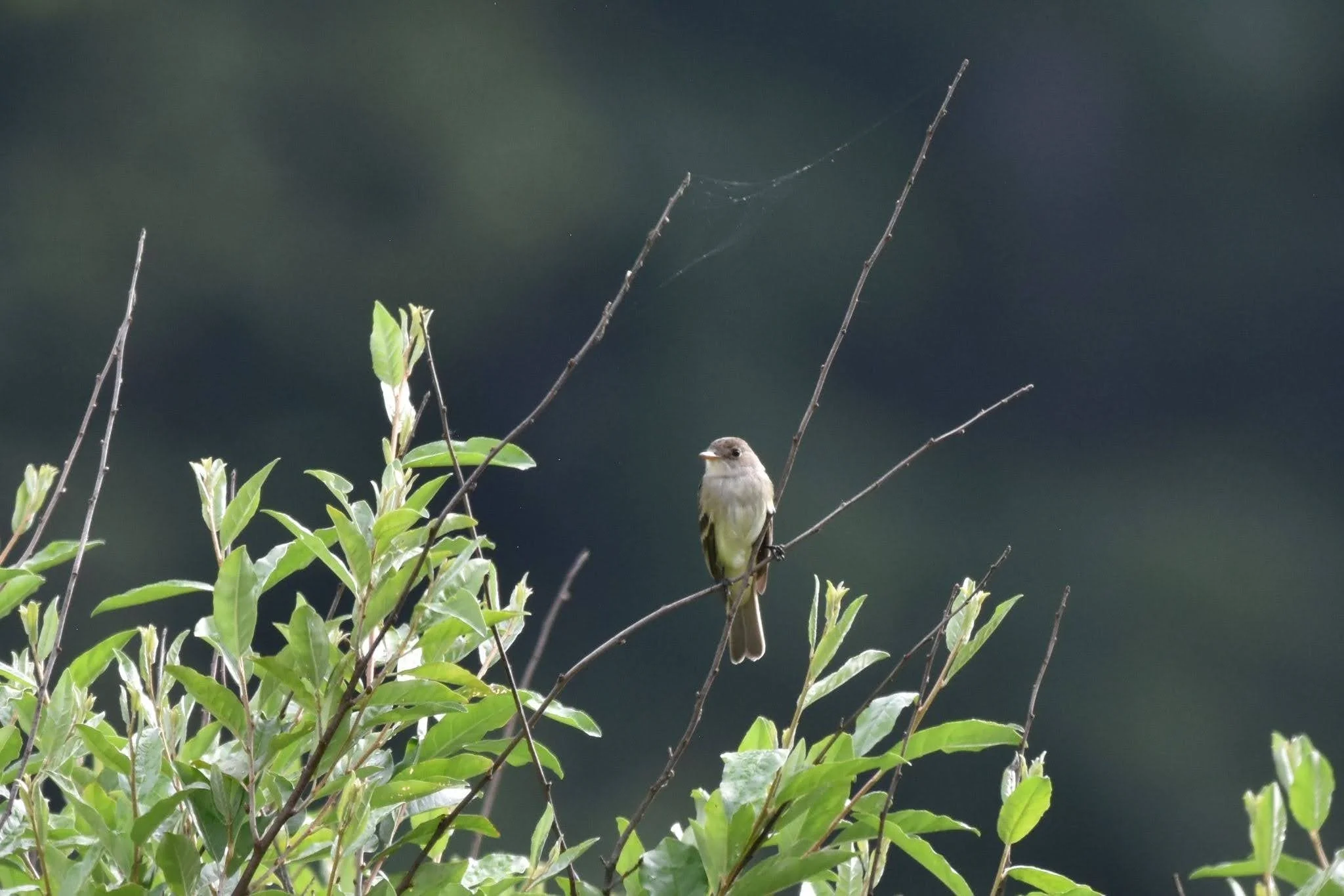
The Willow Flycatcher, identifiable only by his “fitz-bew” song from a distance.
We would like to extend a big “Thank You!” to the Bristol Bird Club and Virginia Society of Ornithology (VSO) for their contributions to the camp scholarships and gear, as well as our volunteers with a special thanks to Allen Boynton, Monica Hoel and Steven Hopp for their willingness to teach these aspiring (and inspiring) young ornithologists.
(Photos by Cade Campbell)