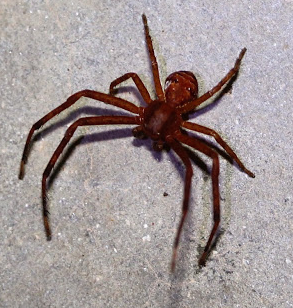
Blue Ridge Expeditions: Spring Foray, April 12, 2014
BRDC's first local Blue Ridge Expeditions field hike of 2014 was great; warm, sunny weather for the 16 eager hikers on the New River Trail below Fries. Guides Roald Kirby, Carol Broderson and Harrol Blevins led the participants, some of whom were from the Mount Rogers Appalachian Trail Club and most others regulars.

Artichoke Plume Moth
The plume moths, Pterophoridae, include many species that can't be identified either in the field or from photos. Fortunately there are a few exceptions in our area. This moth is maybe an inch from wingtip to wingtip. Its name, Platyptilia carduidactylus, is longer than its wingspan. Its English name, Artichoke Plume Moth, indicates one of tis host plants, but the caterpillars also utilize thistles, much more common than the garden vegetable in my neck of the woods.

(May 2014) 2. The Beak of the Finch: A Story of Evolution in Our Time, Jonathan Weiner
"On a desert island in the heart of the Galapagos archipelago, where Darwin received his first inklings of the theory of evolution, two scientists, Peter and Rosemary Grant, have spent twenty years proving that Darwin did not know the strength of his own theory. For among the finches of Daphne Major, natural selection is neither rare nor slow: it is taking place by the hour, and we can watch."

About BRDC
"Why I prefer the field of science over any other is this one single fact: there is no final decision, but a process of constant discovery, discussion and leaning into the evidence that shifts as well. The questions mature as the answers compete." - Scott Jackson-Ricketts
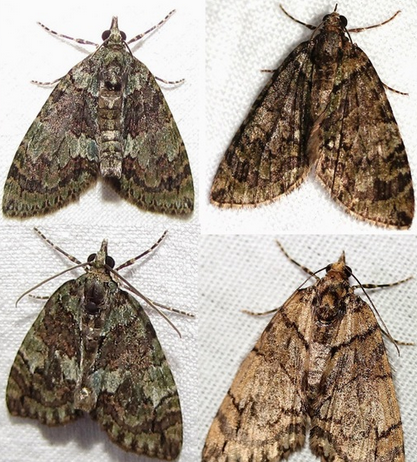
Hydriomena Something or Other
After I posted the message about digital photographs and IDs, I realized that I had erred because no one other than a dedicated moth-er would know what the genus Hydriomena is.


When a digital photo really helps
Identifying insects (and other critters) is a reasonable method most of the time, but sometimes is impossible. An example is the Geometer moth genus Hydriomena. There are probably several species in our area, but the color and patterns on the wings are highly variable and cannot be used safely to distinguish species.
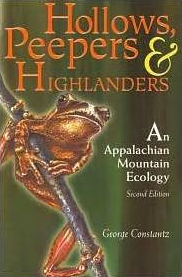
(April 2014) 1. Hollows, Peepers, and Highlanders - An Appalachian Mountain Ecology, George Constantz
"In this revised and expanded edition of Hollows, Peepers, and Highlanders, author George Constantz, a biologist and naturalist, writes about the beauty and nature of the Appalachian landscape. While the information is scientific in nature, Constantz's accessible descriptions of the adaptation of various organisms to their environment enable the reader to enjoy learning about the Appalachian ecosystem."

Chasing Tigers in the Blue Ridge
In the Central Virginia Blue Ridge exists a phenomenal ecosystem, one that was probably shaped by raging braided mountain streams during the last iceage. It contains many disjunct species. In fact, over 90 species that are well outside their typical range have been documented here. It’s an odd mix of coastal plain, Appalachian and northern plants and animals. While several rare and endangered species exist here, today we focused on a well known Blue Ridge phenomenon: Salamanders.
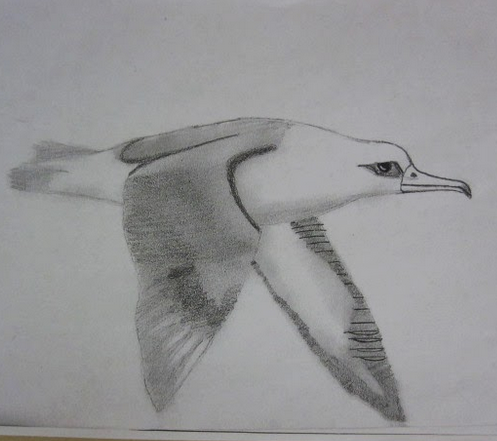
Bird Sleuth: Chapter 2
After weeks of often interrupted effort, snow, sleet and hail held off for Bird Sleuth's grand finale on Friday, March 21st. Bird Sleuth, an educational tool box designed by Cornell's Lab of Ornithology is a project managed under Avain Adventures, a BRDC program.

Plethodon complex salamander
Yesterday, March 12, I photographed a salamander in the yard. After I did an initial search for an ID, I sent the photos to Bill Dunson. He forwarded them to a couple of experts and recommended that I send the pics to the president of the Virginia Herpetological Society, which I did.

Winterlude
Tracks are always fun to follow and extract a story from. The unmistakable Spring songs of male Northern cardinals, robins and a tufted titmouse contrasted with the tiny footprints of juncos and song sparrows beneath the sunflower seed feeder.

Snow and Birds on March 7
Today, March 7, was a good day to stay inside, enjoy the falling snow, and watch the birds. The first unexpected arrivals were red-winged blackbirds, three of them—a female and two first-winter males. The first photo shows the female.

FINALLY...The Elusive Red Crossbill
In the birding world, folks talk about their nemesis bird, the one that got away, that elusive, irritating species that everyone else sees but you. Bragging rights and chest pounding are not uncommon.
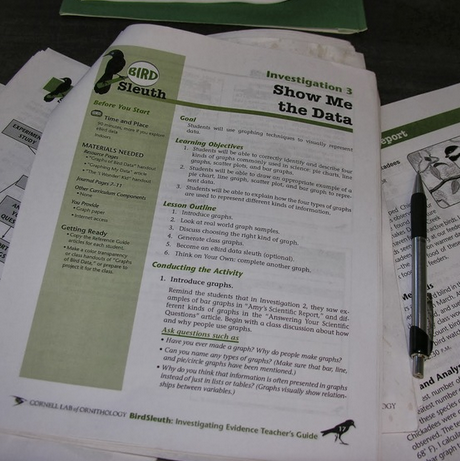
Bird Sleuth, chapter one
Bird Sleuth is a program designed by Cornell's Lab of Ornithology (http://www.birds.cornell.edu/Page.aspx?pid=1478). Blue Ridge Discovery Center decided to offer a first run of this investigative and hands-on citizen science project to two classes at Grayson County High School.
Christmas Bird Counts
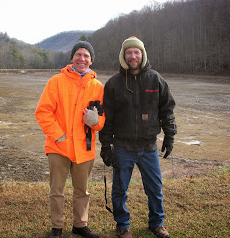
These annual counts provide a great excuse to get out with friends and freeze. This year was gentler, with much warmer temps and less wind than usual. But the warmer weather seemed to negatively affect the bird numbers and species diversity. I am guessing, but some of my theories are: less need for the birds to form foraging flocks and less elevational migratory movement, both behaviors due to a wider abundance of food and water sources. Regardless, I had a great time on two counts…the New River and the Mount Rogers.
Fox Squirrel
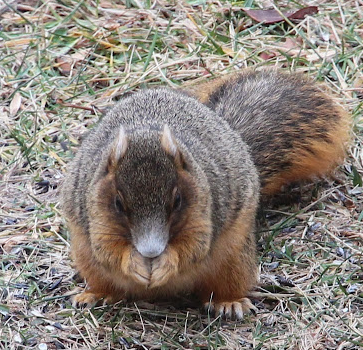
The fox squirrel that first appeared in the yard on December 12 continues to return periodically. This morning, Christmas Eve, it came to the pole feeder in front of the study window, enabling me to take a photo in spite of the cloudy weather.

Blue Ridge Expeditions: Fisher Peak
We began a gradual climb on the trail through woodland cove popular-pine forest and soon picked up the Fisher Peak road which we followed the rest of the way. According to Aubrey,it was originally built by the City of Galax in the 1930's so people attending the Rhododendron Festival could drive to the mountain.It is now used to access the WBRF radio towers.
RAPTORS OF HARVEY'S KNOB HAWK WATCH
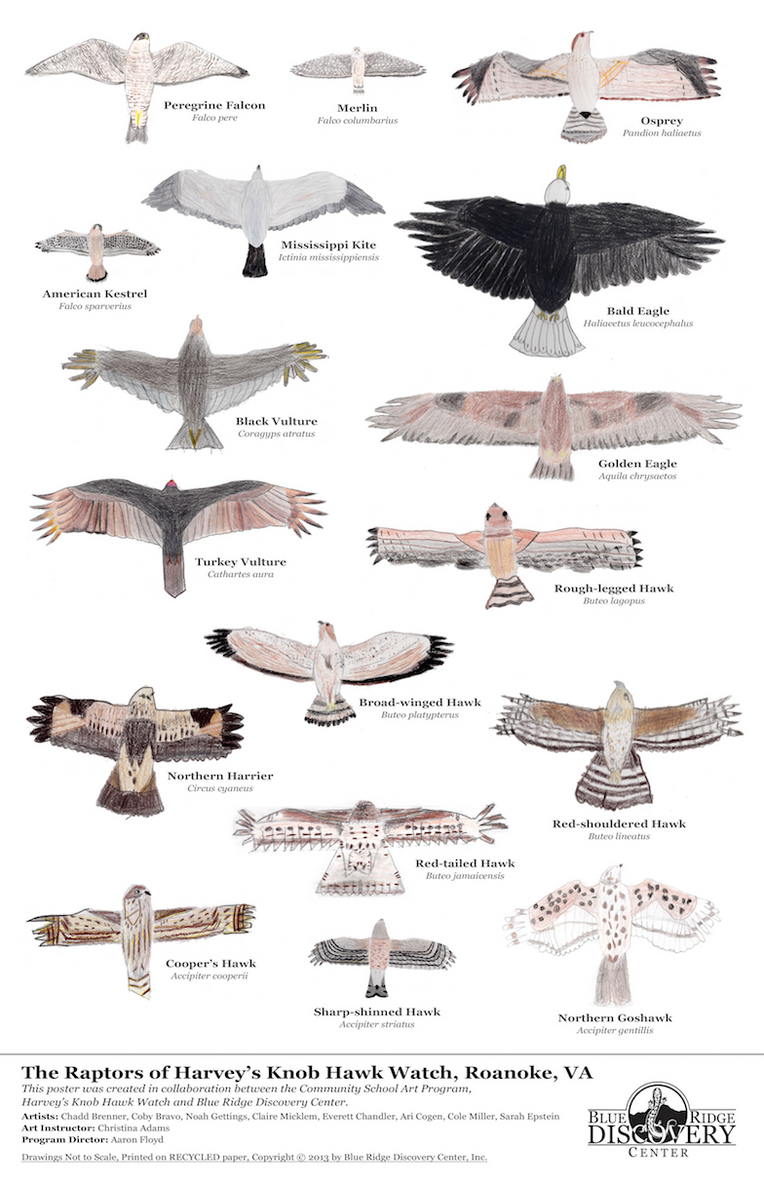
This project is a partnership with the Community School of Roanoke and Harvey's Knob Hawk Watch. 5th, 6th and 7th graders of the Community School in Roanoke, VA diligently observed and illustrated the raptors at Harvey's Knob Hawk Watch.