Branch Lettuce: A Taste of Appalachian Spring
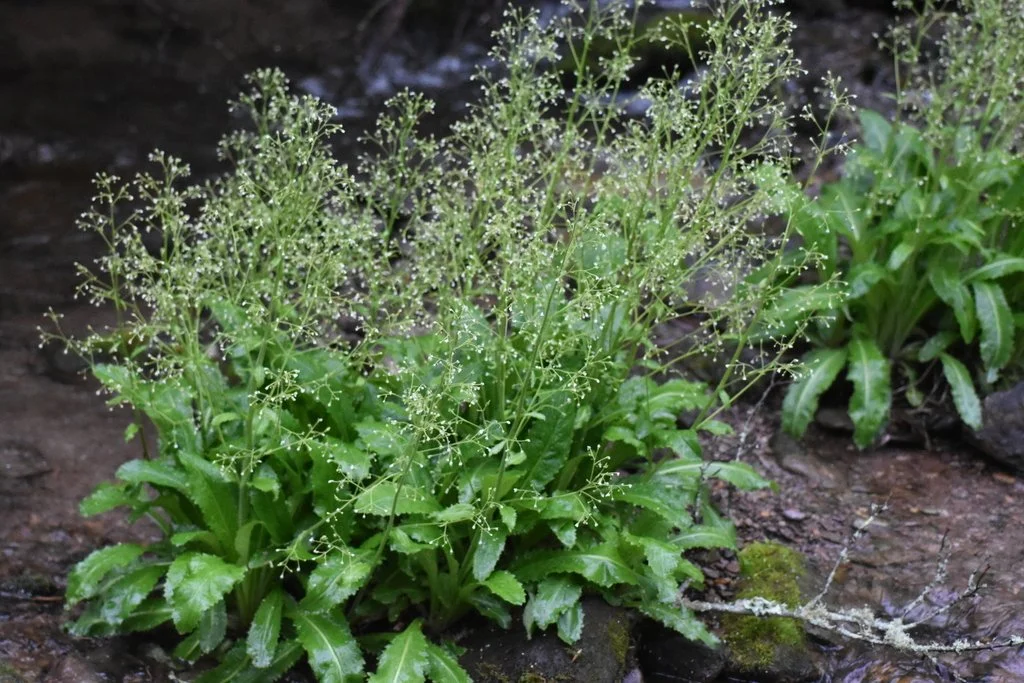
Branch Lettuce (Micranthes micranthidifolia)
At the end of every dragging, gray Appalachian winter, those of us who live in the high country long for the rush of green, verdant warmth that comes with the mountain spring. This yearning led the first mountaineers to the spring greens we know today as a crisp, crunchy delicacy that bursts fresh from the moss-covered stones and hand-sized islands of babbling brooks. The Lettuceleaf Saxifrage (Micranthes micranthidifolia), known locally as “branch lettuce,” is one of the first signs (and delicacies) of spring, named for a semiaquatic love for small creeks and streams with crystal-clear, cascading water.
On the rock outcrops of Whitetop Mountain, Cliff Saxifrage (Micranthes petiolaris) and similar species thrive in dry, exposed crevices with jagged, succulent-like leaves. The name “saxifrage” comes from the Latin saxum meaning “rock,” and frangere for “breaking,” either referring to the habit of these small plants sprouting from fissures in bare rock (or alternatively from medicinal uses to break up kidney stones). Instead of rugged cliffsides, branch lettuce thrives in the “hollers” or cove forests where rushing water provides bare rock to grow, and this beloved delicacy is found nowhere else in the world, aside from the colder, narrow headwater valleys of Central and Southern Appalachia.
Armed with baskets and paring knives, foragers must venture up shallow seepage streams in the chilly March or early-April air, before spring has truly arrived in the highlands, in search of these inconspicuous greens. While regional indigenous tribes such as the Cherokee and the Iroquois used the plant, it was mostly a medicine. Foraging the plant as a food source likely originated from Scots-Irish settlers searching for similar plants to their water-dwelling saxifrages, some of which are known and foraged to this day as “lus nan laogh” in Scottish Gaelic. As the cultures collided in the Southern Appalachian Mountains, branch lettuce quickly became a local delicacy.
The trick is to harvest the young foliage of branch lettuce before it starts to flower, when bitter terpenes (chemical defenses) will fill the leaves. Instead of eaten as a raw salad, branch lettuce is often prepared as a cooked green, often with vinegar. The traditional recipes for “kilt lettuce” work extremely well for this perennial species, crafted by pouring hot bacon grease or melted lard over the leaves, causing them to wilt and pleasantly soften while soaking up hearty flavors, often with added spring onions. Recipes often include foraged onion-substitutes, like ramps or wild garlic. Kilt branch lettuce can be layered into soup beans, and eaten with cornbread, or even served with scalded milk, buttermilk or potatoes.
Unfortunately, branch lettuce is becoming easy to overharvest. Even some small grocery stores and farmer’s markets offer the wild-cut greens for sale, in the right season. As in the case with ramps and ginseng, where there is economic incentive to harvest, poaching and unsustainable practices often take root. More and more of the branch lettuce’s habitat is being encroached upon, and peaceful, undisturbed cove forest streams are becoming difficult to find. Sometimes, it takes two years or more before a single plant reaches maturity. They are perennials in a peaceful but extreme environment, constantly battling rushing water, powerful freezes, floods, drought, and grazing wildlife. Cutting the first spring leaves, especially when they are large enough to eat, saps energy from the fragile plants. Make sure to always leave a leaf or two after harvesting, and always let the areas you harvest rest and recover for a season before foraging there again. Respectful foraging is the only way this delicacy will survive long enough to be enjoyed by future generations!